
Table of Contents
Introduction
Mold is not just a cosmetic issue. In the mobile home world, it is a structural predator. I have seen well over 2,000+ properties, and nothing rots a subfloor or ruins a resale value faster than unchecked moisture. Most advice you read is fluff. You need to understand the physics of how these homes breathe.
Mobile homes are built differently than site-built houses. They are tighter, often use different materials, and sit on a chassis that creates a unique crawlspace environment. If you do not manage the air and water, the home will eventually fail. This guide is about preventing that failure before it costs you $10,000 in repairs.
Video Guide Overview
Affiliate Disclosure
I may earn a commission if you purchase products through links in this article. I only recommend tools and materials that I personally use in my remodeling projects to ensure structural integrity and moisture control. Using these links helps keep this site a free resource for mobile home owners.
The Short Answer
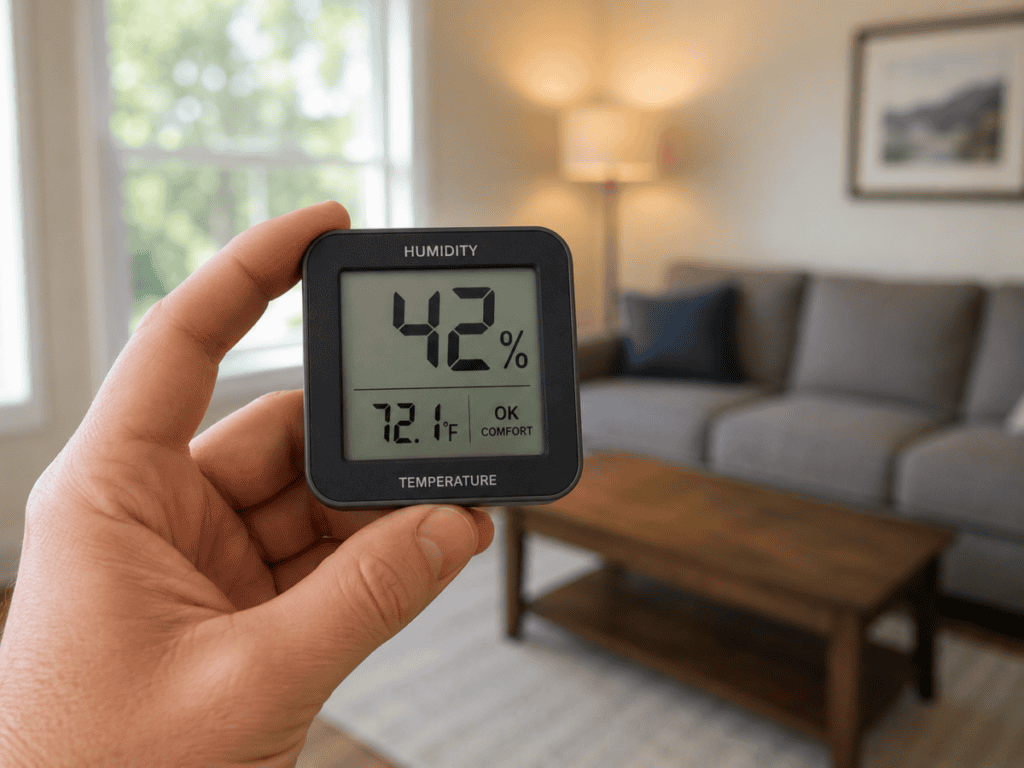
Mold in mobile homes is caused by water intrusion, lack of ventilation, and high humidity. To stop it, you must keep indoor humidity between 30% and 50% and seal the underbelly. Repairing every roof or plumbing leak the moment it is detected is the only way to avoid total subfloor failure.
Why Mobile Homes Are More Prone to Mold
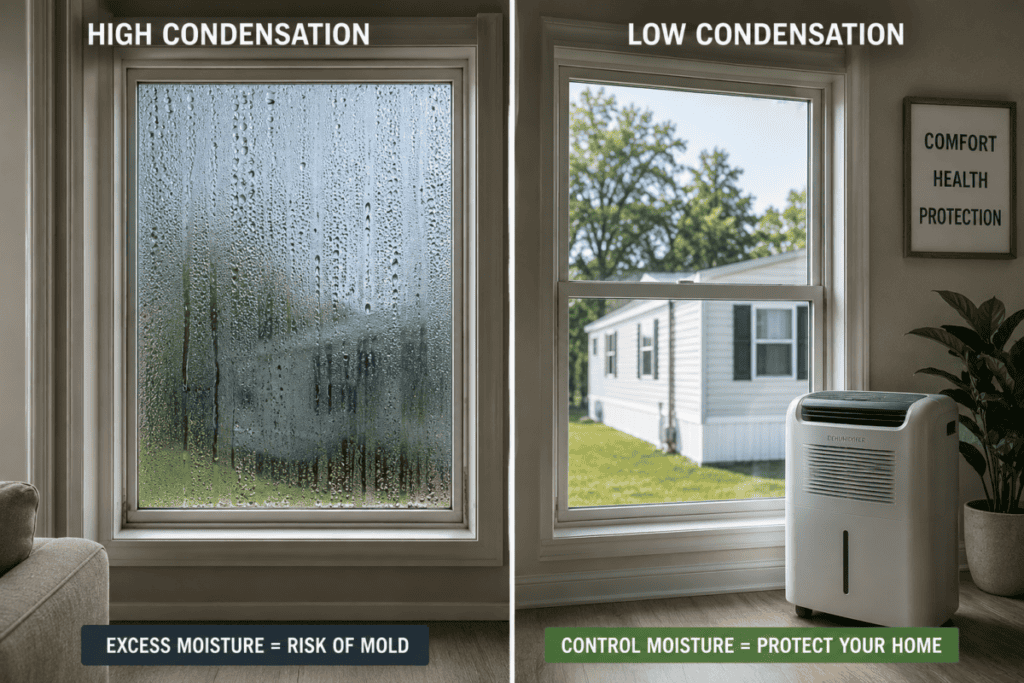
The construction of a manufactured home makes it vulnerable. Thinner walls and ceilings mean there is less of a thermal buffer between you and the elements. This leads to condensation forming on the interior side of exterior walls. When warm, moist air hits a cold wall, water beads up.
That water is the fuel for mold growth. The underbelly and crawlspace design is the second major factor. Most mobile homes have a belly wrap or “poly-wrap” that holds insulation against the floor joists. If a pipe leaks inside that wrap, the water stays trapped against the wooden subfloor.
You will not see the leak until the floor becomes spongy or mold starts growing through the carpet. This is a mechanical failure of the home’s drainage logic. Finally, temperature swings play a massive role. In places like Arizona, the extreme heat outside versus the cold AC inside creates a dew point inside your wall cavities.
Technical Deep Dive: The Engineering of the Vapor Barrier
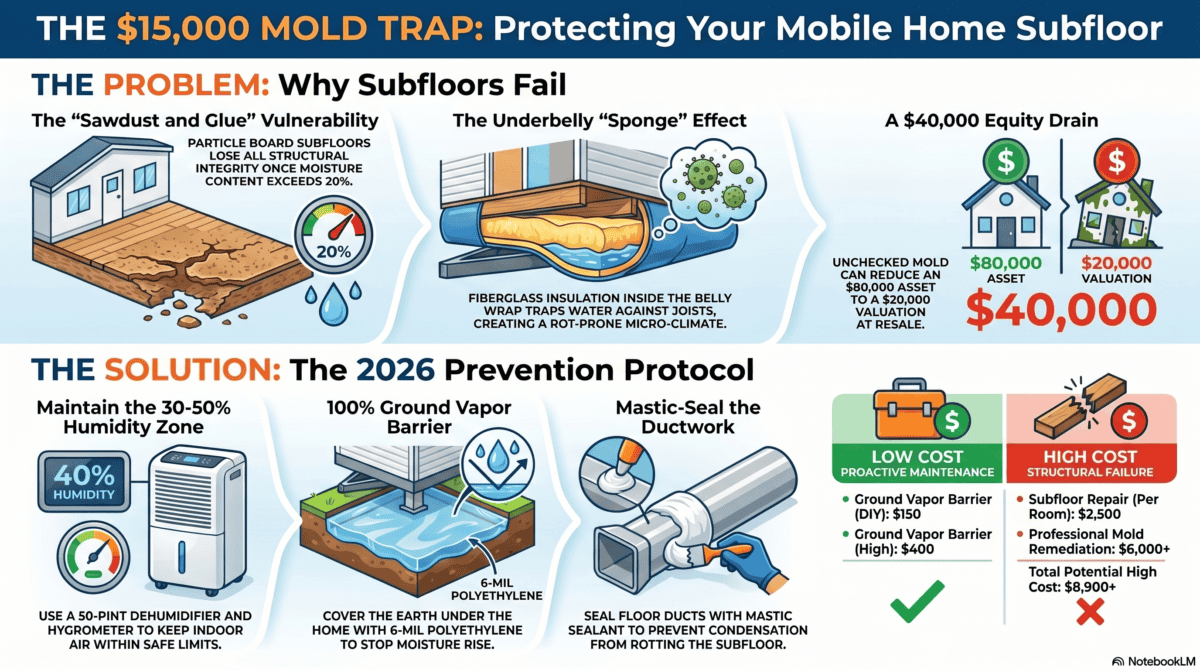
To understand mold, you must understand the hygroscopic nature of mobile home materials. Most mobile homes built before the mid-2000s use particle board subflooring. Particle board is essentially sawdust and glue. When it absorbs moisture, the glue bonds break and the wood fibers expand. This is irreversible.
Unlike plywood, which can sometimes dry out and retain strength, particle board loses all structural integrity once it hits a moisture content above 20%. The underbelly insulation exacerbates this. Standard fiberglass batts act like a sponge. Once they get wet from a leak or ground moisture, they hold that water against the floor joists.
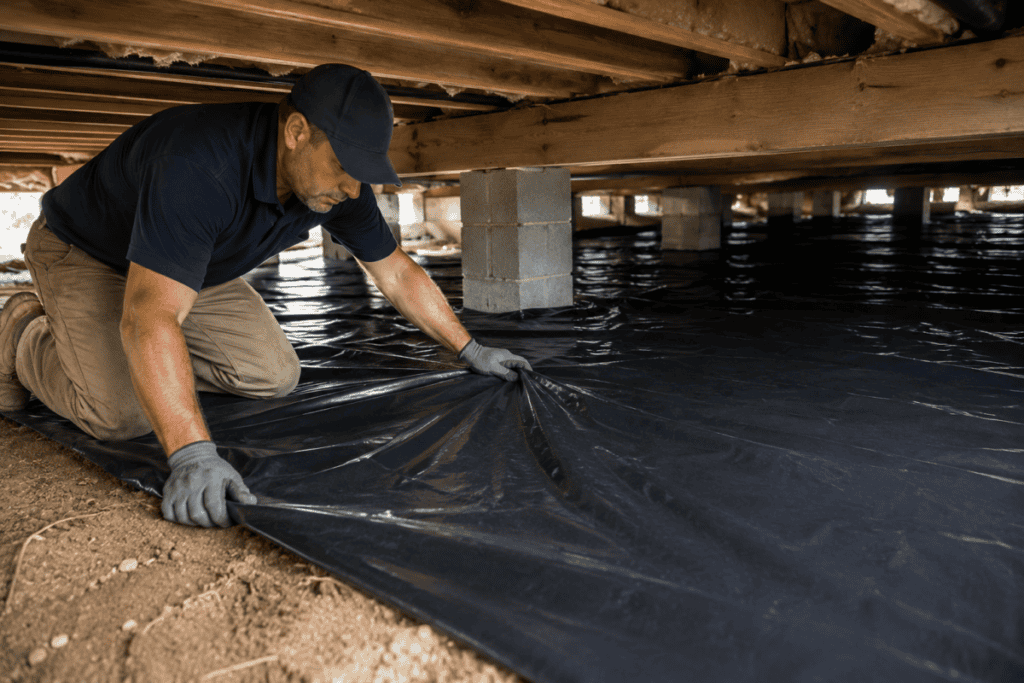
This creates a micro-climate that is perfect for mold. The air is stagnant, the temperature is moderate, and the wood provides the organic food source. This is why a ground vapor barrier is not optional. It is a critical engineering component to prevent the capillary rise of moisture from the earth into your home’s chassis.
In 2026, we also see tight building envelopes causing issues. Newer HUD code homes are built to be energy efficient. This means they do not “leak” air. If you do not mechanically ventilate these homes, the humidity generated by showering and cooking has nowhere to go. It sits in the home and saturates the drywall or wall panels.
The 3 Main Causes of Mold in Mobile Homes
1. Water Leaks
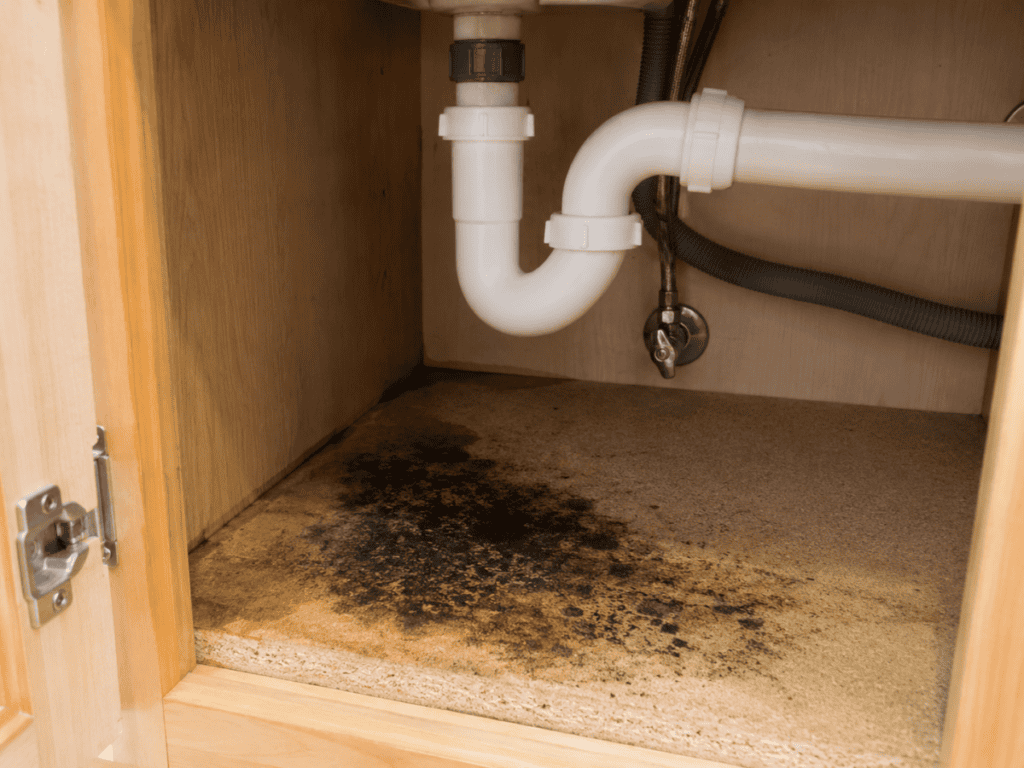
Roof leaks are the primary culprit. Mobile home roofs, especially flat metal or bowstring roofs, require coating every few years. If the seam parts, water enters the ceiling cavity. Window and door leaks are also common because the flashing on mobile homes is often minimal. Plumbing leaks under the home are the “silent killers” of subfloors.
2. Condensation
Your HVAC system is a major moisture producer. If the ductwork is not sealed correctly, it pulls in humid air or drips condensation onto the belly wrap. Single-pane windows with aluminum frames are also notorious for sweating. This moisture drips down into the wall track, leading to hidden mold behind the paneling.
3. High Indoor Humidity
Human activity creates moisture. Cooking, showering, and even breathing raise humidity levels. If your dryer vent is not exhausted completely outside the skirting, you are pumping gallons of water under your home. Swamp coolers (evaporative coolers) are also a major risk factor because they function by adding humidity to the air.
Technical Deep Dive: The ROI of Moisture Prevention
From an investment perspective, moisture control is the highest return activity you can perform. A $300 investment in a vapor barrier and a dehumidifier can protect a $80,000 asset. If you ignore these, the diminished value of the home at resale is staggering. Most buyers will walk away the moment they smell mold.
Those who stay will demand a $10,000 to $15,000 credit for “structural repairs.” In 2026, lenders are becoming stricter about FHA and VA inspections for manufactured homes. If the appraiser notes moisture in the crawlspace, the loan will not fund. You are essentially trapped in the property until it is fixed.
Spending $500 a year on proactive maintenance ensures you maintain 100% of your equity when it comes time to sell or refinance. I have seen homes that were worth $60,000 sell for $20,000 because of mold and rotted floors. That is a $40,000 loss that could have been prevented by a $50 hygrometer and a tub of roof sealant.
2026 Cost Transparency Table
| Service/Item | Estimated Cost (Low) | Estimated Cost (High) | Frequency/Notes |
|---|---|---|---|
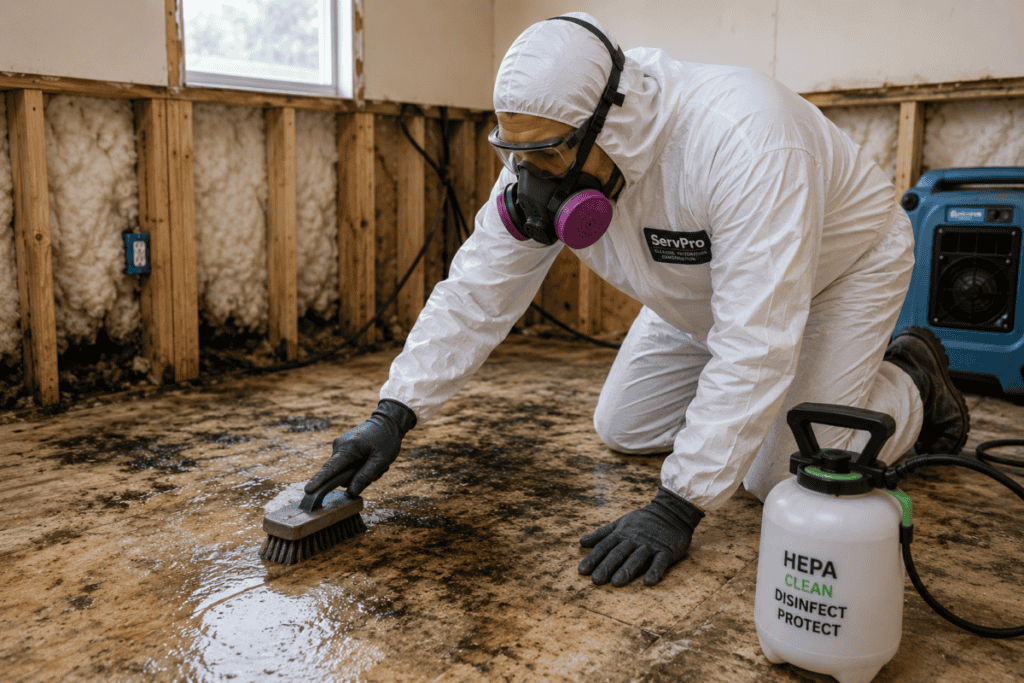
| Professional Mold Remediation | $1,500 | $6,000+ | Depends on square footage and wall entry. |
| Subfloor Replacement (Per Room) | $800 | $2,500 | Includes removal of old debris and new plywood. |
| Ground Vapor Barrier (DIY) | $150 | $400 | 6-mil or 10-mil polyethylene sheeting. |
| Roof Coating Service | $500 | $1,200 | Should be done every 2 to 3 years. |
| Dehumidifier (Whole Home) | $250 | $600 | Look for 50-pint capacity or higher. |
Affiliate Products for Moisture Control
| Product Category | Recommended Use | Primary Benefit |
|---|---|---|
| Digital Hygrometer | Place in living room and master bath. | Real-time tracking of humidity levels. |
| 50-Pint Dehumidifier | Use in humid climates or during winter. | Removes up to 50 pints of water daily. |
| Belly Repair Tape | Patch holes in the underbelly wrap. | Stops moisture from entering insulation. |
Technical Deep Dive: The Legal and Tax Implications of Mold
Mold is not just a health risk; it is a legal liability. If you are a landlord renting out a mobile home, most states have an implied warranty of habitability. If mold is present, the tenant can legally withhold rent or sue for health damages. Documenting your prevention measures like vapor barrier installation and HVAC servicing is your best defense.
From a tax perspective, mold remediation is often classified as a repair rather than an improvement. This means you can often deduct the entire cost in the year the work is performed if the home is an investment property. However, if you are replacing the entire floor system with upgraded materials, it may need to be depreciated over 27.5 years.
You should also check your insurance policy. Most standard mobile home insurance policies have very limited mold coverage, usually capped at $5,000. This rarely covers a full structural remediation. Understanding these financial boundaries before a disaster strikes is what separates an expert investor from an amateur.
Early Warning Signs Most People Miss
- Musty Odors: If a room smells “earthy” when you walk in, mold is present, even if you cannot see it.
- Peeling Wall Panels: Mold often starts behind the vinyl coating of mobile home wallboards.
- Morning Window Sweat: Constant condensation on glass indicates your indoor humidity is too high.
- Discolored Ceiling Seams: These are the first signs of roof leaks or attic condensation.
- Spongy Floors: Soft spots near the toilet or fridge indicate a long-term moisture issue.
How to Prevent Mold: Actionable Steps
Control Indoor Humidity
Your goal is 30-50% humidity. Use a dehumidifier in the summer and ensure your HVAC system is sized correctly. A system that is too large will “short cycle,” meaning it cools the air but does not run long enough to remove the moisture. This leaves your home cold and clammy.
Under-Home Moisture Control
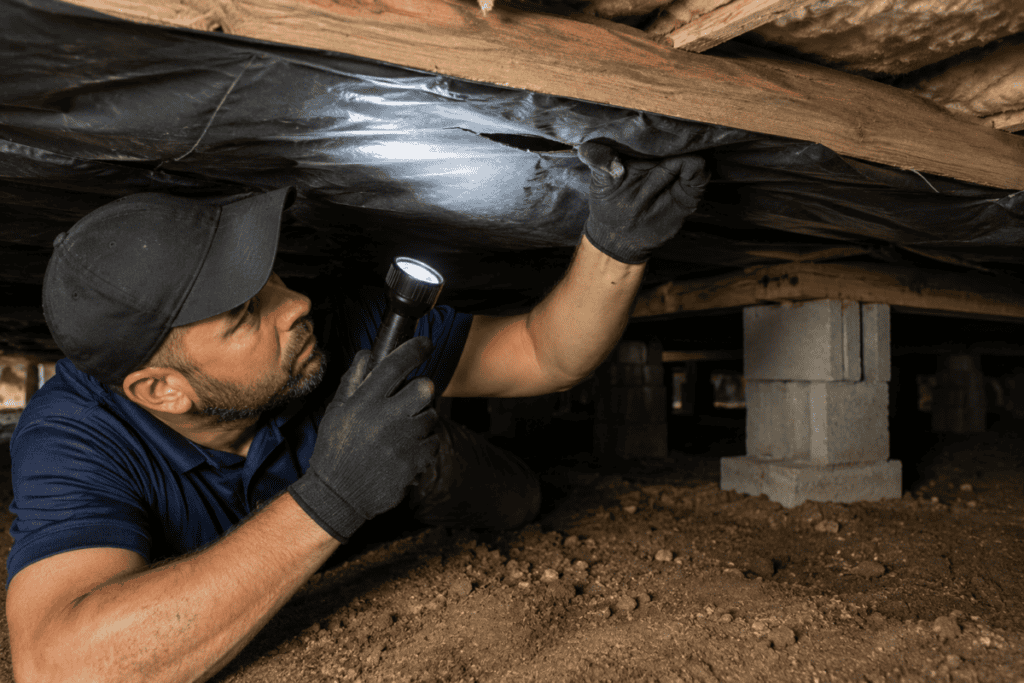
Every mobile home needs a ground vapor barrier. This is a sheet of 6-mil plastic covering 100% of the earth under the home. It stops the ground from “breathing” moisture into your floor system. Also, ensure your skirting has at least 1 square foot of ventilation for every 150 square feet of floor area.
Technical Deep Dive: HVAC Duct Sealing Logic
The HVAC system in a mobile home usually runs through the floor. The ductwork sits between the subfloor and the belly wrap. If there is a leak in the ductwork, you are blowing cold air directly into the crawlspace. This creates a massive temperature differential.
When cold air from the duct hits the warm, humid air under the home, the moisture precipitates out of the air. It settles on the metal ductwork and the wood joists. This is a primary cause of unexplained mold in the middle of a room. Sealing these ducts with mastic sealant (not duct tape) is a non-negotiable structural requirement.
I recommend a smoke test of the duct system every 5 years. This involves pumping non-toxic smoke into the vents and seeing where it escapes under the home. It is the only way to find hidden leaks that are rotting your floor from the inside out. Fixing a $50 duct leak today prevents a $5,000 floor job tomorrow.
Mobile Home Mold & Moisture Checklist
- Check under every sink for dampness or dark spots monthly.
- Inspect the roof seams and plumbing vents twice a year.
- Verify the dryer vent is securely attached and exits the skirting.
- Monitor your hygrometer to ensure humidity stays below 50%.
- Inspect the belly wrap for sagging or tears every 6 months.
- Run exhaust fans in the bathroom for 20 minutes after every shower.
- Keep furniture 2 inches away from exterior walls to allow airflow.
Internal Resources
Summary
Mold is a symptom of a moisture problem. You cannot just clean it; you have to stop the source. By controlling humidity, maintaining the underbelly, and fixing leaks immediately, you protect your health and your wallet. Don’t wait for the smell to start. Prevention is the only way to win this battle.
About Chuck O’Dell: I am the owner of MobileHomeFriend.com and have been a real estate investor since 2003. With over 100 properties flipped, I specialize in identifying and fixing the structural vulnerabilities of manufactured housing. I believe in first-principles logic: fix the system, and the symptoms disappear.
Since 2003, I have flipped and remodeled over 100 properties, tackling the structural failures mold causes firsthand.