
Table of Contents
Introduction
Summary: Painting a mobile home is a high-leverage maintenance task that dictates the lifespan of your siding and the appraisal value of your property. In 2026, the cost of materials has increased, making “one-and-done” technical accuracy vital. This guide covers the chemical bonding requirements for aluminum, vinyl, and T1-11 wood siding. We analyze why 100% acrylic latex is the only logical choice for a structure built on a steel chassis. Using the wrong color can lead to structural warping on vinyl or heat-induced cooling costs on metal. Note: Local labor rates for exterior painting change constantly. See our full regional cost table below.
Video Guide Overview
Affiliate Disclosure: This post contains affiliate links for professional-grade painting equipment. If you purchase through these links, I may earn a commission. I only recommend tools I use on my own 100+ flips.
The Short Answer: Logic-Based Coating Selection
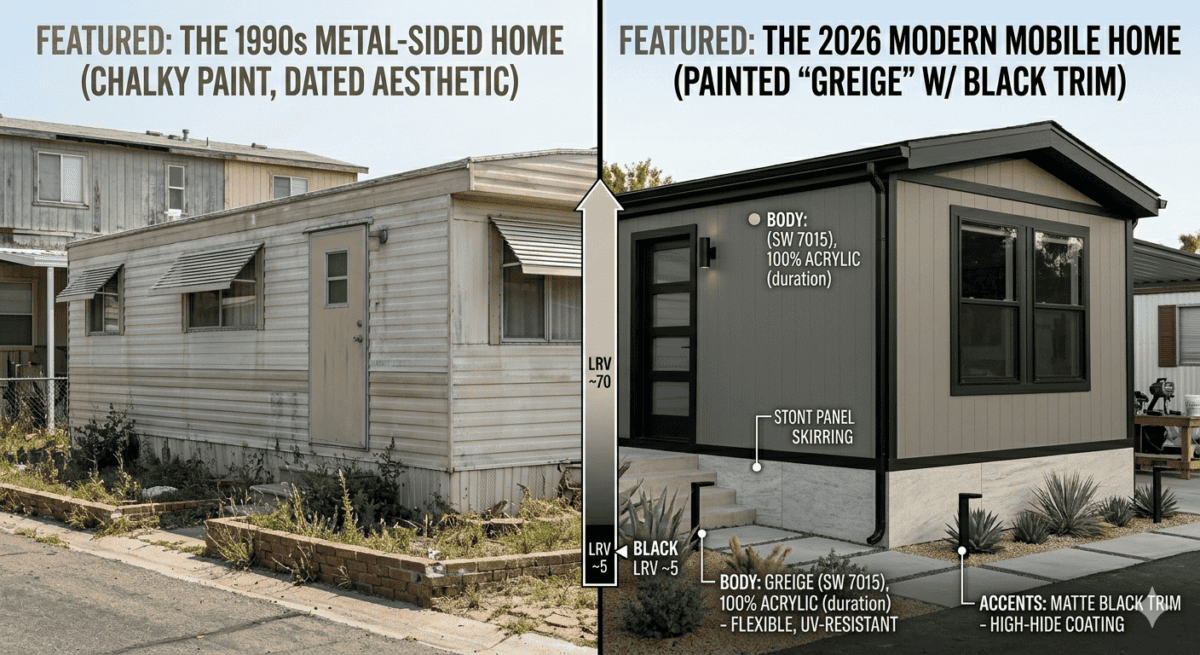
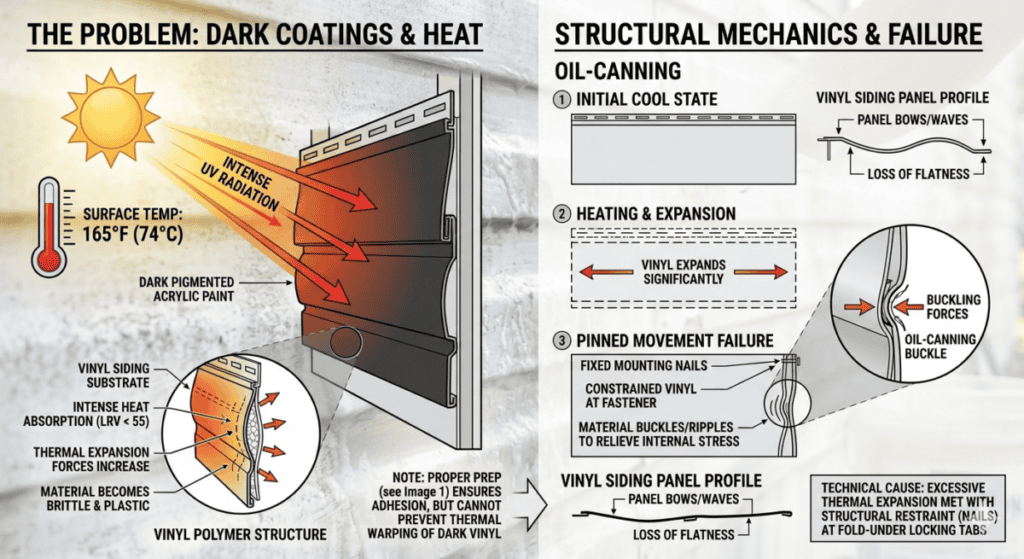
The “Short Answer” is that Proper Surface Preparation beats Expensive Paint every single time. For a manufactured home, you must use 100% Acrylic Latex paint. This is because mobile homes are dynamic structures; they expand, contract, and shift on their piers. Oil-based paints are too brittle and will crack within two seasons. If you have vinyl siding, you are restricted by physics: you cannot use dark colors unless they are specifically formulated as “Vinyl-Safe” pigments. Otherwise, the siding will absorb enough UV heat to reach its deformation point. Stick to Light-to-Medium Neutrals like Greige or Warm Sand. These colors provide the best balance of heat reflection, dirt concealment, and resale appeal. Do not cut corners on the primer; it is the “glue” that prevents your $80-per-gallon topcoat from peeling off in sheets.
2026 Exterior Painting Cost Transparency Table
| Cost Category | DIY / Basic (Single-Wide) | Pro / Premium (Double-Wide) |
|---|---|---|
| Paint & Primer (Premium Acrylic) | $450 – $750 | $1,300 – $2,100 |
| Prep Supplies (Caulk, TSP, Tape) | $150 – $250 | $500 – $900 |
| Equipment Rental (Airless Sprayer) | $200 – $400 | Included in Labor |
| Professional Labor Fees | $0 | $3,500 – $6,500 |
Why Exterior Paint Matters on a Mobile Home
Most owners view paint as a cosmetic luxury. This is a mistake. On a manufactured home, the siding is a thin protective envelope. UV Damage is the primary threat; it makes vinyl brittle and causes wood-based siding to crack. Once the paint film is breached, moisture enters the wall cavity. Because mobile homes often use pressed-wood studs or thinner framing than site-built homes, this moisture leads to rapid structural rot. A fresh coat of high-solids paint is a protective membrane. Furthermore, a modern color palette removes the “dated” look of 1970s or 80s homes, which is critical for Value Increase. I have seen homes sell for 25% more simply because the exterior was modernized with a $5,000 paint job. Finally, you must comply with HOA or Park Rules. Many parks in 2026 have strict “approved color” lists. Failure to verify these can result in a mandatory (and expensive) repaint.
Technical Deep Dive: The Chemistry of Siding Adhesion
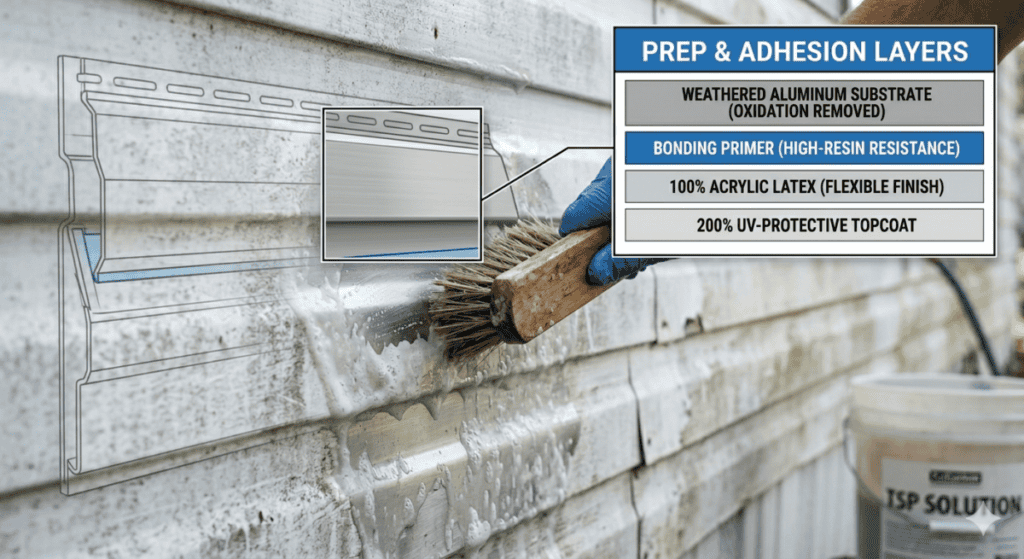
Why does paint peel? On Metal Siding, it is usually because of Oxidation. Aluminum siding develops a “chalky” white powder over time. If you paint over this, you are essentially painting over dust. The paint bonds to the dust, and then the dust falls off the house. You must use a chemical cleaner like TSP (Trisodium Phosphate) to scrub the surface down to the bare metal. For Vinyl Siding, the challenge is Molecular Surface Tension. Vinyl is non-porous. Standard paints cannot “bite” into the surface. You require a primer or paint with high-resin content that creates a chemical bond. For Engineered Wood, the issue is Hydroscopic Expansion. If the bottom edges of your T1-11 siding have soaked up water, they will expand. If you paint over damp wood, the moisture will turn to vapor in the sun and blast the paint off the surface, creating blisters. You must ensure the siding is below 15% moisture content before applying any coating.
Understanding Your Mobile Home’s Exterior Material
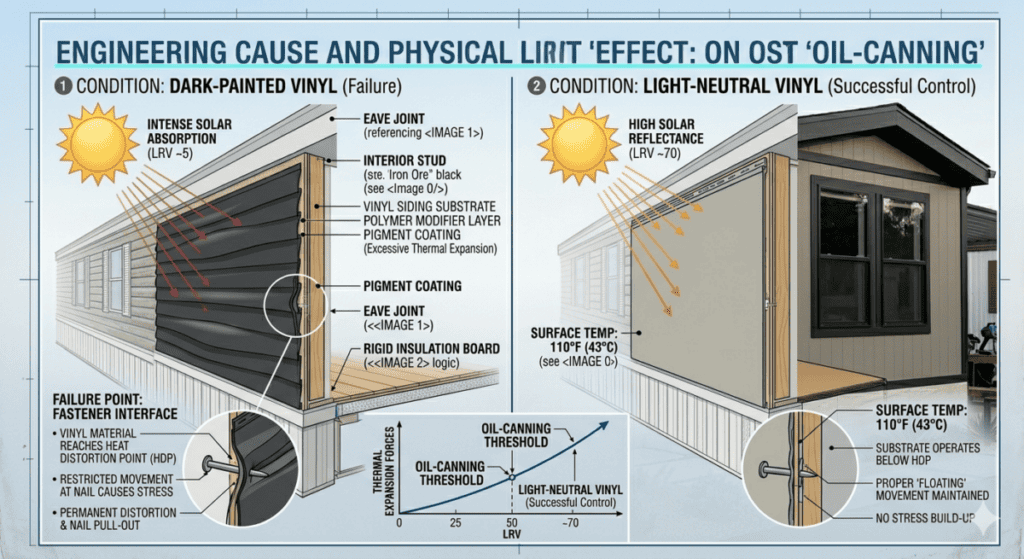
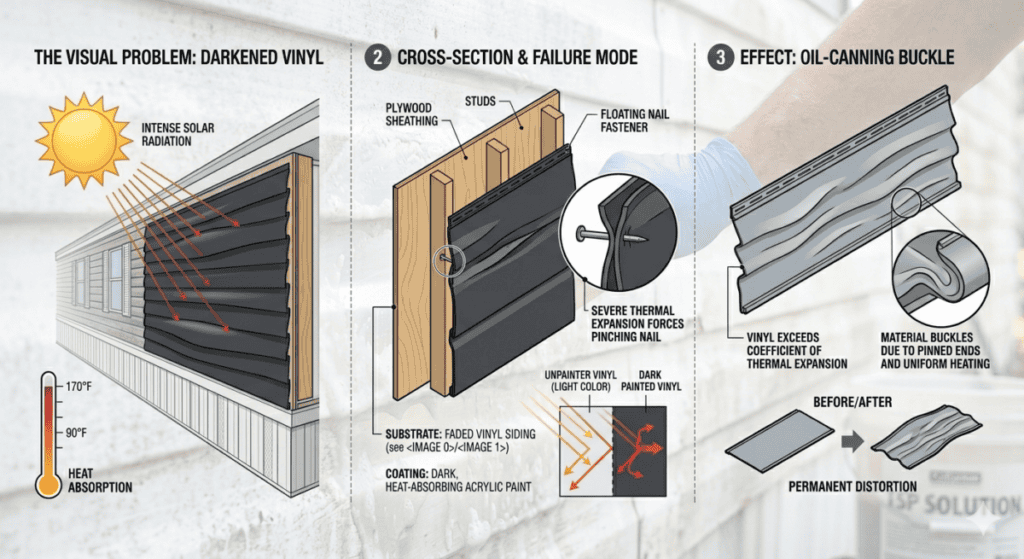
You cannot use a “one size fits all” approach. Metal Siding (Aluminum) is common on pre-HUD and early HUD homes. It requires Damp-Proof Metal Primer if rust is present. Vinyl Siding is the modern standard; it is virtually maintenance-free until you want to change the color. The risk here is Thermal Warping. Vinyl is designed to handle a specific heat load. Dark colors exceed that load. Wood or Hardboard Siding (like LP SmartSide) looks great but is the most vulnerable to Moisture Damage. You must pay special attention to the “drip edge” at the bottom of the panels. If this isn’t sealed, the entire panel will delaminate from the bottom up. Fiber Cement (Hardie Plank) is found on premium 2026 manufactured homes. It is the best substrate for paint because it is stable and does not expand significantly with temperature changes.
Technical Deep Dive: Thermal Warping and the 10-Year ROI Trajectory
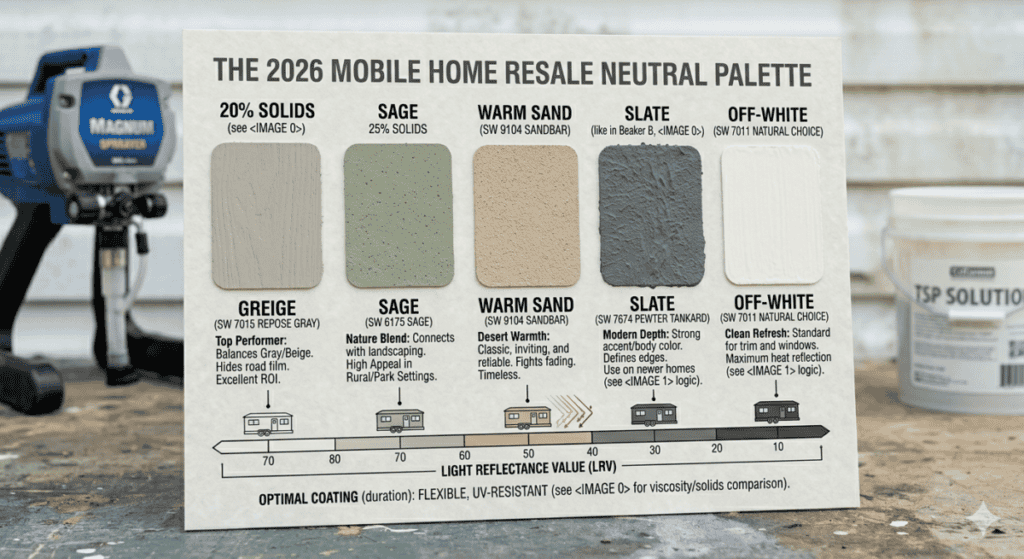
Let’s talk about Net Worth Trajectory. A mobile home is often seen as a depreciating asset, but that is only true if you allow the exterior to fail. If you spend $5,000 every 8 years on a professional exterior refresh, you are protecting a $150,000 asset. If you ignore it, the siding fails, the “belly wrap” gets wet, and the home’s value can drop by $40,000 in a single decade. From a first-principles perspective, the paint job is an insurance policy. In 2026, we see a clear trend: homes with Light Reflective Values (LRV) above 60 sell faster. High LRV colors reflect heat, which lowers the Internal Ambient Temperature of the home. Because mobile homes have less attic insulation than site-built homes, a white or light gray exterior can reduce cooling costs by 15% to 20%. Over ten years, the energy savings alone can pay for 30% of the paint job’s cost.
Affiliate Comparison Table: Professional Application Tech
| Tool / Technology | Top Recommendation | Why It Matters |
|---|---|---|
| Airless Sprayer | Graco Magnum X7 | Achieves Factory Finish texture and speed. |
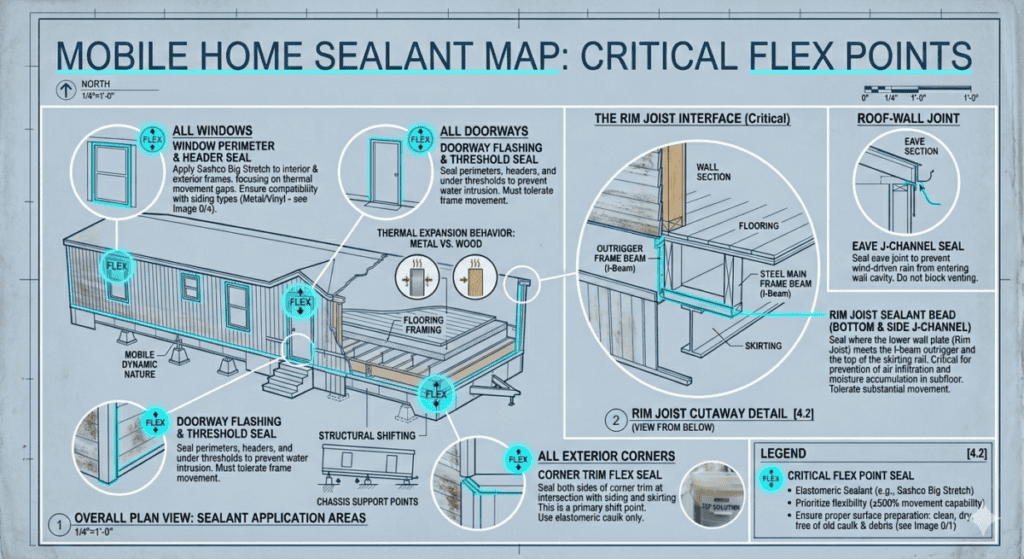
| Elastomeric Caulk | Sashco Big Stretch | Stretches 500%; won’t crack when the home shifts. |
| Heat-Reflective Primer | Insl-X Stix Primer | Bonds to PVC and Metal with zero peeling. |
Best Exterior Paint Brands for Mobile Homes
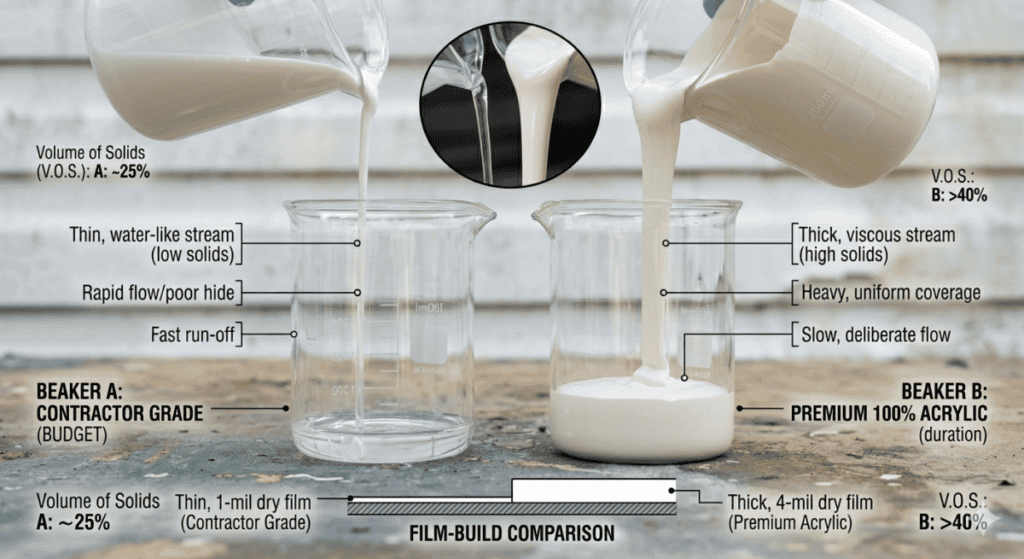
I don’t care about the marketing; I care about the Volume of Solids. Cheap paint is mostly water. When the water evaporates, you are left with a thin, useless film. Sherwin-Williams Duration is my gold standard for mobile homes. It is a high-build coating that covers well in one coat, though I always recommend two. Benjamin Moore Regal Select is another excellent option with high Mildew Resistance. For those on a budget, Behr Marquee from Home Depot offers decent performance, but it lacks the long-term Color Retention of the professional brands. In 2026, stay away from “contractor grade” lines. These are designed for new construction where the builder only cares about the home looking good for one year. You need Premium Acrylics that can handle the 120-degree surface temperatures of a metal-sided home in July.
Technical Deep Dive: The “Vinyl-Safe” Pigment Revolution
In the past, you could never paint vinyl a darker color than the original factory shade. If you did, the siding would melt. However, 2026 technology has given us Infrared-Reflective Pigments. Standard black pigment absorbs heat; “Vinyl-Safe” black pigment reflects it. This allows you to achieve modern “Modern Farmhouse” looks with dark trim even on vinyl-sided manufactured homes. However, you must verify that the Paint Base and the Colorant are both compatible. If you use a standard colorant in a vinyl-safe base, you have defeated the purpose. This is a common Technical Failure in DIY projects. For more details on maintaining manufactured home structural integrity during renovations, visit MobileHomeFriend.com.
Choosing the Best Exterior Colors
Color is subjective, but Resale ROI is objective. Greige and Taupe are the kings of the market. They blend into any park environment and look expensive. Sage Green is a high-performer for homes with natural landscaping. Light Blue is popular in coastal areas but can look “cheap” if the shade is too saturated. Pure White is a maintenance nightmare; it shows every spider web and dirt streak from the roof. Instead, choose an Off-White (Alabaster or Cream). Dark Colors (Navy, Charcoal) are trending for 2026 but come with Heat Risks. If you are in a desert climate, avoid these entirely. They will bake your interior and skyrocket your electric bill. For senior-specific housing advice on color and accessibility, check out HousingAfter60.com.
Preparing a Mobile Home for Painting: The Checklist
- Pressure Wash: Remove all dirt, mold, and oxidation. Use a 45-degree tip to avoid damaging the siding.
- Scrape and Sand: Remove all flaking paint. If you paint over a “cliff” of old paint, the new coat will highlight the flaw.
- Apply Rust Inhibitor: On metal homes, any orange rust must be treated with a converter or sanded and primed immediately.
- Caulk Everything: Use a 50-year elastomeric caulk. Focus on window headers, door frames, and where the siding meets the skirting.
- Mask and Shield: Use 3M Scotchblue tape and 12-inch masking paper. Wind will carry spray further than you think.
- Prime: Use a dedicated primer for any bare spots or major color shifts.
Painting Methods: Brush, Roller, or Sprayer?
If you want a Factory Finish, you must use an airless sprayer. Brushing a 70-foot long mobile home is a recipe for Fatigue and Lap Marks. A sprayer allows you to apply a consistent mil-thickness across the entire surface. However, you should “Back-Roll” the first coat. This means one person sprays while a second person follows with a roller to “push” the paint into the texture of the siding. This creates Mechanical Adhesion that spraying alone cannot match. If you are DIYing and have never used a sprayer, practice on a piece of plywood first. Overspray is the biggest risk; in a crowded mobile home park, you could easily paint three of your neighbors’ cars if the wind picks up.
Common Exterior Painting Mistakes
- Painting Dirty Siding: The number one cause of failure. If the surface isn’t clean, the paint won’t stick.
- Skipping the Primer: Especially on metal or wood. Primer is cheaper than paint; don’t skip it.
- Ignoring the Weather: Do not paint if the temperature will drop below 50 degrees at night. The paint needs time to “film out” properly.
- Painting in Direct Sun: Hot siding causes the paint to dry before it can level. Always “follow the shade” around the house.
- Using Interior Paint: It lacks the UV blockers needed for exterior survival. It will chalk and peel in months.
Actionable 2026 Maintenance Schedule
To keep your paint job lasting 10+ years, follow this logic:
- Year 1-3: Annual pressure wash (low pressure) to remove salt and dust.
- Year 5: Inspect all caulk joints. Recaulk any gaps around windows.
- Year 7: Inspect for “chalking” on the sunny side of the home.
- Year 10: Plan for a fresh topcoat to maintain the UV barrier.
Consistent maintenance is the only way to ensure your home remains a liquid asset. More on long-term property management can be found at Mobile Home Siding Replacement Costs.
Related Questions
Can I paint my mobile home skirting? Yes, but you must use a paint with High Flexibility. Vinyl skirting moves significantly. If you use a rigid paint, it will flake off when the wind hits the panels. 100% acrylic is required here as well.
Is professional painting worth the cost? If you are not physically able or have a double-wide, Yes. The risk of falls from ladders and the technical difficulty of achieving a smooth finish make professional labor a sound investment. Ensure the contractor has insurance and a warranty on labor.
Does a new paint job increase insurance rates? No, but it can help you Pass an Inspection for a new policy. Many insurers will deny coverage for mobile homes with peeling paint or visible wood rot.
About the Author: Charles O’Dell
Charles O’Dell is a professional real estate investor and the founder of MobileHomeFriend.com. With over 23 years in the industry and more than 100 successful property flips, Charles specializes in the technical and financial optimization of manufactured housing. He focuses on first-principles engineering and data-driven maintenance strategies to help homeowners maximize their equity and property longevity. He lives and works in the Phoenix metro area, where he manages a diverse portfolio of residential assets.
Written by Charles O’Dell, who has overseen the exterior renovation of over 100 mobile home flips across 23 years.