
Table of Contents
Mobile Home HVAC Systems
Introduction
Summary: Heating and cooling systems for mobile homes are built differently than those in regular stick-built houses. They use special downflow designs, direct-vent gas furnaces, and high-pressure blowers to push air through floor vents hidden in the belly space. Knowing how your unit works helps you stop sudden breakdowns, lower your electric bills, and skip pricey repair scams. Note: Local labor rates for Mobile Home HVAC change constantly. See our full regional cost table below.
Affiliate Disclosure: This post contains affiliate links. If you purchase through these links, Mobile Home Friend may earn a small commission at no extra cost to you. We only suggest reliable tools and materials that meet mobile home safety standards.
Video Guide Overview
The Short Answer: Why Mobile Home HVAC Needs Special Attention
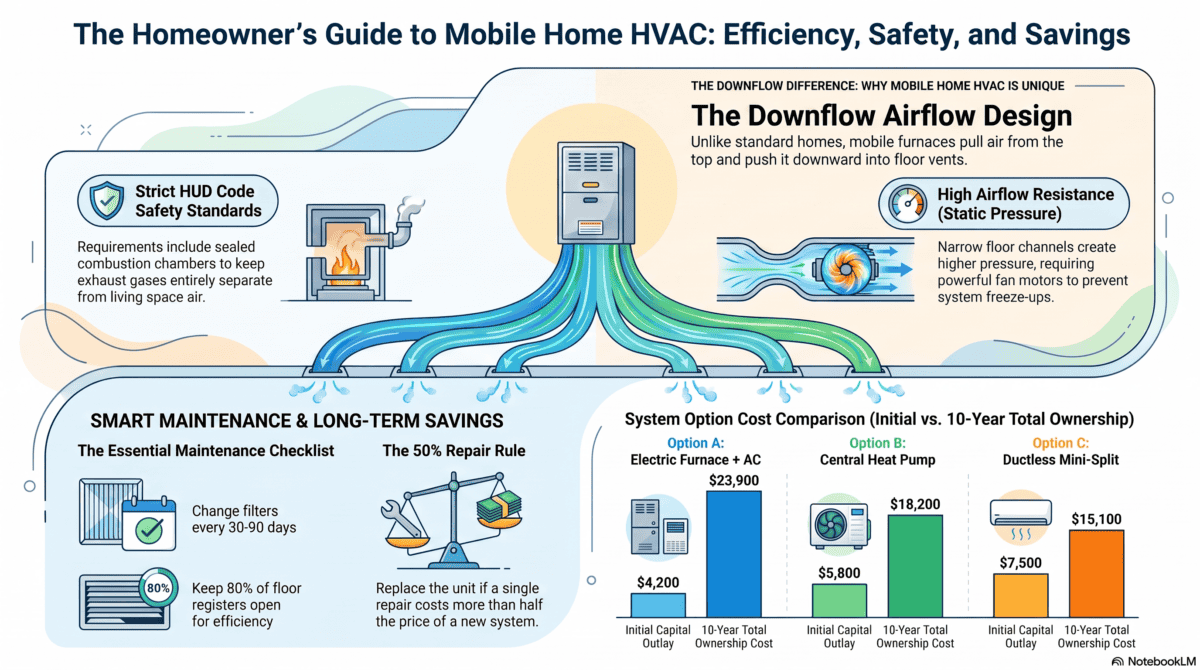
Putting a standard house furnace into a mobile home is a huge mistake. Manufactured homes follow federal HUD Code building safety rules. These rules demand compact equipment, specialized fire safety features, and custom airflow pathing. Regular house furnaces blow warm air upward into ceiling vents. Mobile homes almost always use downflow furnace designs that push air downward into narrow floor vents under the home. Installing the wrong unit can void your home insurance policy, freeze up your air conditioner, burn out fan motors, and trap dangerous gas fumes inside your living room. Learning how your unit operates protects your home and keeps your money in your bank account.
What Is an HVAC System?
An HVAC system keeps your indoor air comfortable and clean using three combined parts: heating, ventilation, and air conditioning. They work as one team to keep your home comfortable year-round.
Heating
The heating part creates warm air during chilly months using electricity, natural gas, or propane fuel. In a mobile home, this heat comes from a tall closet furnace or an outdoor heat pump, then travels into your floor vents.
Ventilation
Ventilation pulls fresh air into your home while pushing stale air, cooking odors, and excess moisture outside. Good airflow keeps your indoor air clean and stops harmful mold from growing under your subfloors.
Air Conditioning
Air conditioning does not actually create coldness. It removes heat and humidity from your indoor air. Liquid refrigerant runs through metal tubes between indoor and outdoor coils, picking up indoor heat and dumping it outdoors until your rooms cool down.
How All Three Systems Work Together
Your wall thermostat measures indoor temperature. When rooms get too hot or cold, it turns on the system. A strong central fan motor pulls room air through intake grilles, blows it across heating coils or cooling coils, and pushes it through your floor registers.
2026 HVAC Cost Transparency Table: System Basics & Components
| Category | DIY / Basic Component Cost | Pro Installed / Premium Cost |
|---|---|---|
| Digital Programmable Thermostat | $35 – $85 | $150 – $300 |
| Blower Motor Assembly | $180 – $350 | $500 – $950 |
| Standard Filter Replacements (1 Year Supply) | $40 – $80 | $100 – $180 |
Why Mobile Home HVAC Systems Are Different Than Site-Built Homes
Manufactured homes must obey strict federal HUD Code structural standards instead of local city codes. These rules account for factory construction and highway travel, which changes how air units must be built.
Factory-Built Construction
Mobile homes sit on thick steel frames built in factory settings. Structural floor beams leave small space for air channels, requiring narrow metal floor trunks instead of big overhead ducts.
Smaller Mechanical Spaces
Furnace closets in mobile homes are narrow. The furnaces built for them need compact metal frames and special wall insulation so nearby wood studs never get too hot.
HUD Code Requirements
Federal rules require fuel-burning mobile home furnaces to use sealed combustion chambers. This system pulls fresh outdoor air directly into the burner through a double-wall pipe, keeping flame gas completely away from indoor living space air.
Transportation Limitations
Equipment mounted inside or outside must survive shaking during highway delivery. Coils and internal valves are fastened tightly to prevent cracks and refrigerant gas leaks on the road.
Different Airflow Design
Regular houses use large return air vents throughout the house. Mobile homes use single central hallway return grilles and powerful fan motors to push air through tight floor vents.
Energy Efficiency Considerations
Mobile home walls and ceilings hold less fiberglass insulation than newer site-built homes. HVAC units must work efficiently to handle faster heat loss through windows and siding. Discover long-term money-saving tips at HousingAfter60.com to keep utility bills down on fixed incomes.
Technical Deep Dive: How Air Moves Through Tight Vents Without Freezing
Pushing air through a narrow metal trunk under a mobile home floor creates high air resistance. HVAC workers call this resistance static pressure, measured in inches of water column. Standard houses operate at low resistance levels around 0.50 inches, but mobile home floor vents frequently run higher, reaching 0.70 to 0.90 inches because the floor channels are narrow and long.
When air resistance gets too high, the blower fan cannot push air fast enough. An air unit meant to move 1,200 cubic feet of air per minute might drop down to 800 cubic feet. In summer, slow moving air makes the indoor cooling coil get icy cold. Water drops freeze into solid ice blocks on the metal fins, blocking airflow entirely. In winter, weak airflow lets heat build up inside the furnace cabinet, tripping safety switches and risking equipment damage.
Keeping air moving freely requires clear return paths back to the furnace fan. Bedroom doors need a gap of 1 to 1.5 inches at the bottom above carpets. This air gap allows trapped air to slide out under bedroom doors and travel back to hallway intake grilles when doors stay shut overnight.
Recommended Professional HVAC Diagnostics & Maintenance Tools
| Product Name | Key Feature / Specification | Primary Application |
|---|---|---|
| Fieldpiece SDMN2 Dual-Port Manometer | 0.01 in. w.c. resolution | Measures static pressure drops and airflow resistance across floor vents. |
| Klein Tools ET110 Carbon Monoxide Detector | 1 to 1,000 PPM range | Checks for gas leaks and exhaust safety on sealed combustion gas furnaces. |
| CPS Pro-Set Vacuum Gauge & Manometer | Heavy-duty brass manifold | Checks AC pressure levels and finds refrigerant gas leaks in cooling lines. |
The Most Common Heating and Cooling Systems Found in Mobile Homes
Picking the best system design depends on your home layout, outdoor climate, available space, and budget balance.
Package Units
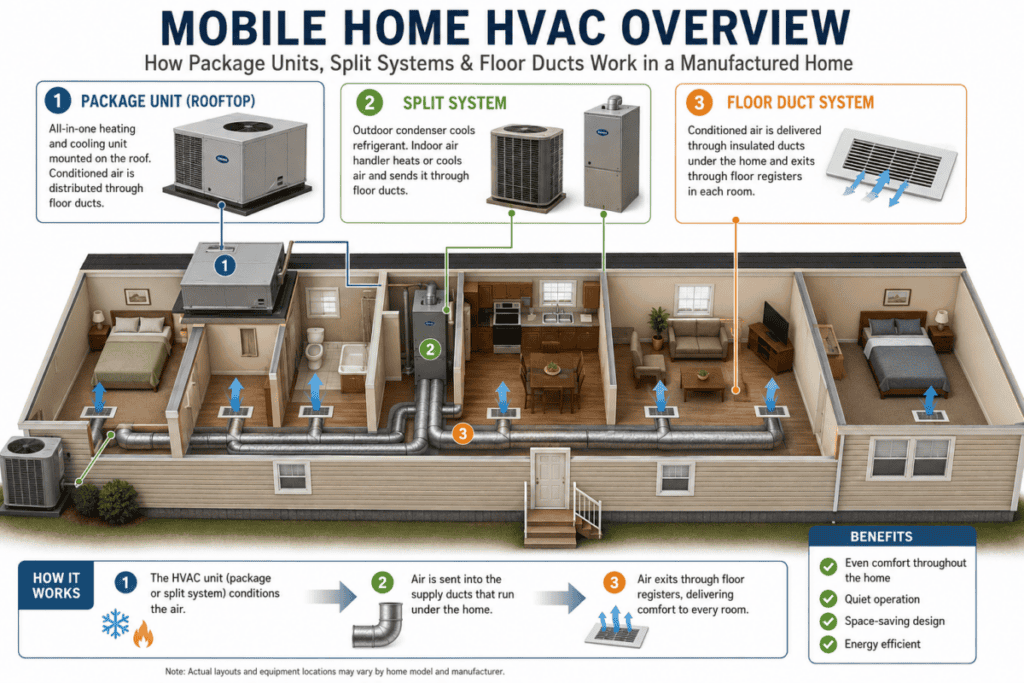
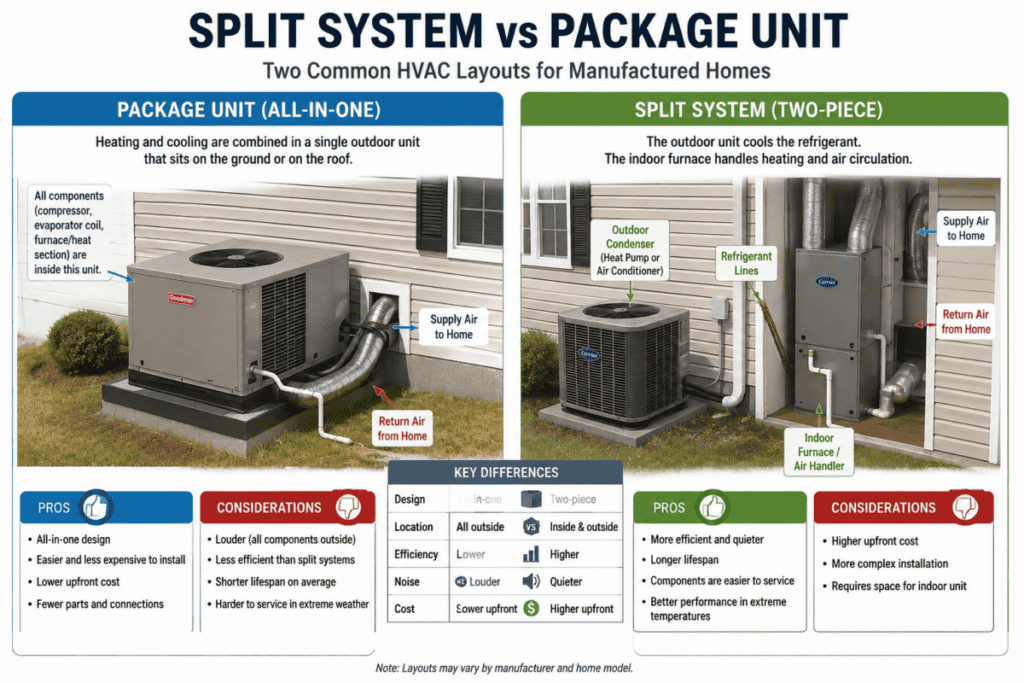
A package unit puts all working parts inside one large outdoor metal cabinet sitting next to your home foundation.
- Installation: Placed outside on a concrete pad or thick composite plastic base.
- Advantages: Keeps all mechanical motor noise outside; frees up indoor closet storage space; keeps refrigerant lines outside.
- Disadvantages: Air ducts must run under your home skirt wall, exposing air paths to outdoor cold and summer heat.
- Lifespan: Lasts roughly 10 to 14 years because the metal cabinet stays outside in the weather.
- Best Applications: Warm regions where floor space outside is open and indoor closet space is tight.
Split Systems
A split system splits working parts into two locations. An outdoor condenser unit holds the heavy motor compressor, while an indoor furnace or fan cabinet inside a hallway closet holds the cooling coil and blower fan. Copper lines carry refrigerant between both sections.
Heat Pumps
A heat pump is an air conditioner that runs backward in winter. During summer, it pulls indoor heat out and dumps it outside. During winter, an internal reversing valve changes direction, pulling outdoor heat energy out of cold outdoor air and pumping it inside your rooms.
When outdoor air drops below 35 to 40 degrees Fahrenheit, heat pumps lose some heating power. The unit then switches on backup electric heating coils inside the hallway unit to keep your home warm. Heat pumps work great in moderate climates like Arizona, where hard winter freezes rarely happen.
Electric Furnaces
Electric furnaces warm homes by running high electrical power through thick metal resistance coils (usually rated between 10 kW and 20 kW). A blower fan pushes room air across these hot metal coils into floor vents. They are simple to install but draw heavy electricity, making monthly electric bills expensive in cold states.
Gas Furnaces
Gas furnaces run on natural gas or liquid propane fuel. Mobile home gas units must use a sealed combustion design that pulls outdoor air in for burner flames and pushes exhaust gases out roof vents safely. Gas conversion kits are required when switching between natural gas and propane tanks.
Mini-Split Systems
Ductless mini-splits use a small outdoor unit connected by narrow copper lines to compact air blower boxes mounted high on interior walls. They skip floor ducting entirely, providing excellent room-by-room temperature control. They work great for room additions, older homes with crushed belly ducts, or extra cooling needs.
10-Year ROI & Net Worth Trajectory Analysis: System Choice Financial Impact
The type of system you choose makes a massive difference to your bank account over ten years. Here is a clear ten-year cost comparison for a 1,200-square-foot mobile home using average electricity prices of $0.16 per kWh.
10-Year Net Worth Trajectory & Energy ROI Comparison
| Option Type | Initial Capital Outlay | Avg. Annual Operating Cost | 10-Year Maintenance Cost | 10-Year Total Ownership Cost |
|---|---|---|---|---|
| Option A: 14 SEER2 Electric Furnace + Standard AC | $4,200 | $1,850 | $1,200 | $23,900 |
| Option B: 15.2 SEER2 Central Heat Pump System | $5,800 | $1,100 | $1,400 | $18,200 |
| Option C: 20 SEER2 Multi-Zone Ductless Mini-Split | $7,500 | $680 | $800 | $15,100 |
Option C costs $3,300 more up front than Option A, but saves you $8,800 overall over ten years. Avoiding heat loss from leaky belly ducts keeps real cash in your wallet. For useful long-term savings tips for senior homeowners, check the retirement planning guides on MobileHomeFriend.com.
Understanding Downflow Furnaces
Downflow furnaces are built specifically to fit mobile home floor vent layouts.
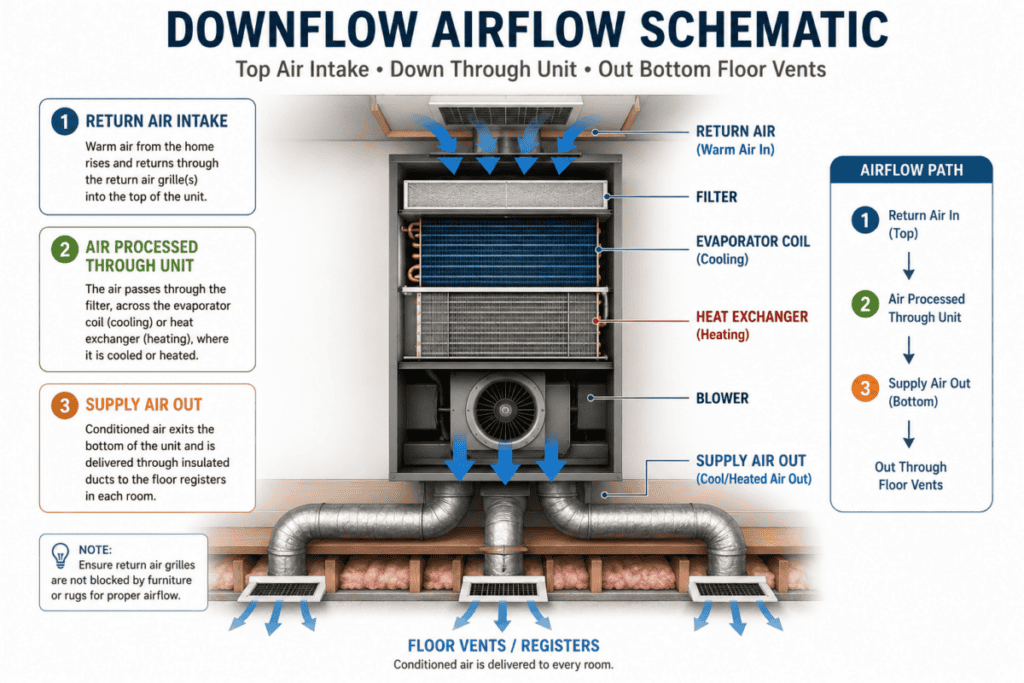
Standard house furnaces draw room air from floor level and blow warm air up into ceiling attic ducts. Mobile homes need the exact opposite path. A downflow furnace draws room air into top louvers, passes it downward across hot heating coils or cold AC coils, and pushes it out through the cabinet bottom directly into floor vents.
Installing an upflow furnace inside a narrow mobile home closet creates severe fire hazards and breaks safety codes. New replacement units must carry an official HUD-listed safety approval tag proving zero-clearance wall safety ratings and direct vent safety.
Understanding Mobile Home Ductwork
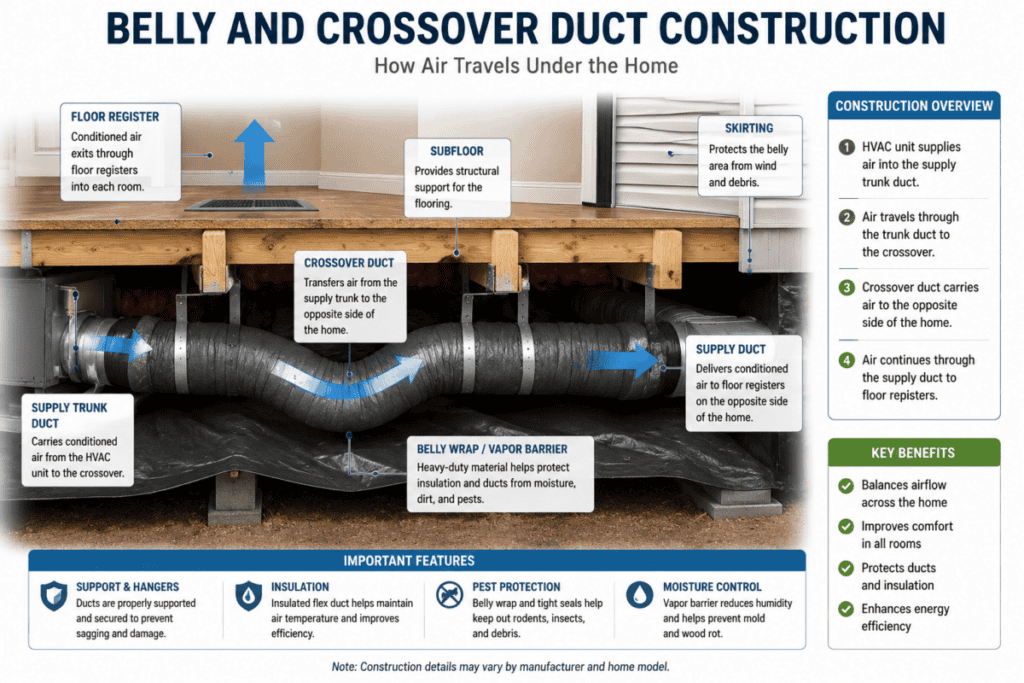
Mobile home ducts sit hidden under your subfloor boards inside the underbelly space.
The main air trunk runs straight down the middle of the home inside the insulated belly board cavity. Floor registers branch off this central trunk into bedrooms and living spaces. Double-wide homes use a thick flexible duct called a crossover duct to carry air from the furnace side across to the second home section.
Duct leaks in the belly board are the single biggest cause of high electric bills. Torn fabric wrap, disconnected crossover tubes, or loose vent connections dump cold air under the dirt crawlspace while pulling muggy, dusty crawlspace air straight into your home.
2026 HVAC Cost Transparency Table: Ductwork & Installation
| Category | DIY / Materials Only | Professional Contractor Cost |
|---|---|---|
| Flexible Crossover Duct Replacement | $85 – $160 | $350 – $650 |
| Belly Board Patching & Duct Mastic Sealing | $50 – $120 | $400 – $900 |
| Complete Mobile Home Duct System Rebuild | $600 – $1,100 | $2,200 – $4,500 |
Technical Deep Dive: Safe Gas Venting and Gas Pipe Sizing
Tightly built mobile homes require complete isolation between indoor living space air and furnace burner flames. Regular house furnaces pull room air directly to feed gas flames. Inside a tight mobile home, pulling room air creates low pressure that can suck dangerous carbon monoxide exhaust gases back into bedrooms, causing severe health risks.
HUD safety rules require sealed combustion gas furnaces for all mobile home gas installations. These units intake outside air through a dedicated outer pipe, feed the sealed burner box safely, and vent dangerous exhaust smoke out an inner pipe roof jack. Living space air never touches the fire flame chamber.
Gas pipes must also be sized correctly to avoid fuel pressure drops. Natural gas runs at a low pressure around 7 inches of water column, while liquid propane runs at 11 inches of water column. Using long, undersized gas pipes (like a small 1/2-inch pipe over 50 feet) starves the furnace of fuel when water heaters or gas stoves run at the same time. Fuel starvation causes noisy popping, soot buildup, and ruined heat exchangers. Always hire an experienced tech to install correct burner orifices when changing gas types.
How Thermostats Control Your HVAC System
Thermostats measure indoor temperatures and send low-voltage power signals (usually 24 volts AC) to turn heating and cooling components on or off.
Mechanical Thermostats
Old mechanical thermostats use coiled metal strips or mercury tubes to close electrical contacts when room air warms up or cools down. They are imprecise and cause wide temperature swings before turning equipment on.
Programmable Thermostats
Programmable units let you set automatic schedule changes for daytime work hours and sleeping hours, helping cut electric costs when you are away from home.
Smart Thermostats
Smart thermostats connect to home Wi-Fi networks, letting you adjust home temperatures using smartphone apps from anywhere. They track usage habits and save energy automatically.
Can Any Thermostat Be Used?
No. Standard store-bought thermostats do not always work on mobile home heat pumps. Heat pumps need thermostats with special Auxiliary/Emergency Heat connections (marked AUX or E). Using a basic air conditioner thermostat on a heat pump can freeze up coils or lock backup heat strips on continuously, skyrocketing your electric bill.
What Size HVAC System Does a Mobile Home Need?
Getting the right unit size (measured in tons or BTUs) is key to keeping air comfortable and protecting equipment life.
Why Bigger Isn’t Better
Buying an oversized AC unit causes short cycling: the unit cools room air so fast that it turns off in just five minutes. Short cycling stops the system from running long enough to pull humidity out of the air, leaving rooms feeling damp, cold, and sticky while wearing out electric switches quickly.
How Sizing Is Determined
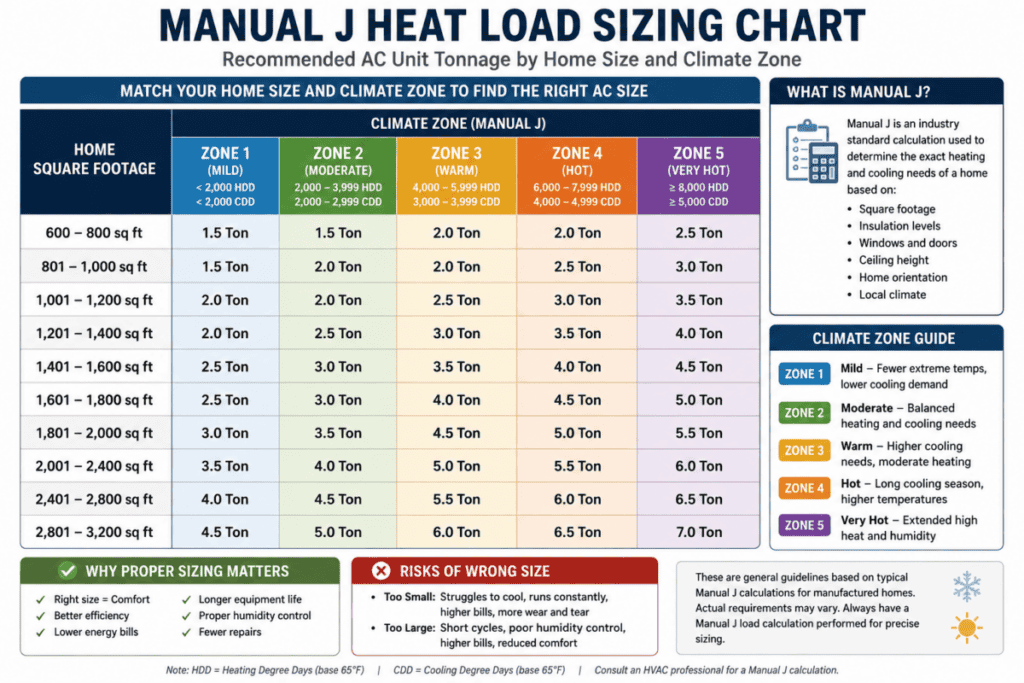
AC size should never be guessed using rough square footage rules. Proper sizing needs a real ACCA Manual J Heat Load Calculation, which measures home heat gain and loss using real structural details.
Factors Affecting Sizing
Key details measured in a Manual J check include:
- Square Footage: Total interior floor area.
- Climate Zone: Local summer heat and winter cold extremes.
- Insulation Ratings: Wall, floor, and ceiling R-values.
- Window Area & Orientation: Total window glass area and sun direction exposure.
- Air Leakage Rates: Air gaps around doors, marriage lines, and floor vents.
- Occupancy: Total people living in the home and heat-producing appliances.
How Long Do Mobile Home HVAC Systems Last?
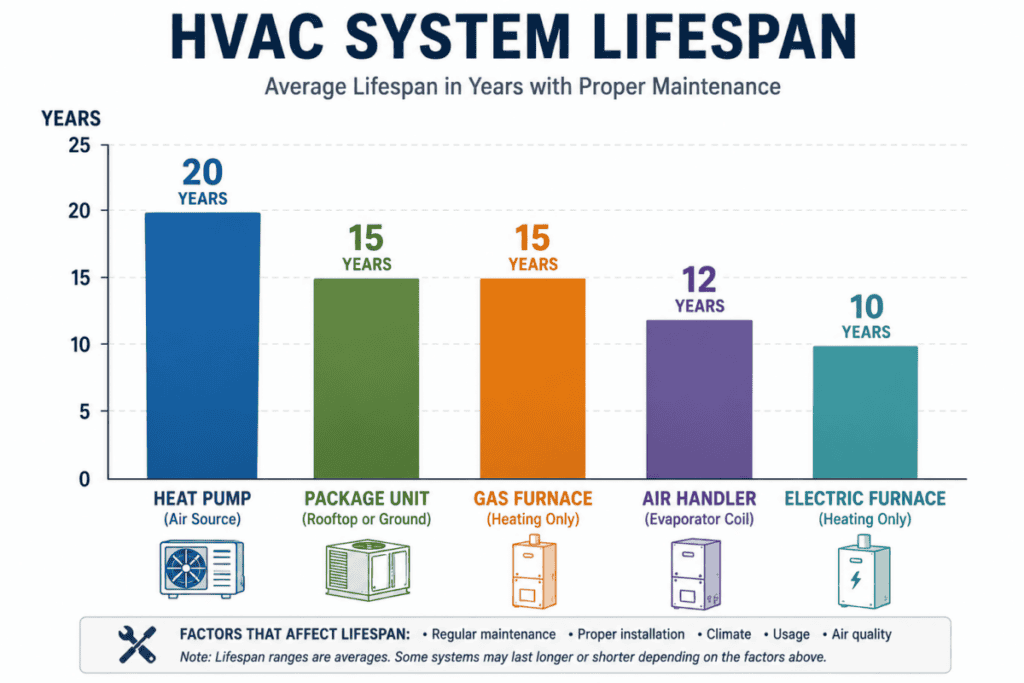
System lifespan depends on local weather conditions, installation quality, and routine filter cleaning frequency.
Average HVAC Lifespan Expectations by System Type
| System Architecture | Average Service Lifespan | Primary Failure Modes |
|---|---|---|
| Package Units | 10 – 13 Years | Outdoor metal cabinet rust, coil corrosion, compressor failure. |
| Split System Air Conditioners | 12 – 15 Years | Refrigerant gas leaks in indoor coils, burnt electrical points. |
| Heat Pumps | 11 – 14 Years | Reversing valve failure, long year-round run hours wearing out compressors. |
| Electric Furnaces | 15 – 20 Years | Burnt Sequencer switches, broken heating coils. |
| Gas Furnaces | 15 – 18 Years | Cracked heat metal, failed exhaust fan motors. |
| Mini-Split Systems | 12 – 16 Years | Circuit board failures, dusty indoor fan wheel clogging. |
Signs Your HVAC System May Be Failing
Catching system problems early prevents minor electrical breaks from burning out expensive motor compressors.
Poor Airflow
Weak air blowing out of floor registers points to failing fan motors, crushed crossover ducts under the home, or iced-over cooling coils.
Hot and Cold Rooms
Temperature differences between rooms signal air leaks in underbelly ducts, blocked vents, or incorrect unit sizing.
High Electric Bills
Sudden spikes in power bills often mean heat pumps are running constantly on expensive emergency heat strips because refrigerant levels are low.
Short Cycling
An AC unit that turns on and off every few minutes points to an oversized unit, failing pressure safety switches, or bad thermostat wiring.
Loud Noises
Squealing, grinding, or loud metallic banging noises signal failing motor bearings, bent fan blades, or damaged internal compressor valves.
Frequent Repairs
Calling repair technicians multiple times in one season means system parts are worn out and reaching the end of their usable life.
Humidity Problems
Persistent damp indoor air, window sweat, or musty odors indicate short run cycles or air leaks under the belly wrap.
2026 HVAC Cost Transparency Table: Common Pro Repairs
| Repair Job Description | DIY Part Cost | Pro Repair Total Cost |
|---|---|---|
| Dual Run Capacitor Replacement | $20 – $45 | $150 – $275 |
| Furnace Sequencer or Contactor Relay | $30 – $70 | $180 – $320 |
| Refrigerant Recharge (R-410A / R-32 leak repair extra) | N/A (EPA Certified) | $300 – $750 |
***
Technical Deep Dive: Fixing Electrical Breaks and Testing Capacitors
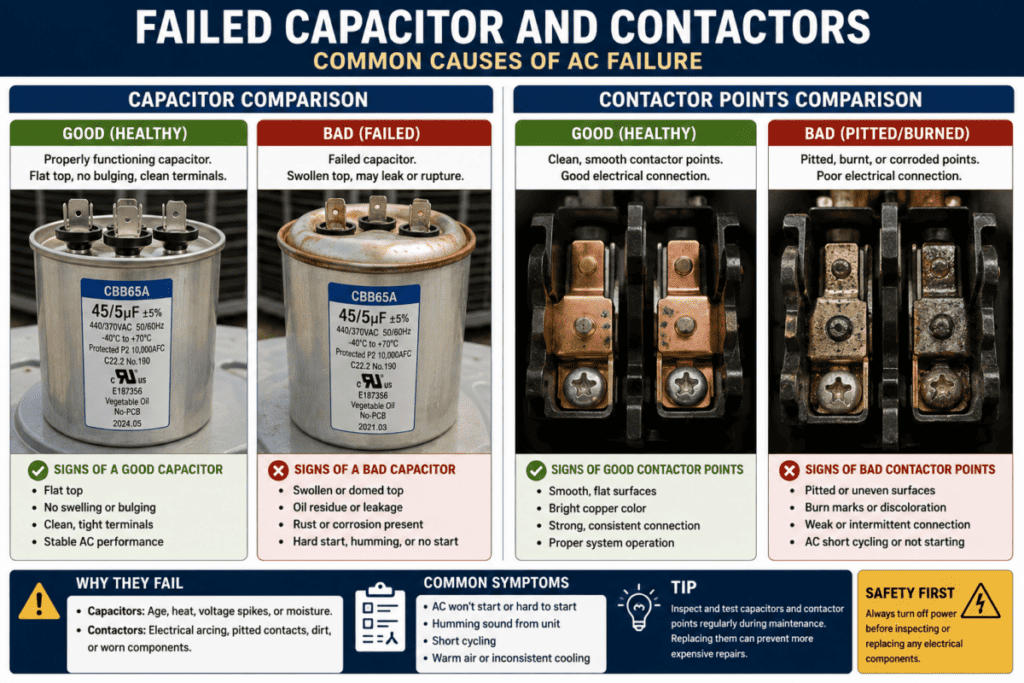
Electrical issues cause over 60% of sudden HVAC breakdowns. The most common broken part in cooling systems is the dual run capacitor. Capacitors hold electrical energy to give compressor and fan motors the strong extra boost needed to start up. They are measured in microfarads (µF) with tight working limits, usually within ±5% of their printed number (such as 45/5 µF).
Hot summer sun heating up outdoor metal electrical boxes stresses capacitors hard. As internal oil breaks down, microfarad strength drops below safe levels. When a capacitor drops more than 10% below its rating, the heavy compressor motor struggles to start, drawing high starting power amperage (LRA). This heat causes motor wires to melt, tripping main circuit breakers or burning out the main compressor motor entirely.
Testing electrical parts requires careful safety steps. Turn off main circuit breakers at both the outdoor wall disconnect box and indoor breaker panel. Discharge remaining capacitor power safely using a 20,000-ohm resistor across terminals before touching wire leads. Use a digital multimeter set to capacitance mode (µF) to test terminal connections. If numbers read lower than the stamped label, replace the capacitor right away with the exact same microfarad rating to protect your compressor. ***
Common Mobile Home HVAC Problems
Knowing common failure points helps you fix simple issues before they turn into complete system breakdowns.
Frozen Evaporator Coils
Ice forming on cooling coils happens when air gets blocked (dirty filters, closed vents) or when refrigerant leaks out of copper lines.
Dirty Filters
Clogged air filters choke off return airflow, overheating furnaces in winter, freezing cooling coils in summer, and burning out fan motors.
Leaking Ducts
Torn underbelly fabric and disconnected flexible crossover ducts waste warm or cool air under the home while pulling dirt and damp air inside.
Bad Capacitors
Weak capacitors stop outdoor fans and heavy compressors from turning on, causing loud hums and tripped electric switches.
Failed Blower Motors
Hallway fan motors fail over time from thick dust buildup, dry bearings, or pushing air against restrictive high-pressure duct systems.
Low Refrigerant
Refrigerant gas runs inside a permanently sealed loop. Low gas pressure means you have a physical hole or crack that must be soldered shut before adding new gas.
Heat Strip Failures
Overworked electric heating coils can snap or burn out electric sequencer switches, leaving your home without heat during winter freezes.
Thermostat Issues
Loose wire screws, incorrect switch settings, or dead AA batteries can stop wall thermostats from sending power signals to your furnace.
Maintenance Every Homeowner Should Perform
Simple routine care keeps your system running efficiently, lowers monthly utility bills, and adds years of life to your equipment.
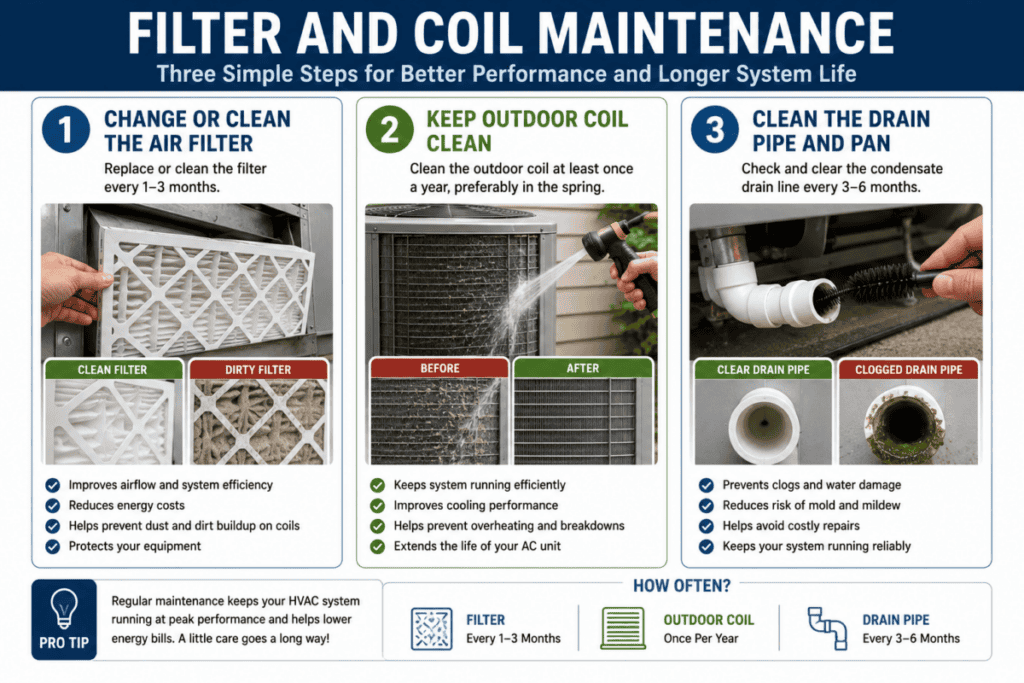
Changing Filters
Check indoor return filters monthly and swap them out every 30 to 90 days. Avoid thick, high-MERV filters (above MERV 8) unless your fan motor is specifically designed for thick air resistance.
Cleaning Outdoor Coils
Clear grass clips, dirt, and leaves away from outdoor coils. Rinse dirt off metal fins once a year using a low-pressure garden hose spraying from the inside outward.
Keeping Vents Open
Keep at least 80% of floor registers open throughout your home. Closing too many vents builds up high air pressure inside floor trunks, cutting overall airflow efficiency.
Checking Condensate Drains
Pour one cup of plain white vinegar down indoor drain lines once a year to clear out algae slime and prevent water drain overflows into subfloor wood.
Annual Inspections
Book an annual checkup with a technician before summer or winter starts to test wire connections, check gas safety pressure, and verify refrigerant levels.
Keeping Vegetation Away from Equipment
Keep plants, weeds, and wood piles at least 24 inches away from all sides of your outdoor AC unit to allow free air intake.
Should You Repair or Replace Your HVAC System?
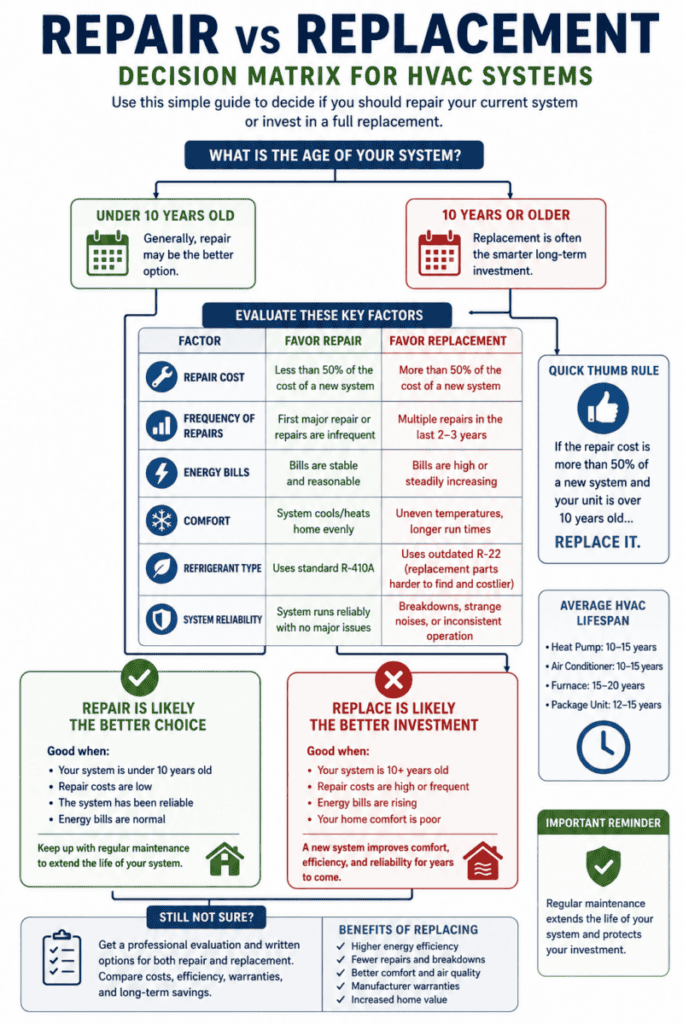
Deciding between fixing an old unit or replacing it comes down to equipment age, repair history, and monthly electric costs.
Follow the simple 50% Repair Rule: if a single repair bill costs more than 50% of the price of a brand-new unit, or if multiplying system age by the repair estimate equals more than $5,000, replacing the old unit is the smarter long-term financial move.
Replacing an old 10 SEER unit with a modern 15+ SEER2 energy-efficient heat pump provides immediate monthly power bill savings and far better indoor air comfort. Review housing budget strategies and senior home care resources at HousingAfter60.com.
Frequently Asked Questions
Can I install a regular house furnace in a mobile home?
No. Regular house furnaces lack required HUD safety stamps, zero-clearance wall insulation, and correct downflow air setups. Installing unapproved units creates fire hazards and voids home insurance.
What is a downflow furnace?
A downflow furnace pulls room air into top vents, heats or cools it inside the metal cabinet, and pushes it downward out the bottom into floor air ducts.
Is a heat pump worth it in a mobile home?
Yes. Heat pumps are extremely efficient in mild to moderate weather zones, delivering up to three times more heat energy than the electricity they draw.
Are package units reliable?
Yes. Package units offer reliable cooling performance and keep motor noise outside your hallway, though outdoor exposure requires routine cabinet coil cleaning.
Can I upgrade to a higher-efficiency system?
Yes, as long as your floor vents are sealed and your blower fan can handle the required airflow volume of modern high-efficiency units.
Can I add central air if my home doesn’t have it?
Yes, provided your furnace cabinet has space for an AC cooling coil and your electric breaker panel has enough open capacity (usually requiring a 100 to 200-amp main panel).
How often should filters be changed?
Check filters monthly and replace them every 30 to 90 days, or more often if you have shedding house pets or dusty outdoor surroundings.
Should I cover my outdoor unit in winter?
Never cover active heat pumps in winter because they must draw outdoor air to heat your home. Straight-cool AC units can use a breathable top cover to keep falling leaves and ice out of fan blades.
Key Takeaways
- Mobile home HVAC units need special ratings: Equipment must carry official HUD approval tags and match downflow floor vent setups.
- Match equipment designs to your layout: Pick package units to save indoor closet space, split systems for quiet running, or ductless mini-splits for targeted room control.
- Size units correctly with Manual J calculations: Avoid guessing unit sizes to prevent short run cycles, damp indoor humidity, and high power bills.
- Keep underbelly ducts sealed tight: Patch torn belly wrap and seal flexible crossover tubes to stop wasting money under your floorboards.
- Perform basic routine maintenance: Simple filter changes and yearly coil washing keep power bills low and add years of life to your equipment.
Actionable Mobile Home HVAC Maintenance Checklist
- Monthly: Check return air filters; replace immediately if dust or pet hair coats the filter mesh.
- Bi-Monthly: Look under your home skirt wall for sagging belly board canvas, water drips, or loose crossover duct connections.
- Quarterly: Pull weeds and clear trash away from outdoor AC cabinets, keeping 24 inches of clear space.
- Bi-Annually: Pour a cup of white vinegar down indoor AC condensate drain lines to clear out line algae.
- Annually (Spring): Rinse dirt off outdoor condenser metal fins using a low-pressure garden hose before turning cooling on.
- Annually (Fall): Check roof furnace flue vent caps to make sure exhaust pipes stay clear of bird nests and leaves.
Related Helpful Articles
About Charles O’Dell
Charles O’Dell is the founder of MobileHomeFriend.com and a real estate investor with over 23 years of practical property experience. Over his career, he has purchased, renovated, and managed more than 100 manufactured homes and single-family properties. Charles focuses on clear, practical repair solutions, structural upkeep, and smart equipment choices for manufactured home owners.
Written by Charles O’Dell, a manufactured housing investor with 23+ years of experience and over 100 successful property renovations.