
Table of Contents
Introduction
Summary: Maximizing resale returns on a manufactured home requires a strict focus on low-cost, high-impact improvements rather than expensive structural overhauls. Manufactured housing operates under strict appraisal ceilings driven by park rules, age, and comparable neighborhood sales. Over-improving a home on leased land rarely yields a dollar-for-dollar return. By prioritizing core structural maintenance first, followed by high-visibility cosmetic updates like paint, LVP flooring, cabinet hardware, and curb appeal, owners secure top-market positioning without burning capital. Note: Local labor rates for budget upgrades change constantly. See our full regional cost table below.
Affiliate Disclosure: This article contains affiliate links to vetted renovation tools and materials. If you purchase through these links, Mobile Home Friend may earn a small commission at no additional cost to you.
Video Guide Overview
The Short Answer: How to Boost Mobile Home Equity Fast
Increasing the value of a mobile home requires strict discipline. Do not copy traditional site-built real estate strategies. Manufactured homes have a firm financial ceiling dictated by land ownership status, home age, and park comps. Spending $30,000 on a luxury kitchen remodel in a home worth $45,000 on a leased lot is financial suicide. You will lose money every single time.
The shortest path to maximizing your equity is fixing hidden structural defects first, then executing low-cost, high-contrast cosmetic updates. Buyers buy with their eyes, but home inspectors kill deals with their flashlights. Clean up your subfloors, stop roof leaks, install fresh neutral interior paint, put down resilient Luxury Vinyl Plank (LVP) flooring, and clean the exterior. These targeted fixes deliver a maximum return on investment (ROI) by keeping your total capital outlay well below the local market appraisal cap.
What Actually Determines a Mobile Home’s Value?
Value in the manufactured housing sector is split into two distinct categories: non-negotiable structural realities and controllable cosmetic factors. Understanding the difference prevents costly financial mistakes.
Factors You Cannot Easily Change
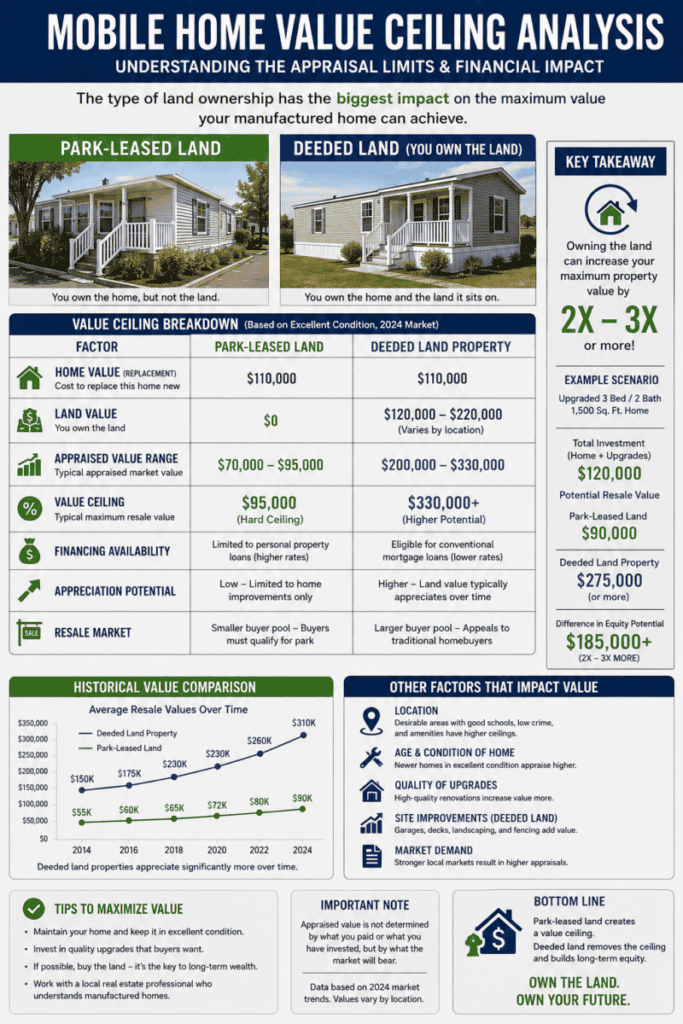
The physical location of your home is the single largest driver of value. A double-wide situated on a private half-acre parcel with deeded land will appreciate similarly to site-built housing. The same double-wide located inside an age-restricted park with high lot rent operates under a strict valuation cap. Local market conditions, lot leases, park management rules, and the age of the unit set the absolute ceiling for what any buyer or appraiser will pay.
Factors You Can Improve
You control the physical presentation, maintenance state, and modern appeal of the home. Visual cleanliness, modern finishes, energy efficiency, and pristine curb appeal dictate whether your unit sells at the top or bottom of its specific bracket. The goal is to elevate your property to the highest price point allowed by your local park or neighborhood without exceeding it.
2026 Cost Transparency Table: Valuation Factors
| Valuation Category | DIY / Basic Strategy | Pro / Premium Strategy |
|---|---|---|
| Deferred Maintenance Fixes | $150 – $600 (Self-patching roofs, minor plumbing) | $1,200 – $4,500 (Pro belly seal, subfloor repair) |
| Interior Surface Updates | $300 – $900 (Self-painting walls & cabinets) | $2,500 – $6,000 (Full pro spray paint package) |
| Flooring Overhauls | $1.50 – $3.00/sq.ft. (Self-installed LVP) | $4.50 – $8.00/sq.ft. (Pro subfloor leveling & LVP) |
| Curb Appeal Refinishing | $100 – $400 (Power washing, door paint, mulch) | $1,500 – $3,500 (New vinyl skirting, pro landscaping) |
Before Spending Any Money: Fix Deferred Maintenance First
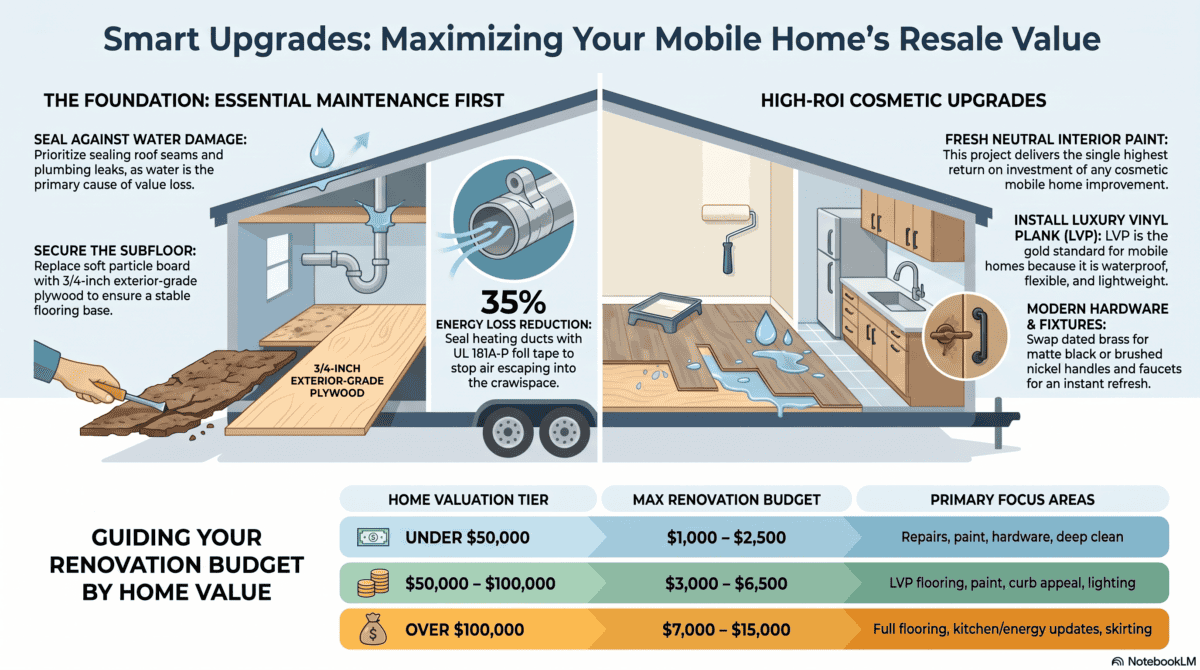
Never put cosmetic finishes over active structural failure. Installing expensive floating floors over soft particle board is a complete waste of capital. Home buyers and inspectors will immediately flag underlying damage, forcing costly price concessions during escrow.
- Roof Leaks: Water destroys mobile homes faster than any other element. Seal all seams, vents, and flashings using elastomeric coatings or repair damaged metal/shingle roofs before touching interior drywall or ceiling panels.
- Plumbing Leaks: Older manufactured units often feature Polybutylene piping or aging PEX systems. Address slow leaks under sinks, around toilets, and near the water heater closet instantly.
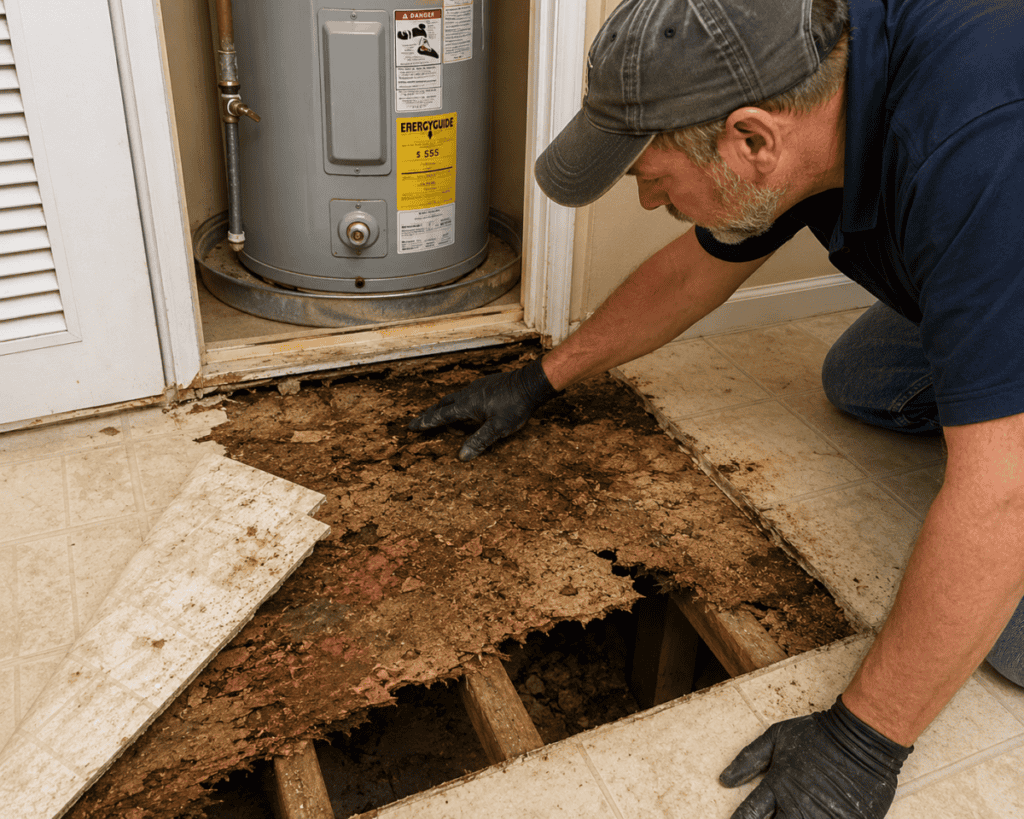
- Soft Floors: Mobile home subfloors are historically built using particle board, which disintegrates when wet. Cut out damaged sections and patch them with 3/4-inch exterior-grade plywood or OSB before installing new surface flooring.
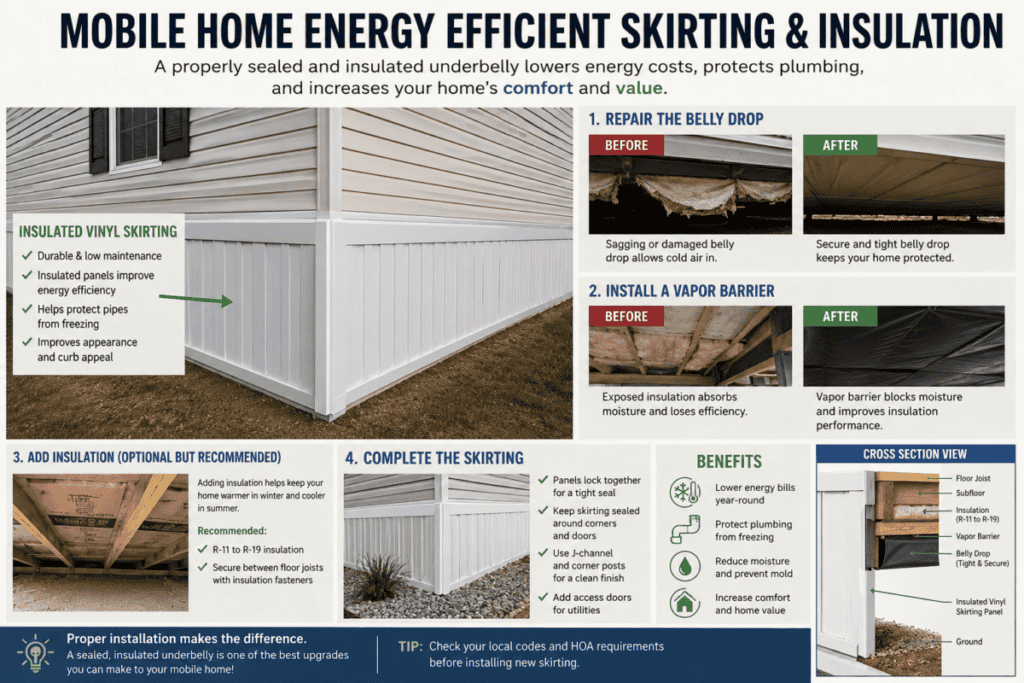
- Rotten Siding and Skirting: Damaged exterior wood, lap siding, or cracked vinyl skirting allows rodents and moisture into the belly cavity, destroying insulation and heating ducts.
- HVAC and Electrical: Verify furnace efficiency, clean condenser coils, and correct exposed wiring or outdated fuse boxes. Functional climate control is a non-negotiable requirement for buyers.
Technical Deep Dive: Subfloor Remediation and Structural Load Transfer
Particle board subfloors are the single greatest structural vulnerability in vintage manufactured housing built prior to modern HUD standards. When exposed to plumbing leaks, roof drips, or high ambient humidity inside the belly cavity, wood fibers lose their resin bond, resulting in severe compression failure (soft spots). Attempting to bridge damaged particle board using floating Luxury Vinyl Plank (LVP) or laminate without structural remediation leads to joint failure, floor squeaks, and total mechanical breakdown of the locking systems under foot traffic.
Proper remediation requires cutting out the compromised board back to the center of the structural floor joists, which are typically spaced 16 inches or 24 inches on-center. Use a circular saw set precisely to 5/8-inch or 3/4-inch blade depth to avoid cutting into the vapor barrier, heating ducts, or PEX supply lines running directly below the deck. Secure 2×4 blocking along exposed joist edges using 3-inch framing screws to create full perimeter support for the patch. Install 3/4-inch tongue-and-groove CDX plywood or exterior-grade OSB, securing it with construction adhesive and 2-inch ring-shank nails or deck screws driven every 6 inches along the perimeter. Proper structural load transfer eliminates vertical deflection, ensuring your new finish flooring remains perfectly level for decades.
Top 15 Budget Upgrades Ranked for Maximum ROI
Upgrade #1: Fresh Interior Paint
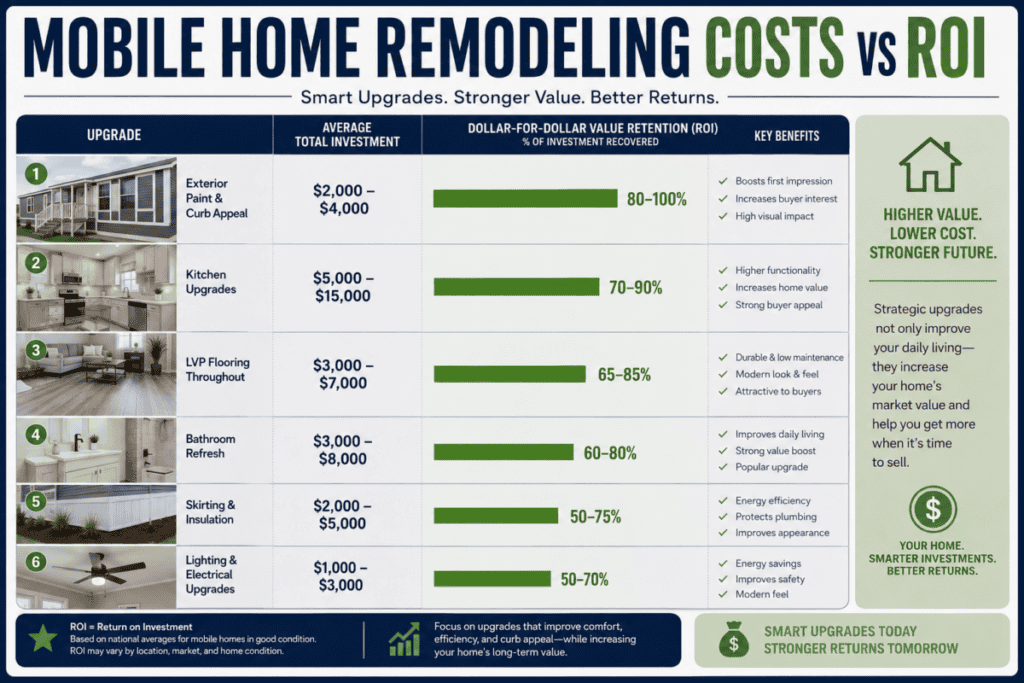
Fresh paint delivers the single highest return on investment of any cosmetic project. Older manufactured home walls feature pre-finished vinyl panels with batten strips that make rooms feel dated, dark, and cheap. A proper paint application brightens space, eliminates lingering smells, and unifies layout transitions.
Stick strictly to light, highly marketable neutral tones: warm white, soft beige, light gray, or greige. Avoid stark cold whites or dark accent walls that make small rooms feel claustrophobic. Clean vinyl walls with trisodium phosphate (TSP), prime with a high-adhesion stain-blocking primer like Zinnser BIN or Kilz, and finish with a durable eggshell or satin latex paint. Expect to spend $200 to $500 for DIY materials, or $1,500 to $3,500 for professional execution, yielding a massive impact on perceived market value.
Upgrade #2: Replace Flooring
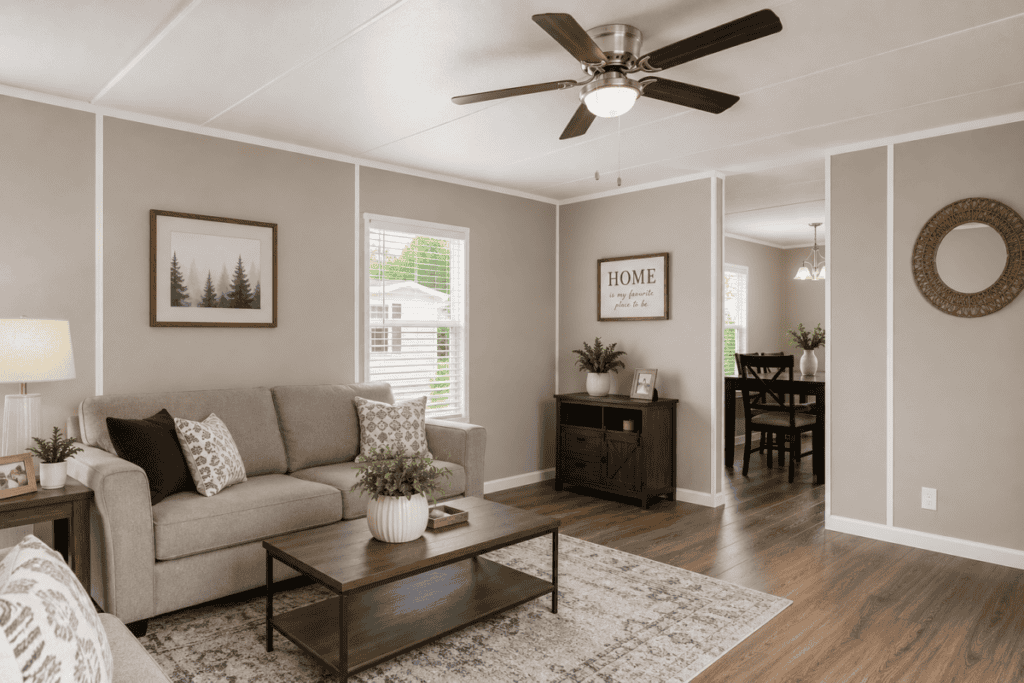
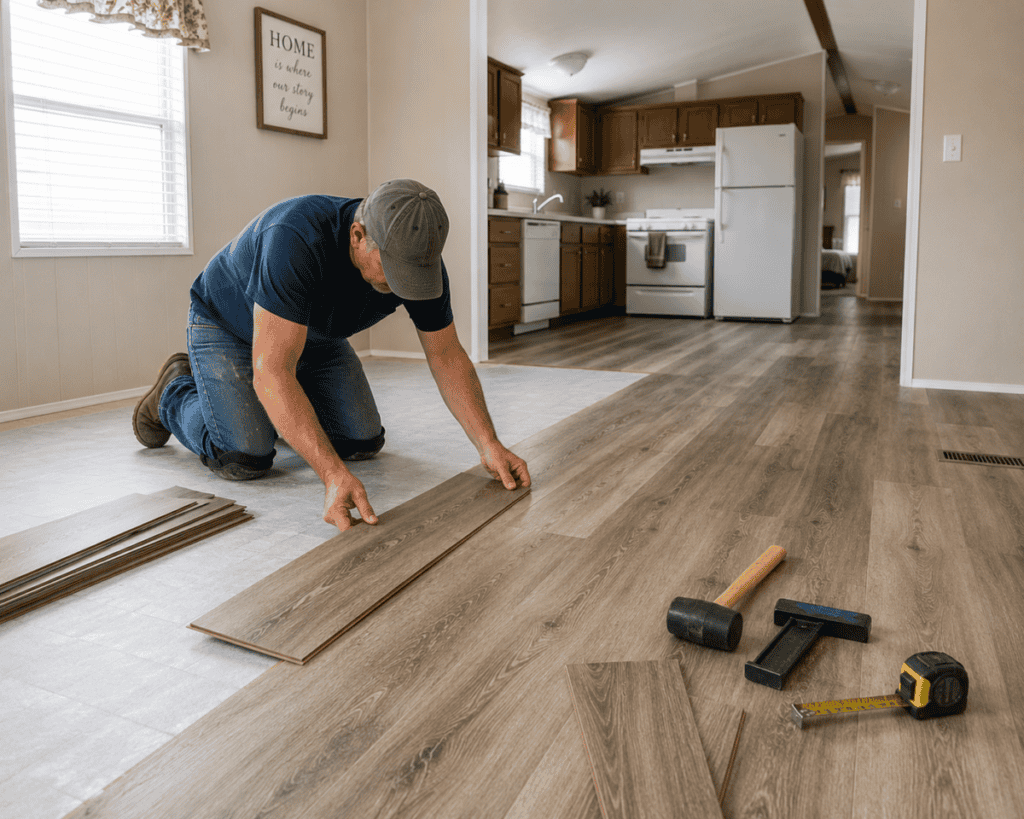
Worn, stained carpet or dated linoleum instantly drops a buyer’s offer price. Modern buyers want continuous, hard-surface flooring throughout the main living areas to maximize visual space and ensure easy cleaning.
The gold standard budget material for mobile homes is Luxury Vinyl Plank (LVP) with a minimum 12-mil wear layer. LVP is 100% waterproof, flexible enough to handle minor structural shifts inherent to manufactured homes, and lightweight. Avoid heavy real hardwood or ceramic tile, which add excessive dead weight to chassis beams and crack when the home settles. Budget approximately $1.50 to $3.50 per square foot for quality click-lock LVP materials. Installing it yourself across an 1,100-square-foot home costs under $2,500, while adding thousands to the home’s final valuation.
Upgrade #3: Update Cabinet Hardware
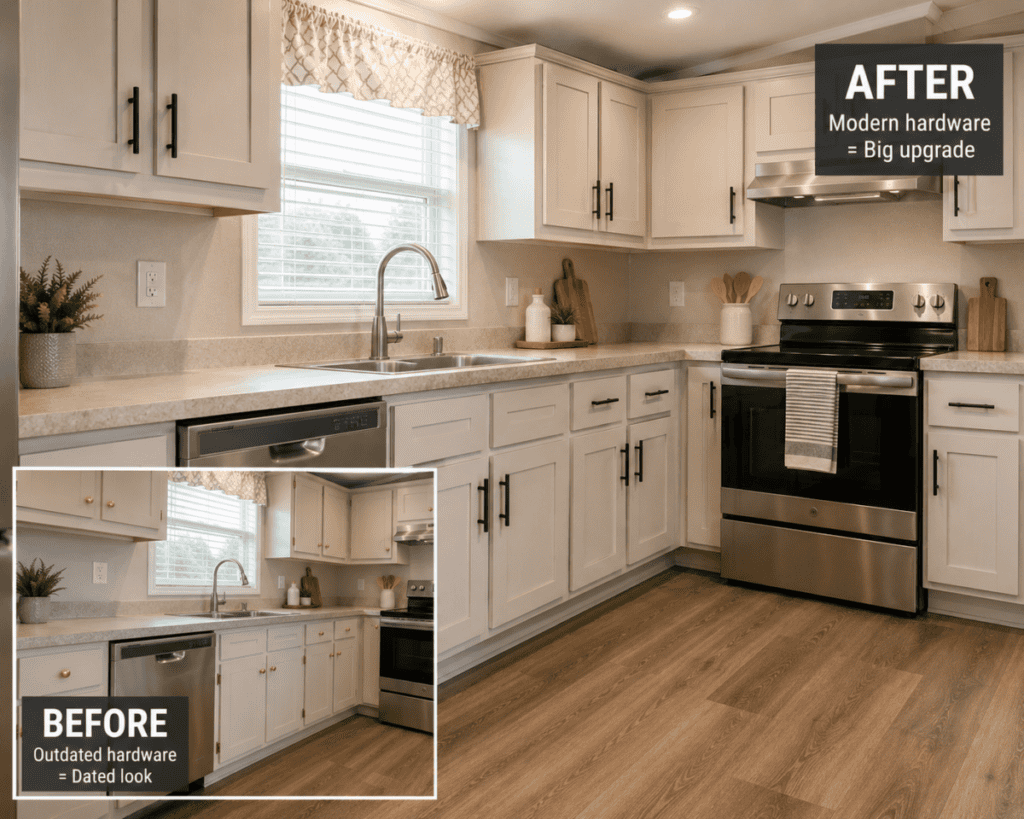
Original mobile home cabinet doors often lack external pull handles, forcing occupants to pull directly on wood edges, leading to finish wear. Installing modern cabinet knobs and pulls is one of the fastest ways to update kitchens and bathrooms without expensive cabinet replacement.
Choose modern styles such as matte black bar pulls, brushed nickel handles, or minimalist oil-rubbed bronze knobs. Use an inexpensive plastic drill template to maintain precise hole alignment across all doors and drawers. Purchasing multi-packs online keeps total material costs between $30 and $100 for the entire home, making this a top-tier micro-investment.
Upgrade #4: Replace Light Fixtures
Outdated brass, generic glass mushroom dome lights, and yellowed plastic covers instantly signal an unmaintained home. Modern lighting dramatically improves indoor photos, which are critical for driving online buyer interest.
Replace main area lighting with flush-mount LED fixtures, update dining areas with clean transitional chandeliers, and install modern vanity lights in bathrooms. Stick to energy-efficient LED technology with a warm color temperature of 2700K to 3000K to avoid harsh blue tones. Replacing 6 to 10 fixtures costs approximately $150 to $450 in DIY materials, completely changing the interior ambiance.
Recommended Renovation Tools and Tech
| Product / Tool | Primary Application | Key Technical Benefit |
|---|---|---|
| High-Adhesion Stain-Blocking Primer | Interior Vinyl Wall Panels | Bonds directly to slick vinyl wall coatings without peeling or flashing. |
| Click-Lock LVP (12+ Mil Wear Layer) | Whole-Home Flooring | Waterproof, flexible joint system engineered to withstand minor floor flexing. |
| Digital Programmable Thermostat | HVAC Efficiency Update | Reduces monthly heating and cooling energy expenses by up to 15%. |
Upgrade #5: Modern Faucets and Plumbing Fixtures
Old plastic chrome-look faucets found in factory-standard mobile homes scratch easily and leak at internal plastic stems. Upgrading to solid metal residential fixtures immediately upgrades perceived quality.
Select high-arc kitchen pull-down faucets and sleek dual-handle bathroom fixtures in brushed nickel or matte black finishes. Ensure the undersink supply lines match manufactured home connections, using 1/2-inch female swivel shanks or adapter fittings where necessary. Expect to spend $120 to $350 for high-quality fixtures across all sinks.
Upgrade #6: Improve Curb Appeal
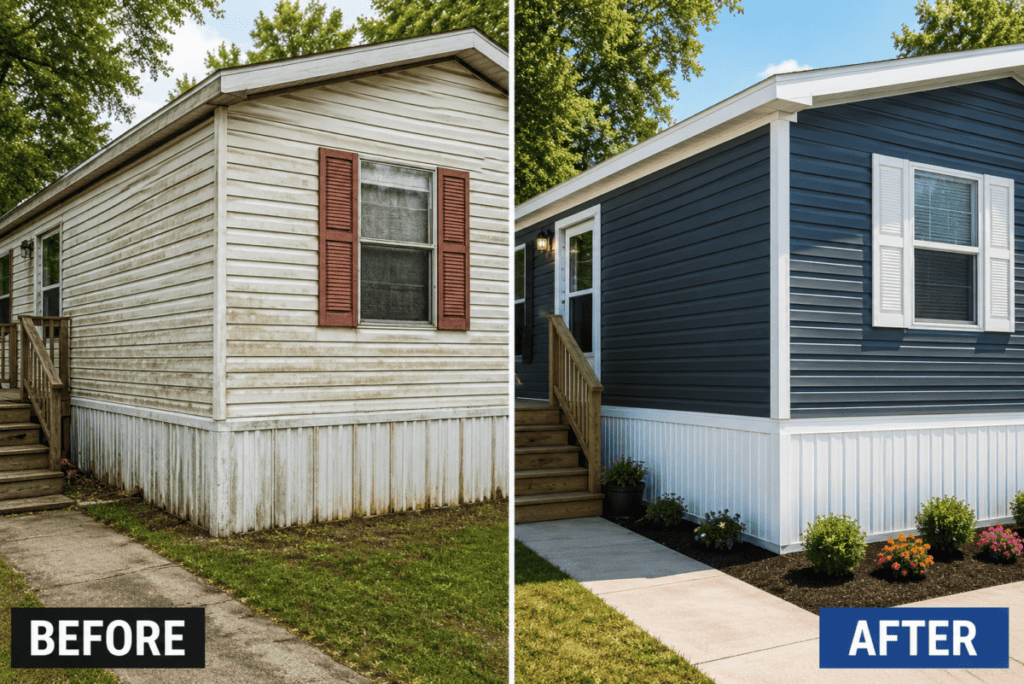
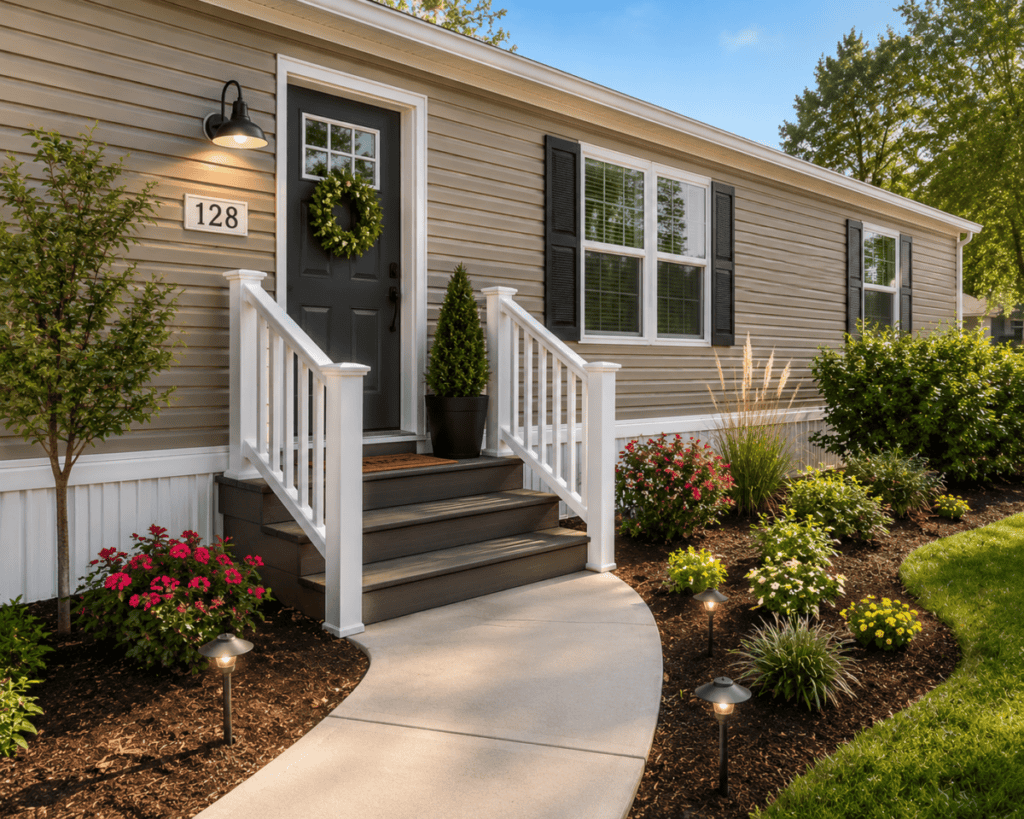
Curb appeal sets the buyer’s psychological price anchor before they even step inside. A dirty, overgrown exterior implies hidden mechanical issues and poor maintenance history.
- Power Wash: Strip away algae, dirt, and oxidation from vinyl siding and skirting.
- Front Door Update: Paint the main entry door a bold accent color like navy blue, deep red, or classic black. Replace rusted door handles and deadbolts.
- House Numbers and Mailbox: Install high-visibility modern metal house numbers and replace yellowed plastic mailboxes.
- Low-Maintenance Landscaping: Apply fresh dark wood mulch, trim back overgrown trees touching the roof line, and plant hardy perennial shrubs.
A full weekend spent cleaning and landscaping costs between $100 and $300, delivering an immediate return by driving buyer competition.
Upgrade #7: Improve Exterior Lighting
A dark entry porch feels unsafe and unwelcoming. Upgrading exterior light fixtures adds security, improves safety, and boosts evening visual appeal.
Install a prominent lantern fixture near the main entrance, add low-voltage or solar LED pathway lighting along walkways, and mount a motion-sensor floodlight near driveway areas. Total costs range from $75 to $200, offering a quick, high-impact update.
If you are planning smart life shifts or downsizing into low-maintenance housing options, explore helpful resources at HousingAfter60.com to evaluate full lifestyle transitions.
Upgrade #8: Upgrade Window Treatments
Broken, yellowed, 1-inch aluminum mini-blinds are one of the most common visual defects in older mobile homes. Replacing them instantly elevates natural lighting and perceived room size.
Install clean 2-inch faux wood horizontal blinds, light-filtering cordless roller shades, or simple neutral fabric curtain panels. Faux wood blinds offer superior moisture resistance in tight spaces like kitchens and bathrooms. Outfitting an entire home costs roughly $150 to $400 via big-box home improvement retailers.
Upgrade #9: Replace Interior Doors (If Necessary)
Thin, hollow-core wood grain doors with visible punctures or water swelling along bottom edges make a home feel cheap. Upgrading interior passage doors updates room transitions instantly.
Replace damaged units with modern 2-panel or 6-panel interior doors. If replacing doors entirely is outside your budget, paint existing doors a crisp semi-gloss white and upgrade old brass knobs to modern black or brushed nickel lever handles. Total DIY costs range from $50 to $400 depending on door counts.
Upgrade #10: Improve Storage Options
Manufactured homes often lack dedicated closet space and storage solutions. Buyers place a high premium on organized, functional closets and pantries.
Install simple wire or laminate closet organizer systems in bedrooms, add heavy-duty metal shelving units in utility closets, and add slide-out organizers inside kitchen lower cabinets. Spending $100 to $300 on storage organization increases functionality and makes living spaces feel larger.
Technical Deep Dive: Electrical Efficiency & Thermal Duct Sealing Protocols
Air distribution systems in manufactured homes utilize a trunk-and-crossover duct network located within the subfloor cavity or ceiling plenum. Over time, physical settling, rodent intrusion, and degradation of factory cloth tape cause severe duct disconnects. Unsealed duct systems dump 20% to 35% of conditioned air directly into the crawlspace, driving up utility bills and accelerating moisture accumulation along subfloors.
Sealing duct systems requires accessing the belly crossover duct; typically a 10-inch or 12-inch flexible insulated pipe running between double-wide sections; and securing all joint connections using UL 181A-P aluminum foil tape followed by thick brush-applied mastic sealant. Never use standard duck tape, which dries out, fails, and leaves gaps within months. Additionally, modernizing electrical safety involves pulling dated 2-wire receptacles in wet locations (kitchens, baths, exterior outlets) and installing Class A 20-Amp Ground Fault Circuit Interrupter (GFCI) breakers or receptacles. Upgrading thermal sealing along exterior outlet boxes with foam gaskets reduces draft infiltration by up to 8%, lowering heating costs while appealing directly to cost-conscious buyers.
Upgrade #11: Kitchen Improvements That Don’t Break the Budget
Full kitchen tear-outs are equity killers in mobile homes. A complete custom cabinet and quartz countertop installation can easily run $12,000 to $20,000, exceeding the total value increase of the home. Stick strictly to visual, low-cost transformations.
- Paint Cabinets: Degrease wood or laminate cabinets, sand surfaces lightly, apply a bonding primer, and finish with a durable cabinet enamel paint in off-white or soft gray.
- Peel-and-Stick Backsplash: Add a faux subway tile or geometric backsplash behind stove and counter areas for easy cleaning and high visual impact.
- Countertop Refinishing: If laminate counters are severely scratched, apply a high-durability epoxy counter refinishing kit or replace them with standard off-the-shelf laminate postform tops.
A comprehensive kitchen cosmetic refresh costs between $300 and $1,200, saving you thousands compared to a total remodel.
Upgrade #12: Bathroom Refresh
Bathrooms are high-priority evaluation zones for buyers. Small, inexpensive cosmetic improvements yield massive returns in these compact spaces.
Replace old framed mirrors with modern decorative wall mirrors, swap out worn toilet seats, re-caulk tubs and sinks with fresh bright-white silicone, update exhaust fan covers, and install modern vanity lighting. A clean, fresh bathroom costs around $150 to $500 to execute yourself, eliminating major buyer hesitations.
Upgrade #13: Energy-Efficient Improvements
High utility bills are a primary concern for mobile home buyers. Adding visible energy-saving features reassures buyers while lowering your own operating costs.
Replace old bulb networks with energy-efficient LED lighting, install continuous weatherstripping along exterior door frames, fit rubber door sweeps, mount a programmable smart thermostat, and verify ceiling fan operation. These energy updates cost between $100 and $400, serving as an active selling point in your listing description.
Learn more about managing home systems and lifestyle adjustments for long-term comfort by reading detailed guides on HousingAfter60.com.
Upgrade #14: Replace Old Outlet and Switch Covers
Yellowed, cracked, or paint-splattered wall plates look terrible. Replacing them is the cheapest, easiest improvement on this entire list.
Swap out all old switch plates, outlet covers, and blank covers with crisp white modern decora-style plates. Ensure you turn off power breakers before handling cover screws near live wiring. Outfitting an entire mobile home requires about $30 to $60 in materials, taking only two hours to complete.
Upgrade #15: Deep Cleaning
Deep cleaning costs almost nothing but yields massive returns. A spotless home signals meticulous care, building instant buyer trust.
Detail-clean baseboards, ceiling fan blades, window tracks, appliance interiors, tile grout lines, and air return vents. Remove all clutter and personal items to maximize open space. Renting a commercial carpet cleaner or purchasing specialized cleaning supplies costs under $100, making this an absolute requirement before listing.
Budget Upgrades That Usually Are NOT Worth It
Knowing what not to fix is just as critical as choosing the right projects. Over-improving a mobile home leads directly to unrecoverable financial losses.
- High-End Solid Custom Cabinets: Heavy solid oak or maple cabinetry adds excess weight to floor joists and costs far more than the market will pay back.
- Luxury Stone Countertops: Installing heavy granite or quartz tops requires extensive subfloor framing upgrades and rarely yields a positive ROI in leased-land parks.
- Expensive Tile Flooring or Walk-in Tile Showers: Rigid ceramic tile and heavy mud-bed showers crack as manufactured home chassis structures flex naturally under temperature shifts and settling.
- Major Room Additions: Building unpermitted stick-built room additions onto a mobile home creates severe roof flashing leaks and often invalidates HUD structural compliance certificates, making bank financing impossible for future buyers.
- Over-Improving for the Neighborhood: Installing high-end finishes in a park where comparable units sell for $35,000 will never pull a $70,000 sale price. You cannot break the neighborhood price ceiling.
Technical Deep Dive: The Appraisal Ceiling & Financing Mechanics
The valuation cap on manufactured housing is dictated directly by underwriting guidelines enforced by major lending platforms, including Fannie Mae, Freddie Mac, FHA, and chattel lenders (such as 21st Mortgage or Triad Financial). Chattel loans; used when a mobile home sits on leased park land without real property title; treat the home as personal property, similar to an RV or automobile. Chattel lenders rely heavily on National Automobile Dealers Association (NADA) manufactured housing appraisal books or tight 180-day park-specific comparable sales. If a chattel appraiser sets the maximum loan-to-value (LTV) threshold at $55,000 based on park comps, a buyer cannot secure financing for a higher purchase price regardless of your $20,000 custom kitchen finish.
When a home sits on private deeded land and is real-property classified, conventional FHA 203(b) or VA loans become available. However, appraisers must select comps within a strict 1-mile radius that feature similar age, HUD tag status, and foundation certifications (HUD Permanent Foundations Guide for Manufactured Housing). If no homes in the immediate area have sold above $120,000, an appraiser will apply steep downward adjustments for over-improvements, forcing the seller to cover appraisal gaps out of pocket or drop the contract price. Understanding these lending mechanics prevents sellers from wasting capital on non-recoverable luxury additions.
How Much Should You Spend? Capital Allocation Rules
To guarantee a positive ROI, align your overall renovation budget strictly with your home’s estimated fair market valuation tier.
| Home Valuation Tier | Maximum Renovation Budget | Primary Capital Focus Areas |
|---|---|---|
| Under $50,000 | $1,000 – $2,500 | Deferred repairs, fresh paint, hardware, deep clean. |
| $50,000 – $100,000 | $3,000 – $6,500 | LVP flooring, interior paint, curb appeal, light fixtures. |
| Over $100,000 (Deeded Land) | $7,000 – $15,000 | Full flooring, kitchen update, energy updates, skirting. |
Always analyze active listings and recent sales inside your specific community or rural area. Never spend more capital than necessary to match the condition of the top-performing listing in your market.
For additional guidance on real estate, equity management, check out resources on MobileHomeFriend.com.
Budget Upgrade Priority List by Investment Level
If You Have a $500 Budget
Focus entirely on immediate visual impact and cleanliness. Paint main living room walls, swap kitchen cabinet knobs, replace yellowed outlet covers, install new exterior house numbers, and detail-clean the entire home.
If You Have a $2,000 Budget
Address core visual surfaces. Install budget-friendly click-lock LVP flooring in high-traffic living areas, apply fresh neutral interior paint throughout, upgrade kitchen and bath faucets, and power-wash exterior siding and skirting.
If You Have a $5,000 Budget
Execute a comprehensive home refresh. Replace all interior flooring with unified LVP, apply professional-grade interior paint, execute a kitchen cabinet paint refresh with new hardware, install modern light fixtures, and refresh exterior entryways and landscaping.
If You Have a $10,000+ Budget
Handle both structural protection and full cosmetic modernization. Fix underlying subfloor issues, repair roof or belly insulation, install new vinyl skirting, update exterior entry doors, lay premium continuous LVP flooring, paint cabinets, replace all plumbing fixtures, and update window blinds across the entire home.
Mistakes Mobile Homeowners Must Avoid
- Remodeling for Personal Taste: Do not install bright accent walls, unusual tile patterns, or custom artwork layouts. Keep all finishes neutral, modern, and widely appealing.
- Choosing Short-Lived Trends: Avoid cheap peel-and-stick floor tiles in wet areas; they lift along edges within months. Stick to proven materials like click-lock LVP.
- Ignoring Structural Maintenance: Spending money on fancy light fixtures while ignoring a roof leak or soft subfloor spot destroys your capital when the buyer’s home inspection occurs.
- Unprofessional DIY Execution: Slapping paint over uncleaned walls, leaving visible paint drips, or sloppy caulking looks worse than old finishes. Take time to prep surfaces correctly.
- Overspending Capital: Exceeding your local appraisal ceiling guarantees financial loss. Budget strictly based on real comps.
Actionable Renovation Checklist
Follow this sequential checklist to maximize your return on investment:
- [ ] Inspect roof seams, vent stacks, and flashing; apply elastomeric sealant where needed.
- [ ] Inspect underbelly for sagging insulation, disconnected heating ducts, or pipe leaks.
- [ ] Check subfloors for soft spots; replace damaged particle board with 3/4-inch CDX plywood.
- [ ] Clean all interior vinyl wall panels with TSP; apply stain-blocking primer and neutral paint.
- [ ] Remove old carpet/linoleum; install continuous click-lock LVP flooring across main spaces.
- [ ] Paint kitchen/bathroom cabinets; install new modern hardware pulls and knobs.
- [ ] Swap out old light fixtures, switch covers, and outlet plates with clean white LED units.
- [ ] Replace kitchen and bathroom faucets with brushed nickel or matte black metal fixtures.
- [ ] Power wash exterior siding, trim shrubs, apply fresh mulch, and paint the main entry door.
- [ ] Complete a thorough deep-clean of window tracks, baseboards, appliances, and vents.
Related Questions
Which mobile home upgrades add the most value?
Fresh neutral interior paint and continuous Luxury Vinyl Plank (LVP) flooring deliver the highest return on investment. They completely update the look and smell of the interior at a very low cost per square foot.
What is the cheapest way to increase a mobile home’s value?
A deep cleaning combined with exterior curb appeal fixes offers the highest return per dollar spent. Pressure washing the siding, painting the front door, trimming landscaping, and replacing yellowed outlet covers cost under $200 total while drastically improving buyer first impressions.
Are kitchen remodels worth it in a manufactured home?
Full custom kitchen replacements are rarely worth the expense due to appraisal ceilings. However, budget cosmetic refreshes; such as painting cabinets, installing modern hardware, adding a peel-and-stick backsplash, and replacing faucets; yield excellent returns.
Should I renovate my mobile home before selling?
Yes, but focus strictly on deferred maintenance and low-cost cosmetic updates. Fixing roof leaks, repairing soft floors, laying low-cost LVP flooring, and applying fresh paint eliminates major buyer price concessions during inspection.
Additional Helpful Articles at MobileHomeFriend.com
About Charles O’Dell
Charles O’Dell is the founder of Mobile Home Friend and a veteran real estate investor with over 23 years of hands-on experience in property acquisitions, mobile home park operations, and residential renovations. Having personally managed over 100 full property flips and hundreds of manufactured housing transactions, Charles specializes in first-principles valuation logic, cost-effective renovation strategies, and direct, fluff-free advice for mobile homeowners looking to build real equity.
Written by Charles O’Dell, a real estate investor with 23+ years of experience and over 100 successful mobile home and residential property flips.