
Table of Contents
Introduction
Mobile home inspections matter significantly more than many buyers realize. Manufactured structures age differently than traditional site-built houses because they rely on a flexible steel chassis. Water intrusion, structural movement, and deferred maintenance create severe, hidden problems that can easily bankrupt an unprepared investor or homebuyer.
Many buyers focus entirely on cosmetic appearance instead of evaluating the core structure and mechanical systems. A clean-looking home with fresh paint and new carpets can still possess thousands of dollars in underlying structural issues. The core goal of a professional inspection is not to find a perfect home: it is about understanding your true financial risk and forecasting future repair costs.
This comprehensive guide will help you know exactly what questions to ask during an inspection. You will learn what problems occur most frequently in manufactured homes and how to separate minor issues from catastrophic deal-breakers. By applying this framework, you will protect your capital, avoid unexpected post-purchase repair bills, and know exactly when to walk away from a bad deal.
Video Guide Overview
Affiliate Disclosure: This article contains affiliate links. If you purchase a tool or service through these links, I earn a small commission at no additional cost to you to help support our testing laboratory.
The Short Answer: The Core Inspection Strategy
A mobile home inspection requires verifying structural alignment, water barrier integrity, and HUD code compliance rather than evaluating simple cosmetics. You must interview both the seller and the inspector specifically about the foundation stability, subfloor material, and underbelly condition to prevent catastrophic financial loss. Never buy a manufactured home without verifying that the chassis is level and the underbelly is completely dry.
Section 1: What a Mobile Home Inspection Actually Is
A specialized mobile home inspection evaluates the physical components unique to factory-built housing. The inspector will review structural systems, the roof, plumbing lines, electrical systems, and the HVAC configuration. They also analyze the flooring integrity, the foundation support system, exterior siding, skirting, and any evidence of moisture intrusion.
However, standard inspections do not cover everything. They usually exclude the following specialized items:
- Detailed engineering reports for structural certifications
- Septic tank certifications and dye tests
- Well water testing for biological contaminants
- Land surveys and property boundary verifications
- Park rule compliance and local permit history verification
Manufactured homes require entirely different inspection knowledge than site-built properties. A pier-and-beam foundation behaves dynamically under shifting soil loads. The bottom board belly wrap and underfloor insulation systems are entirely unique to factory framing. Furthermore, the marriage walls in double-wide or triple-wide models can shift independently, meaning HUD code construction standards require an inspector who understands these specific engineering principles.
Section 2: Questions to Ask About the Roof
You must ask the seller exactly how old the roof is and request original installation receipts. Determine if the structure has the original factory roof or a professional replacement system. Different materials like corrugated metal, rubber membrane, or asphalt shingles possess highly divergent lifespans and maintenance costs.
Ask directly if the roof has ever leaked in the past. Previous active leaks leave hidden structural rot inside the ceiling cavities even if the leak was temporarily patched. You must inspect the interior ceilings for stains, patched panels, soft spots, and warped structural framing.
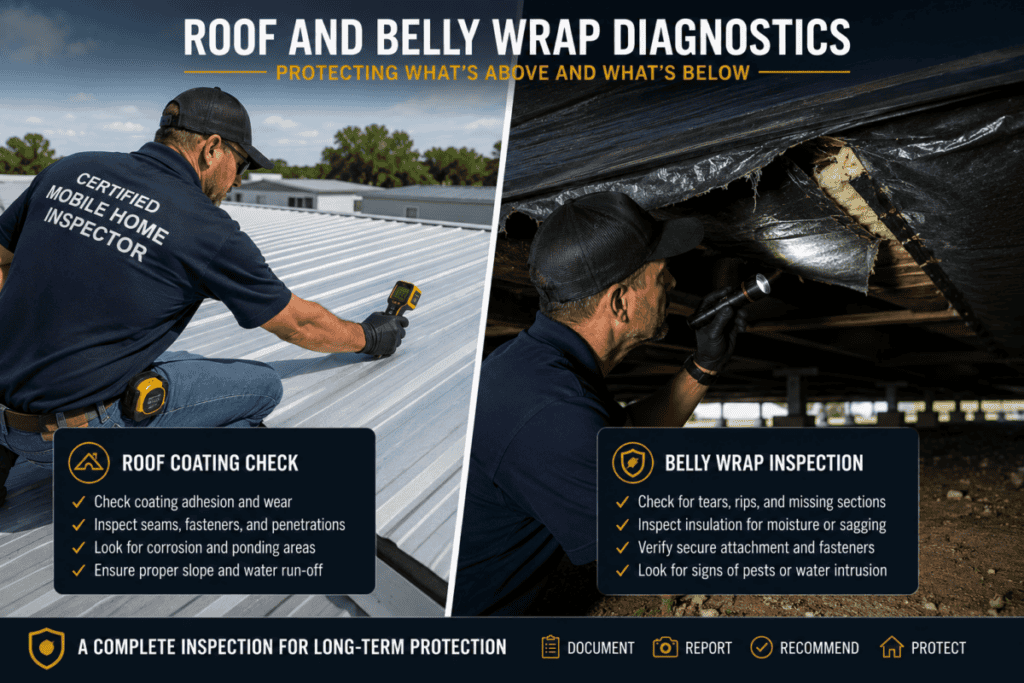
Verify whether the roof was simply coated or completely replaced with new decking. Regular elastomeric roof coatings represent routine maintenance, not a structural replacement. Unscrupulous sellers often use thick white coatings to temporarily hide advanced metal rust and severe structural deterioration.
Look carefully for visible soft spots or sagging areas along the exterior roofline. Sagging indicates advanced water rot on the plywood or oriented strand board decking underneath. Pay close attention to roof penetrations including skylights, plumbing vents, chimneys, and HVAC exhaust stacks since these areas fail first.
Watch for critical warning signs during your initial walkthrough:
- Bubbling interior ceiling panels along the center line
- Strong mold smells emanating from closets or vents
- Discolored ceiling seams and sagging trim strips
- Uneven exterior roof lines or dipping perimeter profiles

Section 3: Questions to Ask About the Flooring and Subfloor
Soft spots in the floors are the single most common mobile home defect I encounter. You must test the areas immediately surrounding toilets, bathtubs, exterior doorways, kitchens, and laundry hookups. Step heavily on every square foot of these high-moisture zones to check for deflection.
Ask the owner if the subfloor has ever undergone structural repairs in the past. You need to know exactly where the work occurred and what methods they utilized. DIY handymen frequently perform substandard repairs by patchwork-cutting sections without supporting the underlying floor joists.
Determine exactly what type of subfloor material exists inside the home. Older mobile homes built before the mid-1980s heavily utilized particle board subflooring. Particle board disintegrates completely when exposed to a single plumbing leak, whereas modern oriented strand board or exterior-grade plywood offers much higher moisture resistance.
Note if the floor feels uneven, unlevel, or bouncy when you walk through the center of rooms. Bounciness points directly to structural movement, rotted perimeter rim joists, or missing support piers underneath the home. Do not let cosmetic floor coverings fool your eyes.
Cheap sellers frequently install thick carpet or luxury vinyl plank flooring directly over damaged, soft subfloors to mask defects. If the floor covering looks brand new but feels flexible, it is highly likely concealing active structural rot. Force the issue by asking your inspector to check the flooring from underneath the home.
Section 4: Questions to Ask About Water Damage
Inquire directly about the history of plumbing leaks within the wall cavities. Check under every sink cabinet, behind toilets, around the water heater compartment, and near the main water supply lines. Look for swollen wood framing, warped trim moldings, and a persistent musty odor.
Examine the windows and doors for evidence of historical water intrusion. Ask if water leaks into the home during heavy, wind-driven rainstorms. Look for dark stains around the window frames and verify if the home still has original factory windows or updated vinyl replacements.
Ask about localized flooding, poor property grading, or standing water around the home site. Poor exterior drainage causes the soil beneath the home to shift, which destabilizes the foundation piers. Standing water also accelerates the rusting of the main steel chassis rails.
Water is uniquely destructive to manufactured housing due to the lightweight construction materials used. Lightweight wall studs and particle board absorb water like a sponge via capillary action. This hidden moisture inside the wall cavities quickly breeds toxic mold and destroys the structural integrity of the home.
Section 5: Questions to Ask About the Foundation and Support System
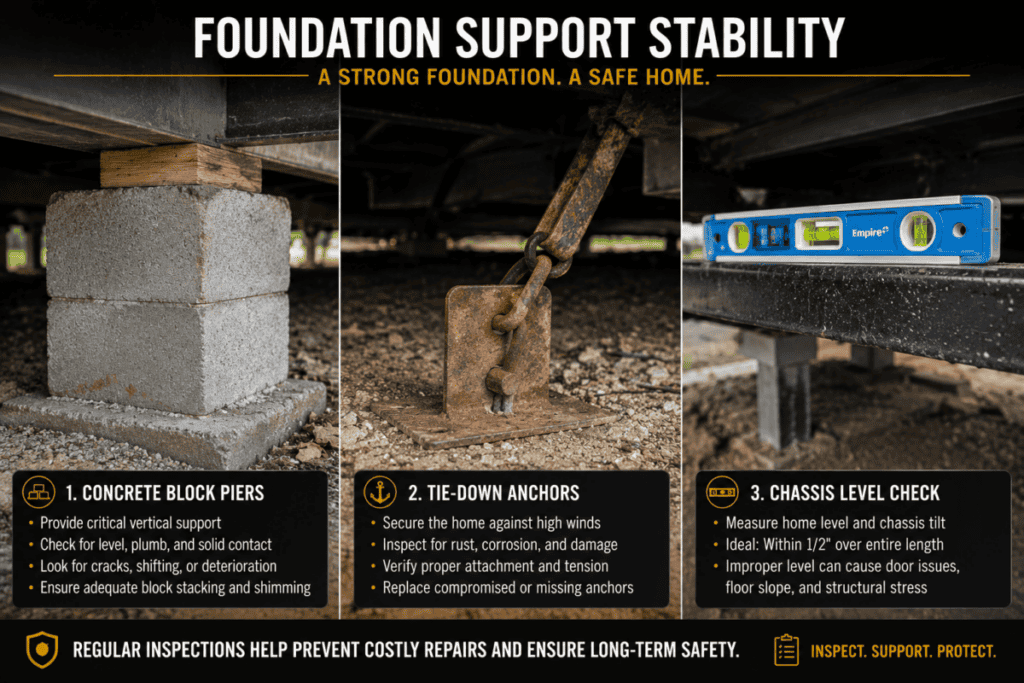
You must determine if the manufactured home is currently level. Tell-tale signs of unlevel foundations include interior doors that stick, cracks at the double-wide marriage wall, and sloped floors. A shifting foundation places massive, twisting stress on the entire wooden framing system.
Identify the exact type of foundation supporting the steel chassis. Common setups include concrete block piers, engineered steel piers, and heavy-duty ground anchoring tie-down systems. You must know whether the home sits on a legally certified permanent foundation or a temporary setup.
Ask the seller if the home has ever been structurally releveled. Find out how often this maintenance was required, the underlying cause of the shifting, and whether licensed professionals performed the work. Frequent shifting indicates highly unstable underlying soil conditions or a failing foundation pad.
Look for clear signs of mechanical movement under the home, such as tilted concrete piers, a sagging steel frame, or separation at the center chassis seams. Check the wind zone tie-down anchors to ensure they comply with local state codes. Rusted, loose, or completely missing anchors mean the home is unsafe during severe storm events.
Your inspector must crawl underneath the home to verify the underbelly condition. They must check for hidden moisture, standing water on the ground, torn polyethylene belly wraps, rodent infestations, and fallen fiberglass insulation. A shredded underbelly leaves the wooden subfloor completely unprotected from exterior elements.
Section 6: Questions to Ask About the Plumbing System
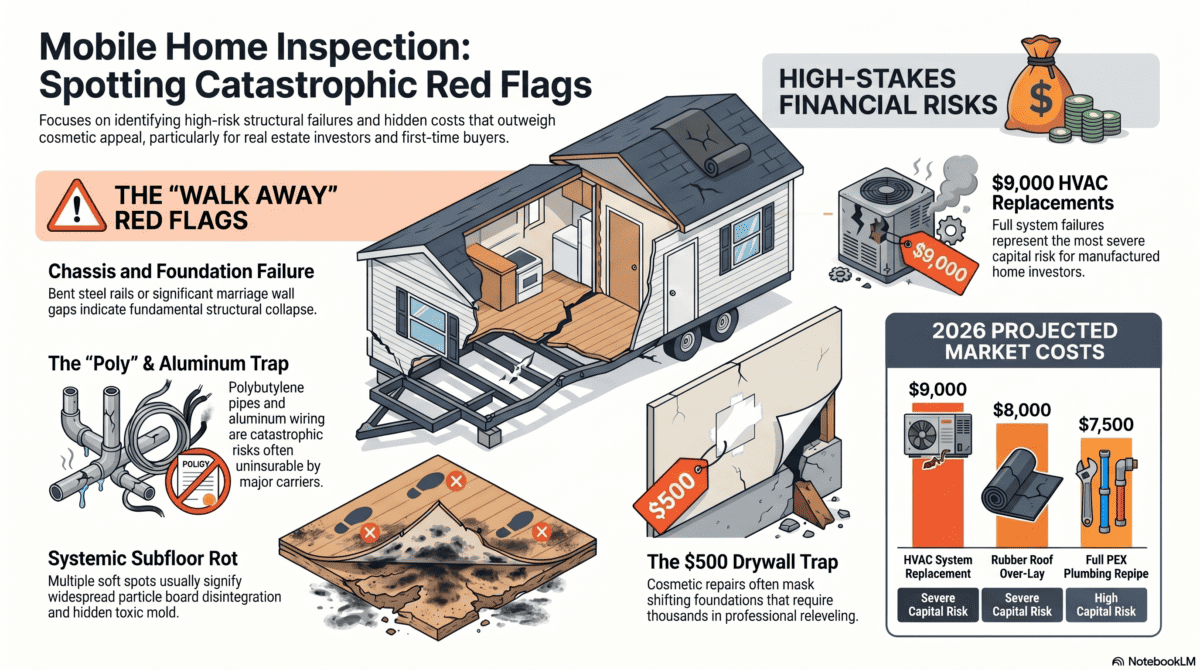
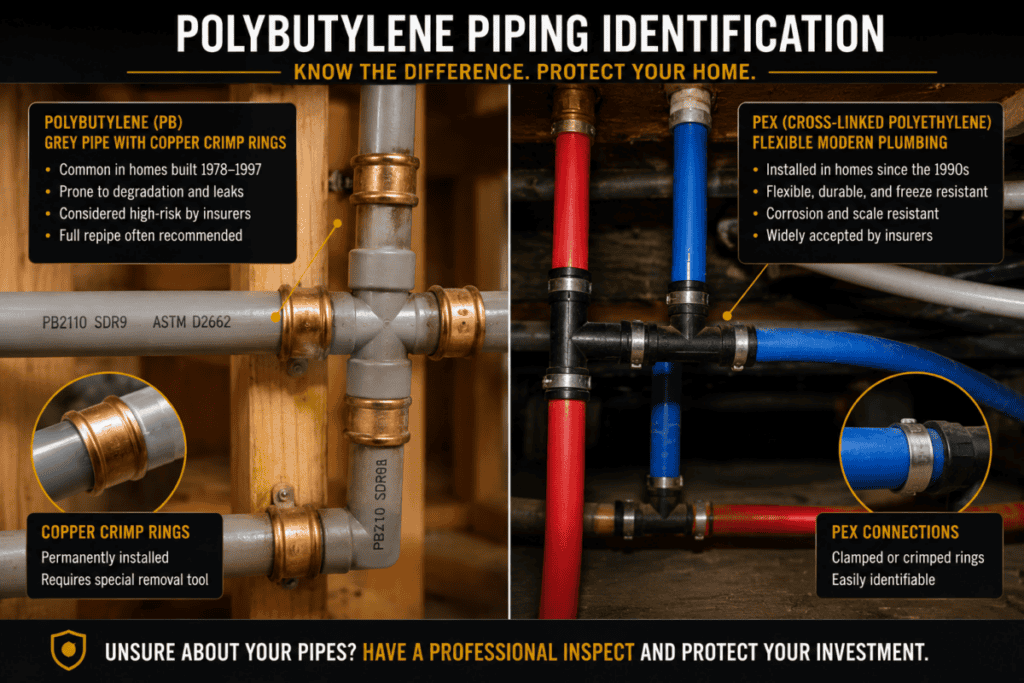
Identify the exact material used for the main water supply lines. If the home was built between 1978 and 1995, look closely for grey polybutylene plumbing pipes. Polybutylene is a catastrophic material known for sudden, unpredicted micro-fracture failures that can flood a home in minutes.
Many insurance companies will completely refuse to issue a policy on a home containing polybutylene plumbing. Modern materials like flexible cross-linked polyethylene, or PEX plumbing, copper, and chlorinated polyvinyl chloride are highly preferred. PEX handles freezing temperatures exceptionally well without bursting.
Test the home’s water pressure by running multiple faucets simultaneously. Check for major pressure drops, weak flow, and slow drainage performance. Slow drains indicate localized pipe collapses or root intrusions in the main sewer line underneath the yard.
Ask for the exact age, tank capacity, and maintenance history of the water heater. Inspect the base of the water heater tank for active rust, scale buildup, and slow leaks. Ensure the water heater compartment vents safely to the exterior of the home according to standard HUD codes.
Section 7: Questions to Ask About the Electrical System
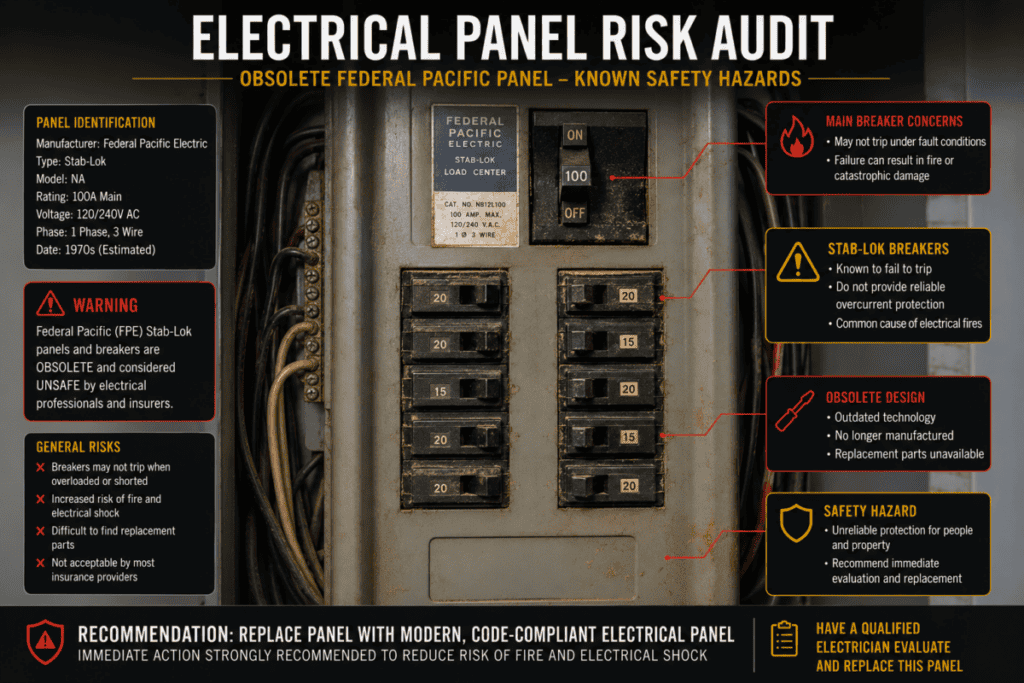
Determine if the electrical service panel is the original factory equipment or a modernized unit. Older electrical panels present significant fire hazards and lack the capacity for modern appliance loads. Check the internal breakers for any evidence of overheating or melted insulation.
Identify the specific brand of the electrical panel. Obsolete brands like Federal Pacific Electric or Zinsco panels are notoriously dangerous because their breakers frequently fail to trip during an overcurrent event. Replacing an entire electrical panel can easily cost you $1,500 to $3,000.
Ask if the electrical system has undergone any DIY updates or circuit additions. Amateur electrical modifications are common in older homes and often violate basic safety codes. Ensure all kitchen, bathroom, and exterior outlets feature modern GFCI protection devices.
Watch for critical electrical warning signs during your evaluation:
- Flickering lights when high-draw appliances turn on
- Loose outlet boxes that push back into the wall cavities
- Warm switch plates or faint electrical buzzing noises
- Historical aluminum wiring connections from the 1960s or 1970s
Aluminum wiring requires specialized crimp connectors to prevent oxidative overheating and subsequent house fires. If you spot silver-colored wire strands inside the panel, hire a licensed electrician immediately.
Section 8: Questions to Ask About the HVAC System
Ask for the exact age of the heating furnace and the exterior air conditioning condenser unit. The average useful lifespan for a manufactured home HVAC system ranges from 12 to 15 years. Request comprehensive maintenance records and verify the filter replacement history.
Determine if the home heats and cools evenly throughout all interior rooms. Weak airflow or hot and cold spots point to major issues within the underbelly ductwork. In efficient systems, the primary in-floor ductwork trunk lines must be tightly sealed and completely insulated.
Look underneath the home to verify that the flexible crossover ducts are intact. Rodents frequently tear into these insulated ducts to build nests, which causes your conditioned air to blow directly onto the ground. Damaged ductwork can easily double your monthly utility bills.
Watch for signs of imminent HVAC system failure during testing. These include loud or grinding noises from the blower motor, heavy rust on the heat exchanger, frequent system cycling, and weak cooling output. Replacing a dead package unit or split HVAC system will cost you several thousand dollars.
Section 9: Questions to Ask About Walls, Ceilings, and Marriage Walls
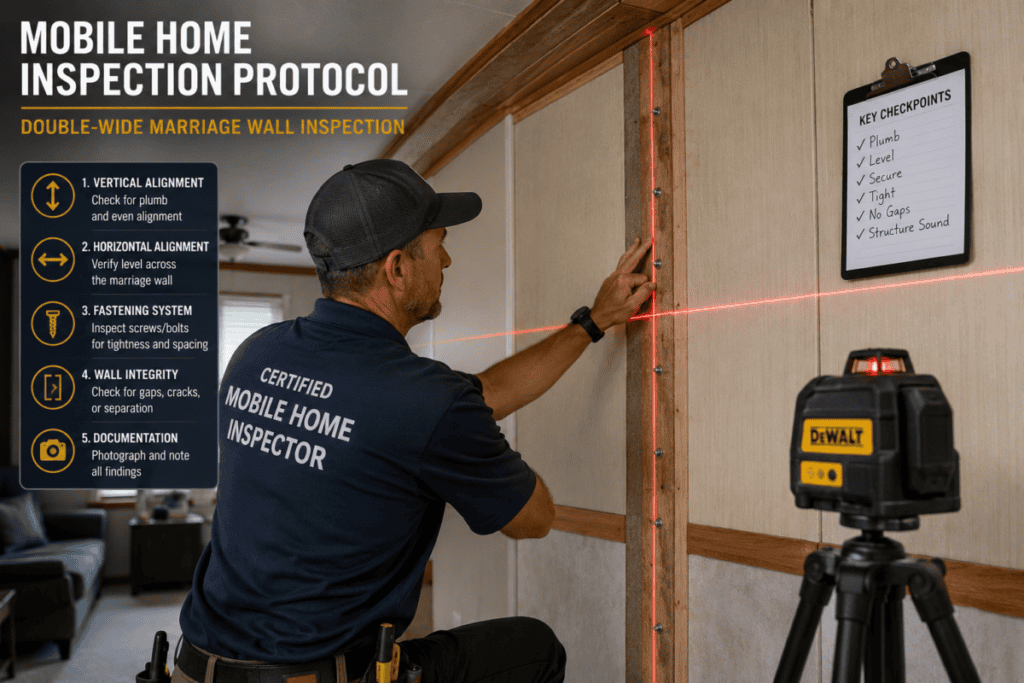
Examine the central marriage wall line in double-wide homes for structural cracks or splitting. Minor settling is normal over time, but wide gaps indicate that the two chassis halves are physically pulling apart. This movement is caused by foundation pier failure or shifting soil.
Check if the interior ceiling panels show noticeable separation or sagging. Panel separation occurs when the roof trusses flex due to external snow loads or interior water damage. Inspect all interior wall surfaces for soft drywall, bubbling vinyl coatings, and mysterious stains.
The marriage wall is critical because it bears the primary structural load where the two home sections meet. If this wall goes out of alignment, it distorts the roof load transfer and warps the exterior door frames. Ensure the center seam remains perfectly flush from the front hitch to the back wall.
Section 10: Questions to Ask About the Exterior
Evaluate the condition of the exterior siding for warping, buckling, cracking, and direct water rot. Ensure wood-based siding sits at least six inches above the ground level to prevent moisture wicking. Look closely for missing caulking around the exterior corner trim pieces.
Inspect the home’s perimeter skirting panels thoroughly. Skirting must be securely fastened, properly vented to prevent underbelly mold, and completely sealed against wild animals. Missing or loose skirting allows rodents, feral cats, and opossums to tear your insulation down.
Check the entire property for active pest infestations including termites, wood-boring beetles, and rodents. Look for termite mud tubes along the concrete foundation piers and check the wood framing for damage. Pests can rapidly destroy the lightweight structural framing of a manufactured home.
Ask if the exterior steps, decks, and structural additions have legal building permits. Decks must stand on their own independent footings rather than being nailed directly to the mobile home’s rim joist. Improperly attached additions will pull the mobile home down as they naturally settle into the soil.
Section 11: Questions to Ask About the Home’s History
Find out exactly how many previous owners have held the title to the home. Long-term, single-family ownership typically results in much better maintenance history than corporate rentals or transient properties. Ask if the home has ever been physically moved to a different parcel of land multiple times.
Repeatedly moving a manufactured home subjects the steel chassis and wood framing to severe twisting stresses. This over-the-road transport can pop structural fasteners, crack interior drywall, and loosen plumbing joints. Always verify if there are any historical insurance claims for fire, flood, or wind storm damage.
Ask the seller directly if there are any known ongoing mechanical or structural problems. Listen closely to vague, evasive, or defensive answers. If a seller avoids answering simple questions about basic maintenance, assume they are actively hiding significant defects.
Section 12: Questions to Ask About the Mobile Home Park (If Applicable)
If the home sits inside a managed community, verify the exact monthly lot rental fees. Ask for a complete history of recent rent increases and find out what utility costs are included. Some parks utilize submetered utility systems that charge you separately for water, sewer, and trash collection.
Review the comprehensive park rules, age restrictions, pet regulations, and vehicle limitations before buying. Determine if the community is privately owned by a local landlord or managed by a large corporate private equity firm. Corporate-owned communities are statistically far more aggressive with annual rent increases.
Talk directly to the neighboring residents without the seller or park manager present. Ask them about the local noise levels, management responsiveness, community crime rates, and general park maintenance. The neighbors will quickly tell you the unvarnished truth about the community’s living conditions.
Section 13: Questions to Ask the Inspector Directly
Once the physical inspection is complete, interview your inspector face-to-face. Ask them to clearly prioritize the biggest structural concerns they discovered. Have them differentiate between immediate safety hazards and minor cosmetic updates.
Ask which discovered defects will be the most expensive to repair over the next twelve months. Roof structures, subfloor overhauls, HVAC change-outs, and complete foundation releveling represent the highest capital expenditures. Use their professional feedback to build your repair budget.
Ask the inspector this highly revealing question: “Would you personally buy this specific home at this price point?” Their immediate reaction will tell you exactly how they view the asset’s overall risk profile. Finally, ask if you need to bring out specialized roofing, foundation, plumbing, or electrical contractors for further diagnostic testing.
Section 14: Red Flags That Should Make Buyers Slow Down
There are several critical red flags that should cause you to immediately halt the transaction. Multiple soft floor areas across different rooms indicate a widespread, systemic subfloor failure. Strong mold odors mean hidden water damage is actively rot-testing the interior wall framing cavities.
Major sagging along the roofline or significant structural shifting at the marriage wall points to fundamental foundation or structural failure. Severe underbelly damage, including shredded bottom boards and water-logged insulation, requires an expensive total replacement. Do not ignore these major warning signs.
Furthermore, if the seller avoids answering basic questions or cannot produce clean HCD/HUD titles and ownership documentation, stop the deal immediately. Buying a mobile home without a clear, unencumbered legal title makes it impossible to legally register or insure the property.
Section 15: What Problems Are Normal vs. Deal Breakers
Every older manufactured home will possess some physical flaws, so you must maintain realistic expectations. Normal, repairable items include minor cosmetic damage, slightly unlevel piers, old carpets, and isolated plumbing leaks beneath a sink. These minor issues can be easily resolved with basic handyman tools.
True deal-breakers include bent or cracked steel chassis rails, widespread structural wood rot, chronic roof leaks that have destroyed the ceiling joists, and obsolete aluminum wiring. Major electrical hazards and unmitigated toxic mold infestations are also highly dangerous. Focus your decision on the total cost of remediation versus the market value of the home.
Technical Deep Dive: Manufactured Housing Structural Engineering and ROI Analytics
From a strict first-principles engineering perspective, a manufactured home functions as a three-dimensional box truss system resting on a flexible steel chassis. Unlike site-built homes anchored to deep concrete foundations, a mobile home redistributes load dynamically through its I-beam chassis rails and wood piers. If the soil exhibits a high plasticity index, localized moisture variations cause uneven frost heaves or soil swelling, resulting in differential settlement.
When a concrete block pier drops by as little as 0.5 inches, it alters the structural load distribution across the marriage line perimeter joists. This variance transfers torsional stress directly into the wall studs, causing drywall fractures and racking the exterior door openings. From a financial return on investment calculation standpoint, buying a home with structural leveling failure alters your capitalization rate significantly. If a property requires $4,500 in foundation stabilization and $6,000 in marriage line re-alignment, that $10,500 total must be deducted directly from your initial purchase offer to preserve your target yield.
Furthermore, the financial math behind particle board degradation vs. plywood replacement confirms that subfloor failures are compounding capital liabilities. Particle board uses a urea-formaldehyde resin binder that dissolves completely upon hydraulic contact with water. Once hydrolyzed, the material loses 100% of its shear strength, turning into a sawdust paste under carpets. Replacing 400 square feet of rotted subfloor requires cutting back to the center of the 2×6 floor joists, installing blocking, and applying exterior-grade CDX plywood panels. This structural repair costs roughly $35 per square foot in labor and materials, altering your net operating income drastically if missed during the initial inspection phase.
2026 Cost Transparency Table
The following table outlines the true market costs for major manufactured housing structural and mechanical repairs in 2026. Use these figures during your price renegotiations.
| Repair Category | Estimated Minimum Cost | Estimated Maximum Cost | Financial Danger Level |
|---|---|---|---|
| Complete Foundation Releveling | $1,200 | $4,500 | Moderate Capital Risk |
| Full PEX Plumbing Repipe | $3,000 | $7,500 | High Capital Risk |
| Subfloor Section Replacement (Per Room) | $1,500 | $3,500 | High Capital Risk |
| Complete HVAC System Package Replacement | $4,500 | $9,000 | Severe Capital Risk |
| Electrical Panel Upgrade (200 Amp) | $1,500 | $3,500 | Moderate Safety Risk |
| Rubber Roof Over-Lay Installation | $3,500 | $8,000 | Severe Capital Risk |
Recommended Affiliate Inspection Products
These specific diagnostic tools are highly recommended for checking mobile homes before closing your transaction.
| Product Name | Primary Inspection Utility | Target Cost Range |
|---|---|---|
| Klein Tools Digital Moisture Meter | Detects hidden subfloor leaks and wet insulation behind vinyl wall panels without cutting holes. | $35 – $50 |
| Sperry Instruments GFI Outlet Tester | Instantly verifies open grounds, reversed polarity, and proper GFCI safety trip functions in older outlets. | $12 – $20 |
| Johnson 48-Inch Professional Aluminum Level | Verifies steel chassis alignment, marriage wall bowing, and indicates if the foundation requires a relevel. | $25 – $40 |
Section 16: Final Mobile Home Inspection Checklist
- Chassis Audit: Crawl beneath the skirting and visually inspect the main steel I-beams for heavy rust pitting, structural bends, or welds.
- Underbelly Verification: Inspect the entire length of the black plastic belly wrap to ensure there are no long tears, sagging water pockets, or open animal entry holes.
- Marriage Wall Check: Walk down the exact center seam of a double-wide home to check for ceiling gaps, misaligned wall trim panels, and unlevel floor joints.
- Hydraulic Pressure Test: Turn on both the kitchen sink and the bathroom tub faucets at the same time to check for significant water pressure drops.
- Perimeter Footprint Step Test: Walk slowly along the exterior walls of every room, stepping firmly into corners to identify soft, rotting particle board subflooring.
- Breaker Box Thermal Check: Open the electrical panel door and verify the manufacturer label while checking for warm breakers or double-tapped wiring configurations.
Internal Educational Resources
Summary
A mobile home inspection is ultimately an exercise in risk management. The best inspection questions uncover hidden capital costs before you sign the closing papers. Buyers must always prioritize structural stability, water barrier integrity, and mechanical systems over cosmetic upgrades like new paint or lighting fixtures. A careful, process-driven inspection can easily save you thousands of dollars and years of immense frustration.
“The most expensive mobile home is often the one that looked cheapest to buy.”
About the Author: Chuck O’Dell
Chuck O’Dell is a professional real estate investor, asset manager, and the founder of MobileHomeFriend.com. Since 2003, Chuck has personally managed, remodeled, and flipped over 100 residential and manufactured properties. He utilizes rigorous, first-principles logic and decades of structural construction data to help everyday buyers protect their hard-earned capital from catastrophic real estate investments.
Written by Chuck O’Dell, a manufactured housing expert who has remodeled and flipped more than 100 properties since 2003.