
Table of Contents
Introduction
Summary Box: Moving a manufactured home a second time is physically possible, but it introduces severe structural risks and financial roadblocks. A secondary move frequently compromises chassis integrity, voids existing insurance policies, and causes traditional mortgage financing options to completely dry up. Before spending a dime on transport deposits, you must verify the home’s structural health, age, HUD code status, and exact final zoning rules. Note: Local labor rates for manufactured home relocation change constantly. See our full regional cost table below.
Video Guide Overview
Affiliate Disclosure: This site contains affiliate links to professional-grade tools and materials used in manufactured housing maintenance. If you purchase through these links, we receive a small commission at zero extra cost to you. ***
The Short Answer: Brutal First-Principles Logic
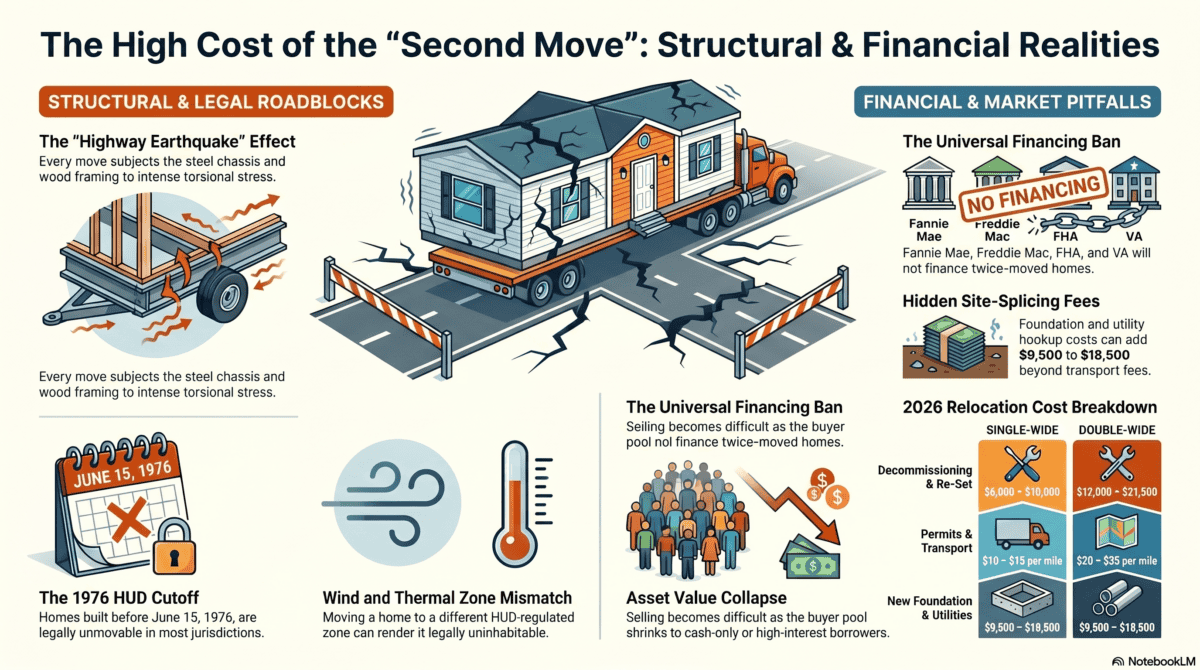
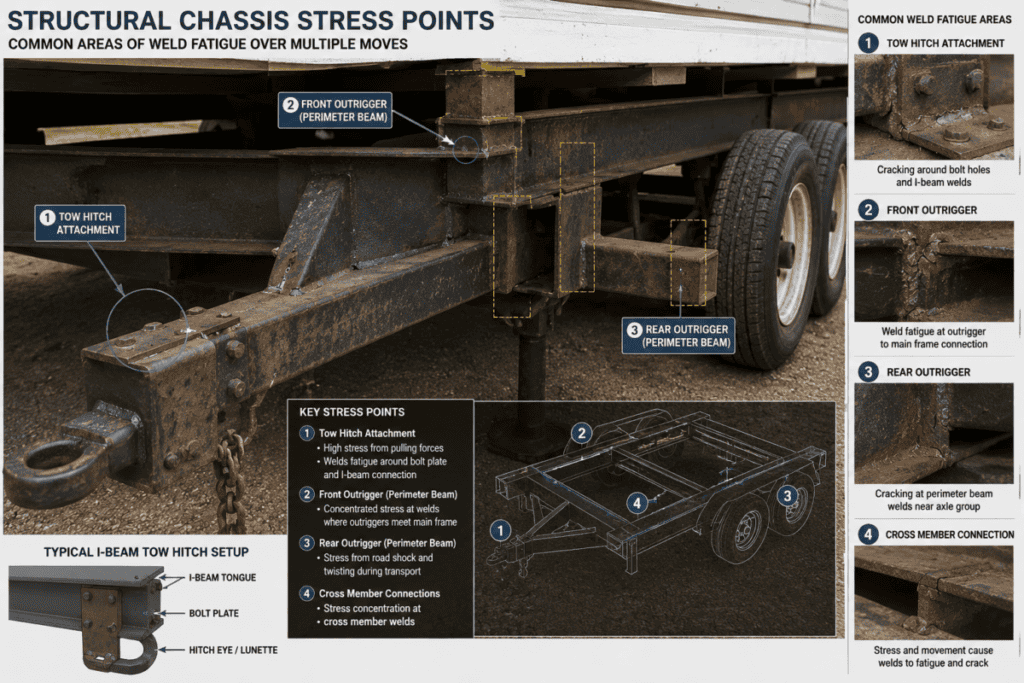
Can you legally and physically move a manufactured home twice? Yes. Should you do it without running a strict cost-to-equity diagnostic first? Absolutely not. Every single time a mobile home is uninstalled, jacked up, fitted with transport axles, pulled down a highway at fifty-five miles per hour, and reinstalled, the structural skeleton absorbs immense torsional stress. Wood framing flexes; drywall cracks; outrigger welds fatigue; plumbing connections loosen. More importantly, the financial secondary market actively penalizes homes that have been uprooted from their original foundations. Most traditional mortgage lenders will flatly refuse to finance a manufactured home that has been moved more than once. If you ignore this reality, you will end up owning an un-financable, structurally degraded piece of personal property that costs more to transport than it is worth in open-market equity.
Age, Structural Fatigue, and the Reality of Multiple Moves
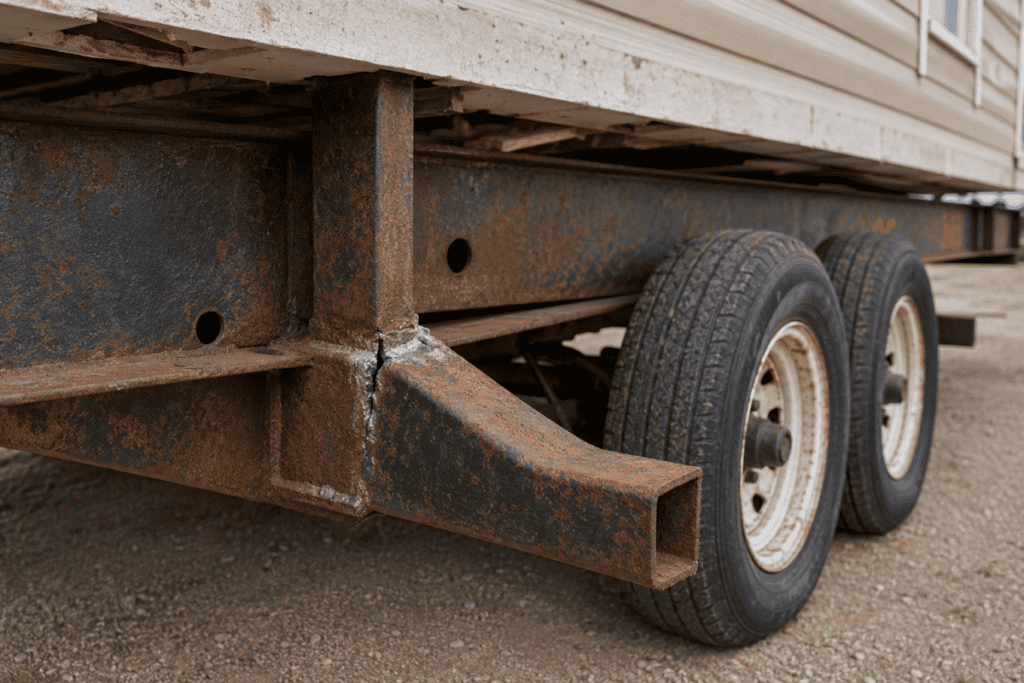
Manufactured homes built under modern standards are engineered with remarkable structural integrity. However, they are designed to be transported from the factory floor to their initial homesite. They are not designed to be perpetual nomadic structures. When a home sits on a foundation for ten, twenty, or thirty years, the entire structure settles into its environment. The materials acclimate to specific load distributions. Uprooting that home forces the steel chassis, outriggers, and fastening systems to re-adapt to extreme mechanical vibrations. The primary point of failure during a secondary move is almost always the steel chassis frame. Rust, hidden moisture damage in the perimeter rim joists, and poor original welds can cause catastrophic failures on the road. If the frame sags or bows during transport, the interior structural load-bearing paths shift, which leads to roof-line failures and permanently jammed doors.
Technical Deep Dive: HUD Code Compliance and Structural Mandates
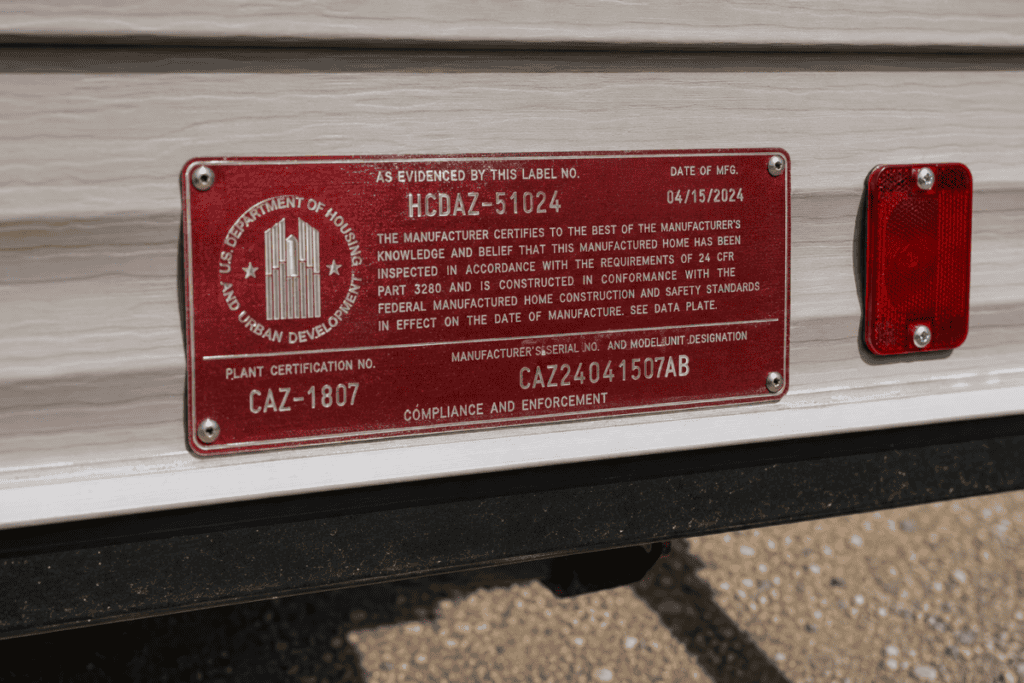
The United States Department of Housing and Urban Development (HUD) established strict federal construction standards on June 15, 1976. If your home was built before this exact date, it is classified as a mobile home, not a manufactured home. Pre-1976 mobile homes cannot be moved a second time under almost any circumstances. In fact, the vast majority of transport insurance companies will refuse to write a policy for a pre-HUD home, and most jurisdictions forbid them from entering county lines. For post-1976 homes, you must locate the red HUD data plate on the exterior and the interior compliance certificate. These documents specify the wind zone, roof load zone, and thermal zone the home was engineered to withstand. If you move a home from a low-wind Zone 1 region into a coastal Zone 3 region, you are violating federal housing guidelines. The home will be flagged during local installation inspections, utility hookups will be denied, and the structure will be rendered legally uninhabitable.
2026 Cost Transparency and Structural Diagnostics Matrix
| Expense Category | DIY / Basic Inspection | Pro / Certified Engineering |
|---|---|---|
| Chassis and Weld NDT Testing | $150 (Visual hammer test) | $750 to $1,200 (Ultrasonic weld inspection) |
| HUD Data Plate Title Search | $50 (IBTS registry lookup) | $250 to $400 (Certified verification report) |
| Foundation Feasibility Engineering | $0 (Not applicable) | $800 to $1,500 (Soil compaction and pier plan) |
The Multi-Move Transport Process Step-by-Step
The physics of moving a manufactured home twice requires meticulous preparation. The process begins with:
- Complete disconnection of all utilities: electricity, water, sewer, and gas lines must be severed and capped.
- Skirting is completely stripped away.
- If the home has been permanently retrofitted to a concrete pad, the steel tie-down straps must be cut, and the concrete anchor bolts removed.
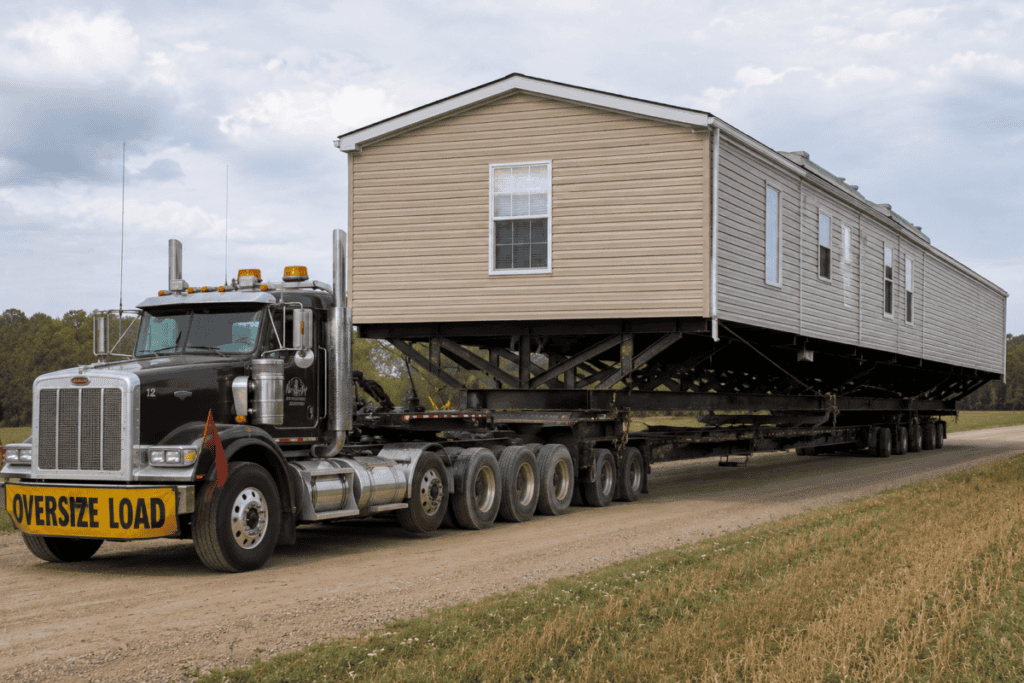
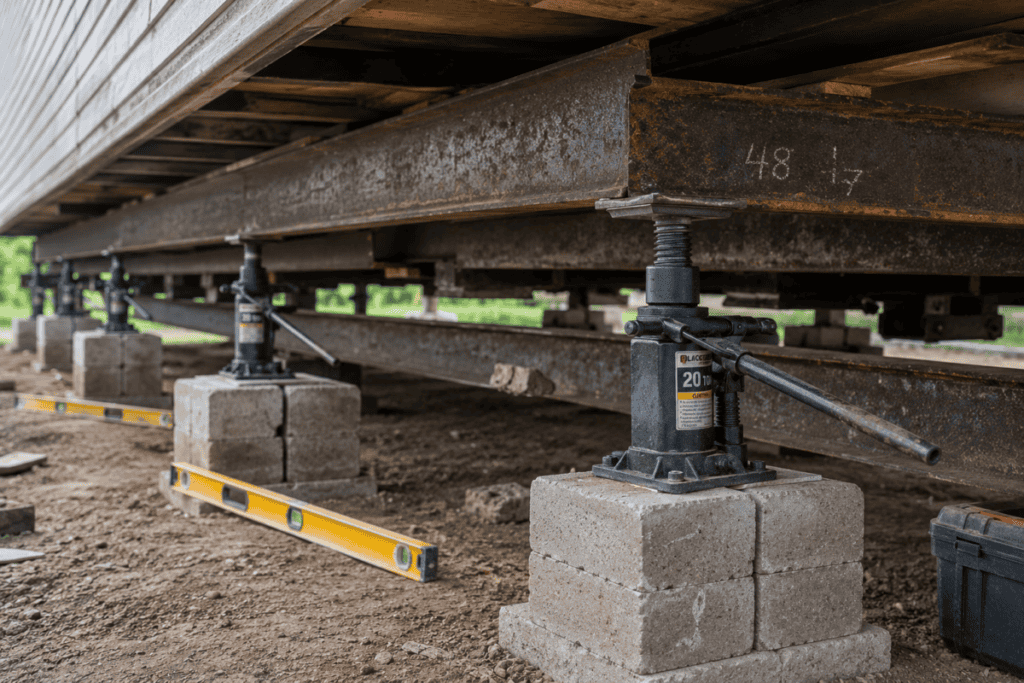
- The home is then painstakingly jacked up using heavy-duty hydraulic equipment so that transport axles and tires can be bolted directly to the integrated steel I-beams.
- The tongue assembly, which is often cut off or buried during initial installations, must be structurally welded or bolted back onto the front of the frame.
This setup is highly vulnerable to mechanical breakdown if the components have suffered decades of subterranean moisture exposure.
During transit, the house is subjected to constant racking forces. The highway acts as a continuous low-grade earthquake. This is why hiring an insured, licensed, and highly experienced transport company is completely non-negotiable. They must secure transit permits for every county and state line crossed, arrange for pilot vehicles, and provide comprehensive cargo insurance. Once the home arrives at its secondary location, the installation process repeats: site clearing, grading, pouring concrete footings, resetting the blocks or piers, anchoring the steel straps, and splicing the utilities back together. If you are dealing with a double-wide or multi-section home, the marriage line must be perfectly aligned, sealed, and weatherproofed using specialized materials to prevent permanent structural water leaks.
Professional Fleet Preparation and Equipment Tracker
| Tool or Material Name | Technical Performance Specs | Critical Field Application |
|---|---|---|
| Titan 20-Ton Hydraulic Jack | Low-profile design; solid steel base plate. | Lifting the chassis cleanly to install axles. |
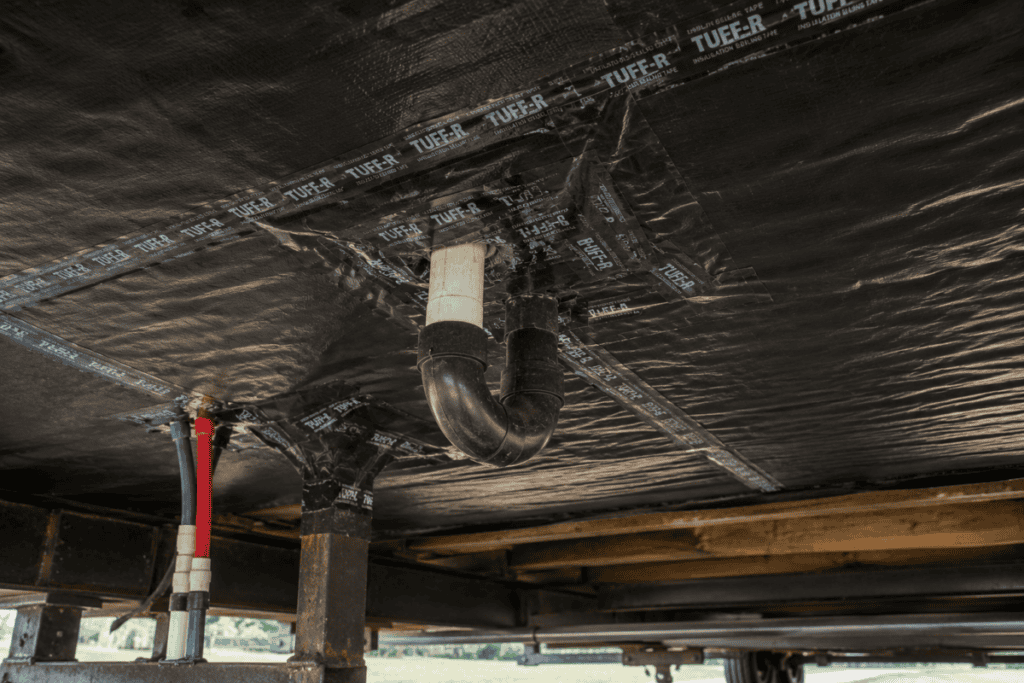
| IronClad Bottom-Board Repair Tape | High-tack acrylic adhesive; water-impermeable. | Sealing underbelly punctures before highway transport. |
| Omni-View Digital Water Level | 0.05-Inch precision rating; 100-foot hose range. | Ensuring dead-on frame leveling at the new site. |
2026 Cost Transparency and Moving Expense Breakdown
Relocating a manufactured home is one of the most expensive logistical challenges in the residential real estate market. In 2026, fuel surcharges, regulatory permits, and skilled labor costs have driven transport prices to historic highs. The absolute baseline cost to move a single-wide home a short distance: under fifty miles: ranges from $5,000 to $9,000 if the home is already on wheels and requires minimal site prep. However, for a true secondary move where the home must be decommissioned, broken down, hauled, and reinstalled, you must budget realistically. Double-wide structures require twice the transport permits, double the pilot cars, and a massive amount of heavy crane or positioning labor. This easily pushes costs into the five-figure range, completely altering your net equity equation.
Technical Deep Dive: The Hidden Financial Fallout of Site Splicing
The transport quote from the moving company is only a fraction of the total financial liability. True cost transparency requires calculating the secondary site preparation expenses. You cannot drop a multi-move manufactured home onto raw dirt. Local building codes universally require engineered foundations. A standard concrete runner foundation system costs between $6,000 and $11,000 depending on soil conditions. Splicing utilities: running new electrical drops from the weather head, burying sewer lines, and hooking up water mains: routinely costs between $3,500 and $7,500. If the local inspector demands a structural engineer certificate to prove the chassis survived the trip, add another $1,200 to your ledger. If you fail to account for these items, you will run out of cash before the home is even liveable.
Comprehensive 2026 Moving Cost Allocation Table
| Operational Moving Phase | Single-Wide (Up to 80ft) | Double-Wide (Full Splicing) |
|---|---|---|
| Decommissioning and Tear-Down Labor | $2,500 to $4,000 | $5,000 to $8,500 |
| Highway Transport Fees (Per Mile Basis) | $10 to $15 per mile | $20 to $35 per mile |
| Permits, Escort Cars, and State Bonds | $800 to $1,500 | $2,000 to $4,500 |
| Re-Set, Leveling, and Tie-Down Anchors | $3,500 to $6,000 | $7,000 to $13,000 |
Financing and Insurance: The Ultimate Deal Killers
This is where most real estate investors and homebuyers hit a brick wall. The primary risk of moving a manufactured home twice is financial obsolescence. The Federal National Mortgage Association (Fannie Mae) and the Federal Home Loan Mortgage Corporation (Freddie Mac) have underwriting guidelines that are absolute and unyielding. Neither institution will purchase or guarantee a mortgage on a manufactured home that has been moved from its original installation site. Federal Housing Administration (FHA) and Department of Veterans Affairs (VA) loans follow the exact same structural mandate: the home must have been delivered directly from the factory floor to the original site. The moment a home is moved a second time, it permanently loses its eligibility for conventional, low-interest real estate financing.
What does this mean for you? It means that when you go to sell the property in the future, your buyer pool shrinks to cash-only investors or specialized chattel loan buyers who must pay high interest rates and massive down payments. This destroys the retail value of the asset. Furthermore, insurance companies view secondary-move homes as extreme liabilities. Many national carriers will completely deny comprehensive coverage for a home once it is uprooted from its original foundation. The policy underwriting risk shifts dramatically because of the high likelihood of hidden structural twist, roof separation, or microscopic cracks in the electrical conduit piping that could lead to post-move electrical fires.
Critical Warning Signs: When To Walk Away Completely
As an investor who has evaluated hundreds of properties, I can tell you that some homes are structural liabilities waiting to implode on the highway. You must perform a rigorous pre-purchase inspection before handing over any earnest money or transport down payments. First, look under the home. If you see severe flaking rust, structural bowing in the main I-beams, or missing outriggers, the frame is compromised. Walk away. Second, check the interior ceiling lines along the marriage wall on double-wides. Sagging structural elements or extensive historic water stains indicate that the home’s wood framing is already soft or rotted. Uprooting a soft home will cause the walls to detach from the floor plates during highway transport.
Finally, inspect the localized zoning boards and municipal regulations at your target destination. Many progressive communities and modern manufactured home parks have strict age limits, often completely barring any home that is more than ten or fifteen years old, regardless of its structural condition. If you buy a home, pay to have it packed up, and tow it to a county line only to discover that local zoning laws forbid its installation, you will be stuck paying astronomical daily impound fees while owning a structure that cannot legally be placed anywhere.
Actionable Secondary-Move Checklist
- Verify HUD Plate Status: Physically locate the red metal HUD tags. If they are missing, file an official verification request through the IBTS database immediately.
- Conduct a Frame Twist Analysis: Hire an independent contractor to string-line the main steel I-beams to check for preexisting frame twist or sag.
- Audit the Target Destination Zoning: Secure written confirmation from the destination county zoning administrator stating that the specific model year can be installed.
- Check Underbelly Wrap Integrity: Inspect the bottom-board membrane for large tears, sagging insulation, or active water traps that could cause floor-system failure during transit.
- Get Triple-Line Carrier Insurance: Force your chosen transport company to provide a current certificate of cargo insurance listing you as additionally insured for the full retail value of the structure.
- Run a Financing Check: If utilizing capital, ensure your funding source is fully aware that this is a secondary-move home to avoid sudden loan pullbacks at closing.
Summary and Professional Takeaway
Moving a manufactured home a second time is a high-risk operational play that demands extreme financial scrutiny. While it offers a potential path to acquiring affordable housing or cheap investment inventory, the hidden costs of site preparation, transport engineering, and permanent financing disqualification routinely wipe out any paper profits. If you proceed, treat it strictly as a cash-flowing asset, assume a zero-dollar retail resale value, and execute rigorous physical due diligence on the structural integrity of the chassis before moving a single tire.
Related Questions and Technical FAQs
Can you get a chattel loan on a mobile home that has been moved twice?
Yes, certain specialized personal property lenders will write a chattel loan on a secondary-move home because they hold a lien on the structure only, not the land. However, these loans carry significantly higher interest rates, shorter repayment terms, and require rigid physical inspections of the chassis tracking numbers.
What happens if the HUD plate is painted over or removed entirely?
If the exterior red plates are missing, the home will fail standard municipal code inspections during the re-installation process. You must obtain a formal Letter of National Label Verification from the Institute for Building Technology and Safety (IBTS) to re-establish the legal identity of the manufactured home.
Does moving a double-wide home twice cause permanent roof leaks?
It will if the transport team fails to utilize professional gasket seals along the marriage line during reassembly. The structural shifting that occurs on the road weakens the original fastening points, making high-quality weatherproofing and precise laser alignment absolutely vital during the final setup phase.
About Charles O’Dell
Charles O’Dell is a professional real estate investor, manufactured housing expert, and the driving force behind MobileHomeFriend.com. With over 23 years of grinding field experience, Charles has flipped more than 100 properties and coordinated hundreds of complex real estate deals nationwide. He operates entirely on first-principles logic, focusing strictly on cost transparency, engineering data, and structural realities. He cuts out the fluff to help everyday property owners and investors build real, long-term wealth without getting burned by hidden systemic risks.
Backed by 23 years of hands-on manufactured housing investment, over 100 successful property flips, and hundreds of real estate transactions nationwide.