(Updated December 12, 2025) For a serious investor, the foundation is the legal and financial component that determines the value of the home, not just its stability. An old home on blocks with cheap vinyl skirting will never fetch the price of a home on a modern, permanent foundation.
The total cost to stabilize, skirt, and potentially upgrade a mobile home’s foundation ranges from $2,000 for a basic skirt and leveling up to $15,000 or more for a permanent, lender-approved foundation. This is a crucial investment that shifts your property from a depreciating chattel asset to appreciating real estate. This guide shows you the mandatory costs to hit FHA/VA lending requirements and the aesthetic costs that drive buyer appeal.
Affiliate Disclosure: This guide contains affiliate links to specialized manufactured housing products and structural components used for high-ROI mobile home renovations. If you purchase through these links, Mobile Home Friend may earn a small commission, at no extra cost to you.
Table of Contents
The Short Answer: Foundation Upgrade Costs (2025 Estimates)
Foundation work falls into three distinct investor categories, each serving a different purpose and price point. Your goal determines your required investment.
| Scope of Work | Average Installed Cost Range | Investor Goal/ROI |
|---|---|---|
| Leveling & Anchoring Only | $700 – $1,500 | Essential structural safety; fixes doors/windows. |
| Aesthetic Skirting Upgrade | $2,000 – $5,000 | Curb appeal upgrade (Faux Stone/Brick); protects underbelly. |
| Permanent Foundation (Lender Approved) | $6,000 – $15,000+ | Mandatory for FHA/Conventional Financing. |
Investor Directive: Permanent foundation costs are high, but they are often recouped entirely by the increase in accessible financing and the home’s classification as real property.
Permanent Foundations: Converting Your Asset to Real Estate
To qualify for FHA, VA, or most conventional loans, your manufactured home must be permanently affixed to the land. This is the single largest structural barrier to maximizing your resale pool and price.
What Qualifies as “Permanent”?
The foundation must meet HUD standards, which typically means it cannot be moved and must be certified by an engineer. The most common methods for older homes are:
- Concrete Slab Foundation: A thick concrete pad with embedded footers and anchor bolts. This is clean, durable, and highly compliant.
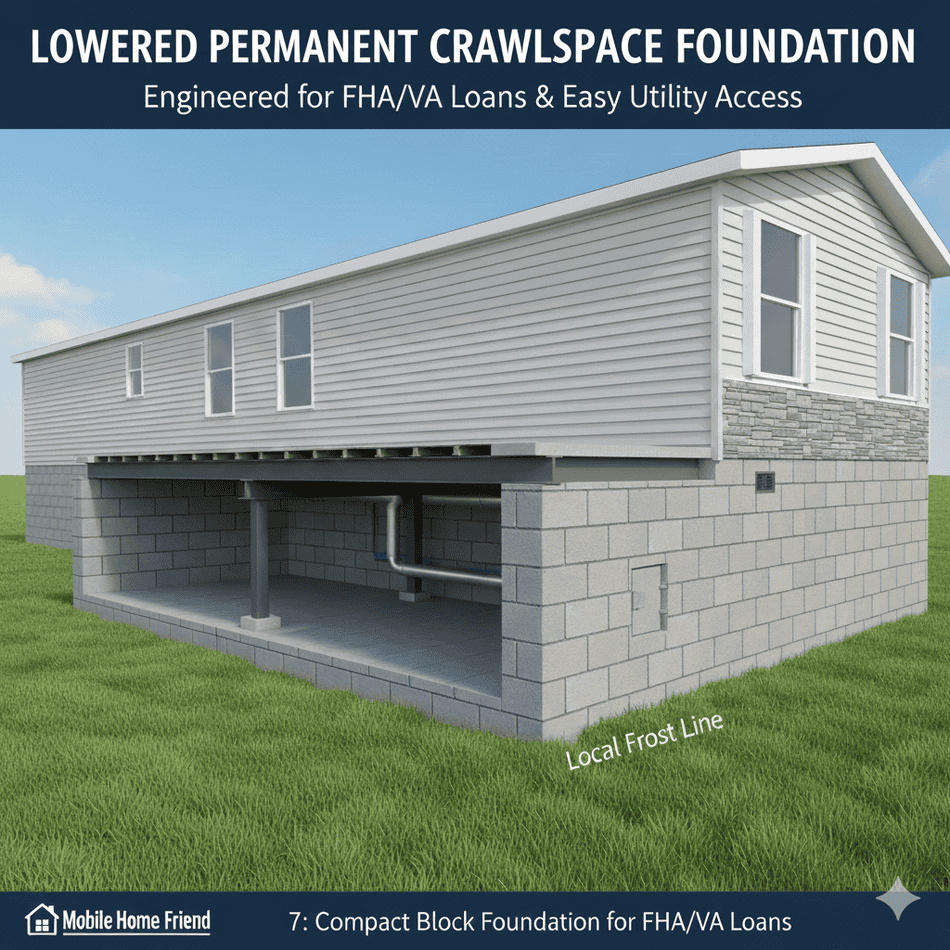
- Concrete Perimeter Wall (Crawlspace): Concrete or block walls are constructed around the perimeter, extending below the local frost line. This provides a traditional look and easy access to the utilities underneath.
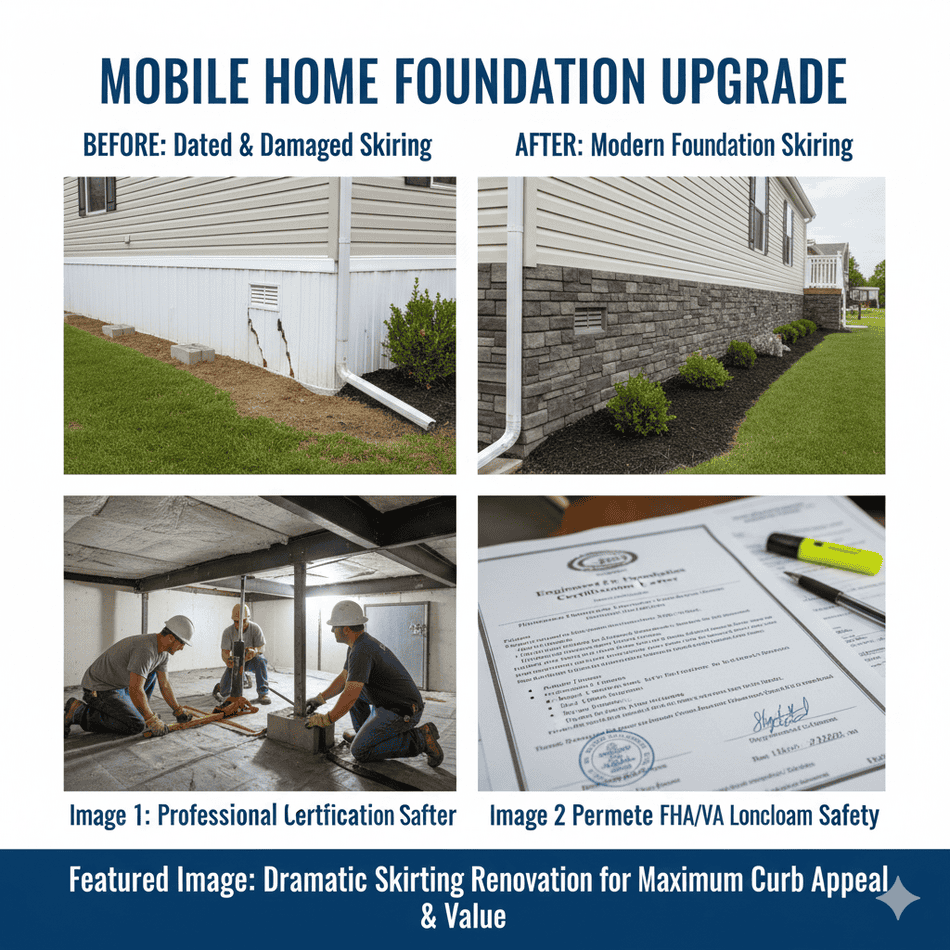
- The Engineers Certification: Regardless of the type, you MUST get a Foundation Certification from a licensed structural engineer that explicitly states the foundation complies with HUD Permanent Foundation Guidelines (PFG). Without this paper, no FHA loan will close.
Cost Impact: The cost is high, but the profit ceiling for the property is much higher when it is eligible for standard 30-year mortgages.
Skirting: Curb Appeal and Energy Defense
Skirting is not structural, but it is mandatory for both aesthetics and utility protection. A well-installed skirt dramatically boosts curb appeal and is essential for energy efficiency.
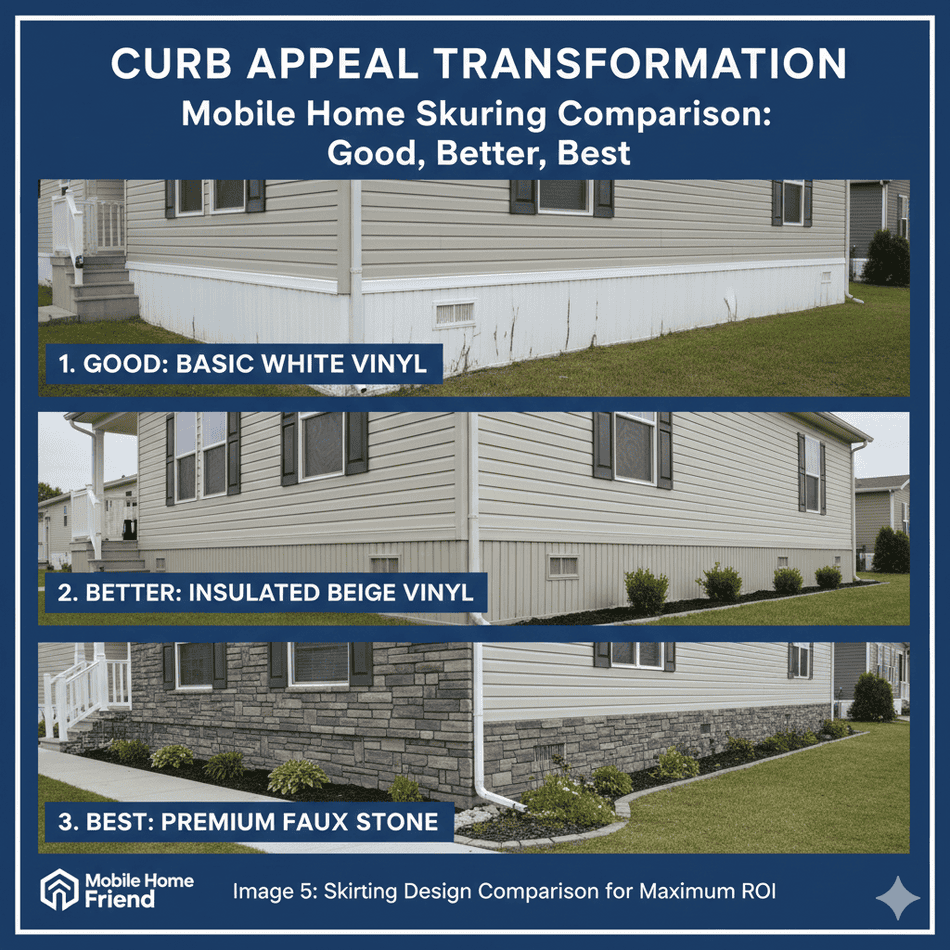
- Aesthetic Impact: Replacing thin, damaged vinyl skirting with a high-end option (faux stone or insulated vinyl) makes the home look like a site-built house, justifying a higher price.
- Underbelly Protection: The skirt keeps animals, moisture, and extreme temperature changes from impacting the ductwork, pipes, and subfloor access. Proper installation requires vents to prevent moisture buildup. For energy specifics, see: Mobile Home Underbelly, Ductwork, and Insulation Cost.
Skirting Material ROI: Vinyl is cheapest but fragile. Faux stone or faux brick offers the highest visual ROI for a flip, costing more in materials but paying off in perceived quality.
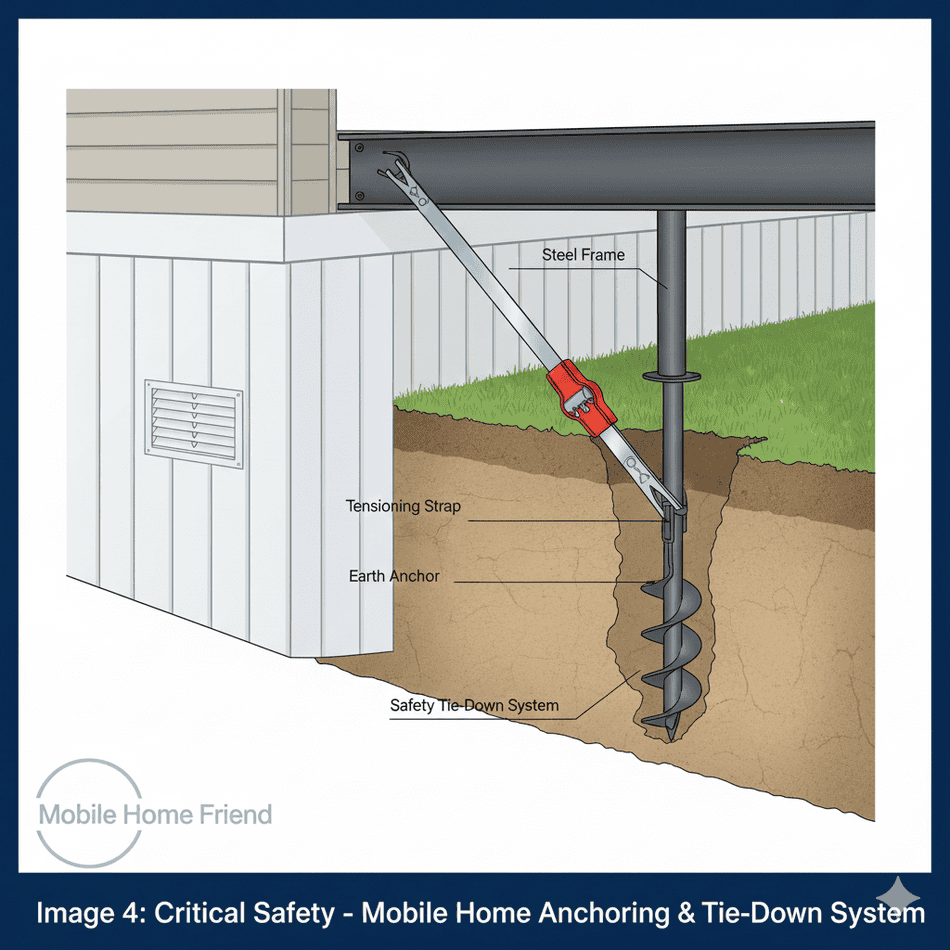
Leveling and Anchoring: The Structural Prerequisite
A mobile home on piers must be perfectly level and securely anchored. An unleveled home causes doors to jam, windows to stick, and creates undue stress on the walls and roof.
- Leveling Cost: Leveling a single-wide typically costs $450-$700; a double-wide costs $750-$1,200. This is a cheap, mandatory maintenance item.
- Anchoring and Safety: The home must be secured to the ground using anchor tie-downs (cables or straps) that connect the frame to concrete footers or earth anchors. This is a critical safety requirement for high-wind areas and is often inspected by insurance companies.
- Foundation Warning: If you have to relevel the home frequently, it means you have a soil or drainage problem, which will eventually lead to major subfloor damage. For subfloor repair instructions, see: The Complete Guide to Mobile Home Subfloor Repair.
Investor Directive: Never buy a home that shows repeated signs of settling without factoring in a foundation/drainage remediation budget.
?️ Key Product Recommendations for Foundation and Curb Appeal
These two products cover the essential compliance hardware and the highest-ROI aesthetic upgrade.
✅ Option 1: High-End Faux Stone Skirting Panels
Moving away from plain vinyl is one of the quickest ways to increase the perceived value of the home. These Faux Stone Skirting Panels offer the look of masonry or stone at a fraction of the cost, dramatically boosting curb appeal and protecting the underbelly from the elements.
✅ Option 2: Compliance-Rated Anchor Tie-Down Kit
For safety, stability, and insurance compliance, your mobile home must be securely anchored to the ground. This Heavy-Duty Mobile Home Anchor Tie-Down Kit provides the hardware required to secure the home’s frame to the earth, protecting your investment from high winds.
Summary
The foundation is the final, non-negotiable step to converting a mobile home flip into a high-value real estate asset. For maximum profit, determine if the home requires a permanent foundation for FHA financing. If not, focus on anchoring, leveling, and high-quality skirting to protect the underbelly and maximize curb appeal.
Related Questions
- How do I find a HUD-approved foundation contractor? Start by asking a few local manufactured home lenders or FHA-approved brokers for a list of engineers and contractors they accept. Using their pre-approved list prevents you from spending money on a foundation that won’t qualify for the loan.
- Can I DIY the skirting? Basic vinyl skirting is highly DIY-friendly. Faux stone or concrete panel systems are more challenging but still possible for a skilled DIY investor. However, never DIY the leveling or anchoring, as this requires specialized tools and technical expertise for safety compliance.
Written by a real estate investor who has managed multiple mobile home permanent foundation conversions to qualify for conventional financing and maximize resale value.