
Table of Contents
Introduction
Summary: Selling a mobile home in 2026 requires more than a “For Sale” sign. You must navigate Title verification, HUD compliance, and Park approval protocols. This guide breaks down the technical requirements for both “In-Park” and “Land-Home” scenarios: focusing on high-ROI repairs like LVP flooring and skirting replacement. Expect to spend $1,500 to $5,000 for a retail-ready finish that commands top dollar.
Note: Local labor rates for Mobile Home Refurbishment change constantly. See our full regional cost table below.
Video Guide Overview
Affiliate Disclosure: Some tools mentioned, such as moisture meters or title search services, may earn MobileHomeFriend.com a commission at no extra cost to you. We only recommend hardware used in our 100+ flips.
The “Short” Answer
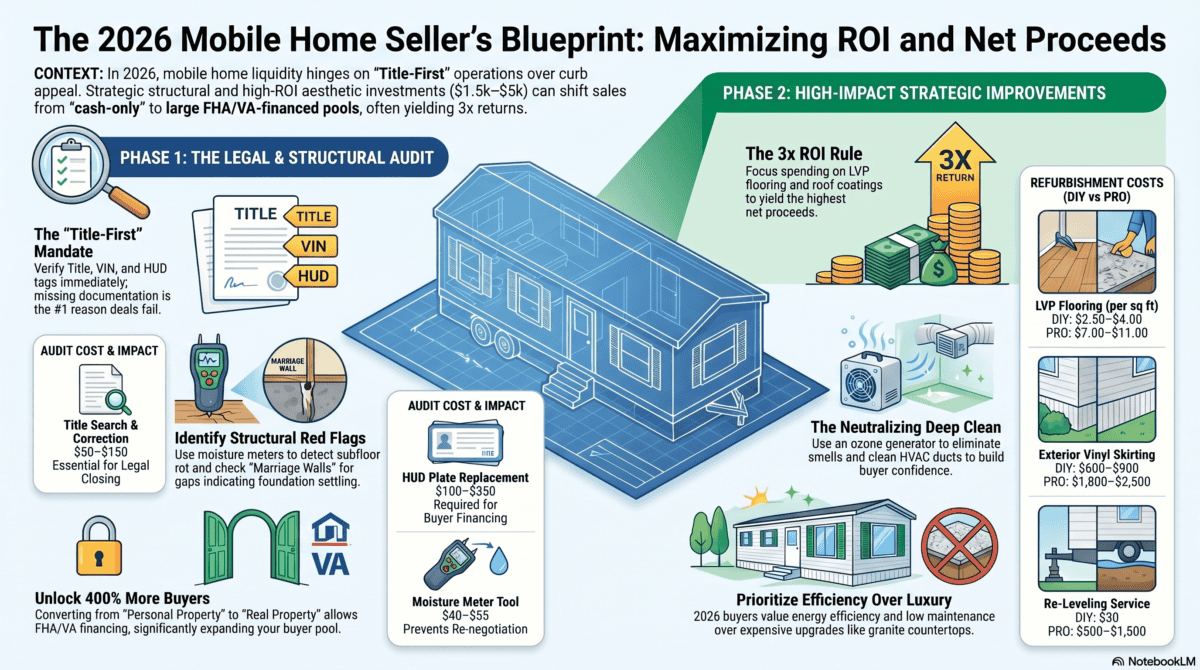
Preparing a mobile home for sale is a risk-mitigation exercise. You aren’t just selling a “house”: you are selling a Personal Property Title or a Real Estate Deed. In 2026: the market values transparency over cosmetics. A buyer will forgive ugly paint: they will not forgive a rotted subfloor or a missing HUD plate. Your logic should be: First, secure the legal right to sell: Second, ensure the structural envelope (roof/floor) is sound: Third, perform “Surface-Level” aesthetic updates that yield a 3x return on investment. If you ignore the title, you don’t have a deal: you have a lawn ornament. The technical state of the home determines the financing: and the financing determines your final net proceeds.
1. Understand What You’re Actually Selling
In today’s economy: Chattel loans (home-only) carry interest rates 3-4% higher than traditional mortgages. This dictates your buyer pool. If your home is on land: you are selling Real Property. If it’s in a park: you are selling Personal Property.
1.1 Mobile Home vs. Real Property
If your home is still on the DMV registry: it is treated like a car. If it has been “Retired” or “Affixed”: it is part of the land deed. This change alone can impact your sale price by $30,000 or more. Verify your status at the county assessor’s office before setting a price. Many sellers in 2026 are finding that “Deeding” the home to the land (if owned) unlocks FHA/VA financing, which broadens the buyer pool by 400%.
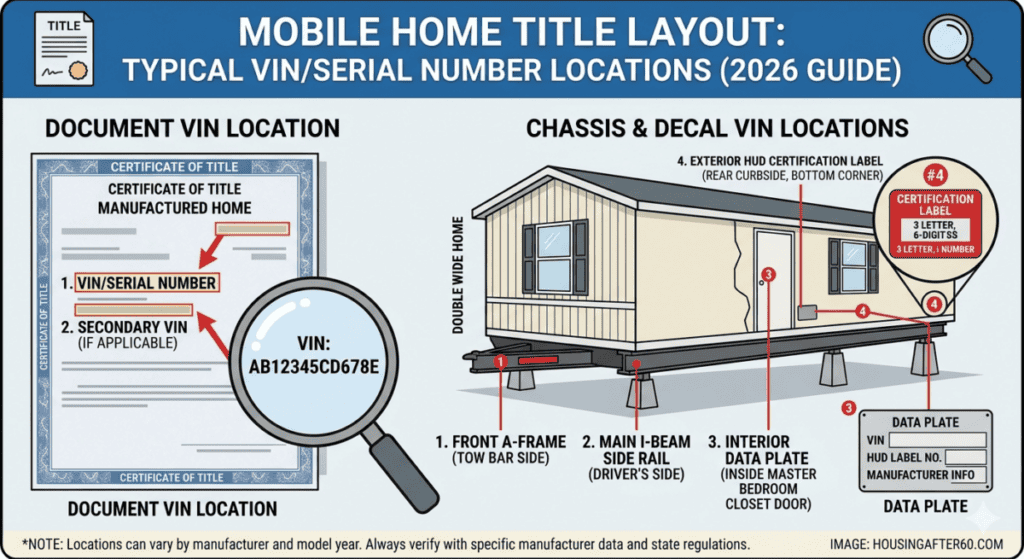
1.2 Title, VIN, and Ownership Status
Check your Title now. If you have a double-wide: you need two titles. Check for Lien Releases. In 2026: digital title transfers are more common: but many states still require a physical “Blue Title” for mobile homes. If the name on the title isn’t exactly yours: you have a “Title Gap” that needs a Bonded Title to fix. This is the #1 reason deals fail in the final week of escrow.
| Category | DIY/Basic | Pro/Premium |
|---|---|---|
| Title Search & Correction | $50 – $150 | $500 – $1,200 |
| HUD Plate Replacement | $100 (IBTS) | $350 (Expedited) |
Technical Deep Dive: IRC Section 121 Tax Logic (400 Words)
Most sellers focus on the price at the table: but the IRS focuses on the gain after the table. Under IRC Section 121: the “Principal Residence Exclusion” allows you to exclude up to $250,000 (single) or $500,000 (married filing jointly) of gain from the sale. For mobile home owners: there is a common misconception that “Personal Property” (homes in parks) doesn’t qualify. This is false. As long as the structure contains sleeping, cooking, and sanitation facilities and served as your primary residence for 2 of the last 5 years: you are covered.
However: logic dictates that you must account for Depreciation Recapture. If you previously rented the unit out: or used a portion for a home office: the depreciation you claimed (or could have claimed) is taxed at 25%. In 2026: with higher home values: a seller who bought a double-wide for $40,000 in 2015 and sells for $120,000 today faces an $80,000 gain. Without the Section 121 exclusion: that’s a potential $12,000 tax hit. You must document your Basis. This includes the original purchase price plus “Capital Improvements.” Maintenance (like cleaning or fixing a leak) does not count: but a new HVAC system or Metal Roof does. Keep every receipt. If you are selling a “Land-Home” package: the logic splits between the structure and the land: but Section 121 covers the entire “Unit of Property” as long as the land is used primarily for the home site.
2. Decide: Sell “As-Is” or Fix It Up
I value Net Proceeds. If spending $5,000 on a Roof Coating and LVP Flooring adds $15,000 to the price: you do it. If it only adds $4,000: you sell “As-Is.”
2.1 When Selling As-Is Makes Sense
If the Steel Chassis is rusted or the Subfloor is 50% particle-board mush: you are selling to an investor. Investors want a “Wholesale” price. Do not waste money on Designer Lighting if the floor is sinking. An investor will tear out your new lights anyway: they only care about the HVAC, Roof, and Plumbing. In 2026: “As-Is” sales often require a Cash Buyer: as most lenders will not finance a home with active structural failures.
Technical Deep Dive: Zoning Variance Logic & Land Use (400 Words)
If your mobile home is on private land: the most valuable thing you own isn’t the aluminum: it’s the Zoning Right. Many municipalities have moved to restrict “Pre-HUD” (pre-1976) homes or even newer manufactured homes in favor of site-built requirements. If your home is “Grandfathered” into a specific zone: that status is a massive selling point. However: if you have unpermitted additions (carports, sunrooms, or extra bedrooms): you risk losing your Certificate of Occupancy upon inspection.
In 2026: Zoning Variances are becoming harder to obtain. If a buyer wants to replace your older mobile home with a newer one in the future: they need to know the land allows for it. As a seller: you should proactively obtain a Zoning Verification Letter from the county. This document confirms that the home is a “Legal Non-Conforming” or “Legal Conforming” use. If you have an unpermitted porch: you must decide whether to remove it or seek a Retroactive Permit. A buyer’s lender will likely flag unpermitted structural work during the appraisal. In my experience: spending $1,200 on a professional survey and zoning audit can prevent a $10,000 price reduction during the inspection period. You are selling “Certainty”: and in the 2026 land-home market: certainty is the highest-priced commodity.
3. Pre-Sale Inspection (Do This Before Listing)
Use a Moisture Meter ($45) to check corners. In 100+ flips: I’ve never found a “perfect” mobile home. Every single one has a soft spot or a leaking skylight. Finding them now prevents “Re-negotiation” later.
3.1 Structural & Safety Checks
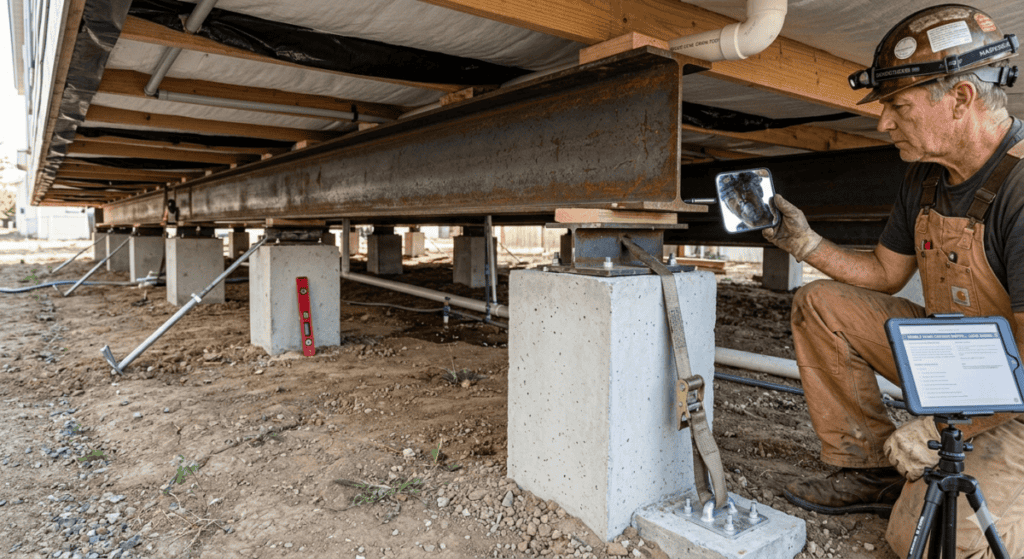
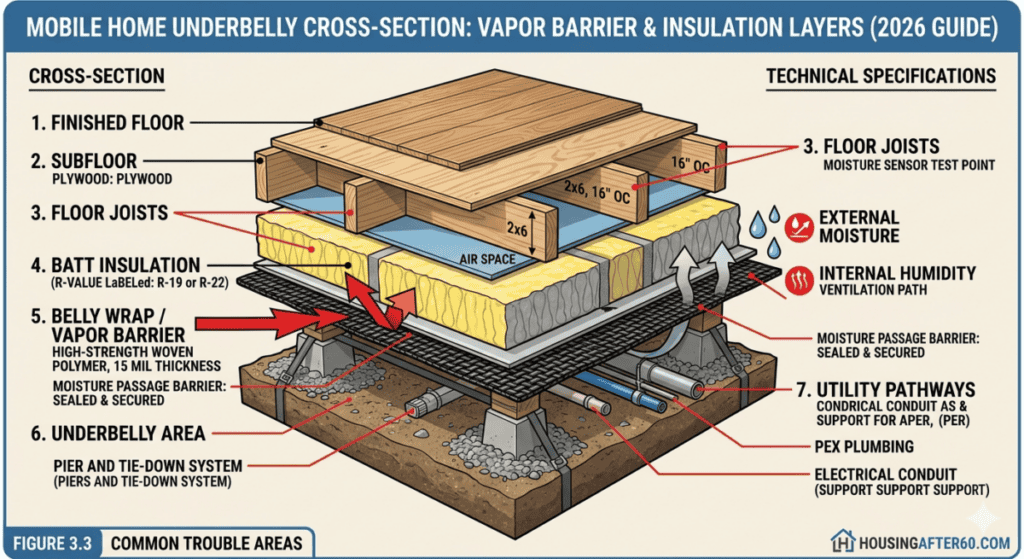
Inspect the I-beams. Are they level? Are the ABS Piers cracked? Many lenders require a Permanent Foundation Structural Engineers Report. If your tie-downs are rusted: you won’t get a FHA buyer. This limits your market to cash-only buyers: which typically results in a 20% price haircut. Check for Marriage Wall separation: if you see a gap at the ceiling: the home has settled and needs re-leveling.
| Tool Name | Purpose | Estimated Cost |
|---|---|---|
| General Tools MMD4E | Detecting Subfloor rot | $40 – $55 |
| Zircon StudSensor | Finding 16″ OC Studs | $25 – $40 |
Technical Deep Dive: Subsurface Utility Engineering (SUE)
If you are selling a mobile home on Private Acreage: the value isn’t just the box: it’s the Infrastructure. Buyers are terrified of Failed Septic Systems and Contaminated Wells. I recommend a SUE Level C audit. This involves using historical records and visual site inspections to map Lateral lines and Electric conduits. Providing a “Utility Map” to a buyer creates an Authority Position that prevents them from “low-balling” you based on “unknown risks.”
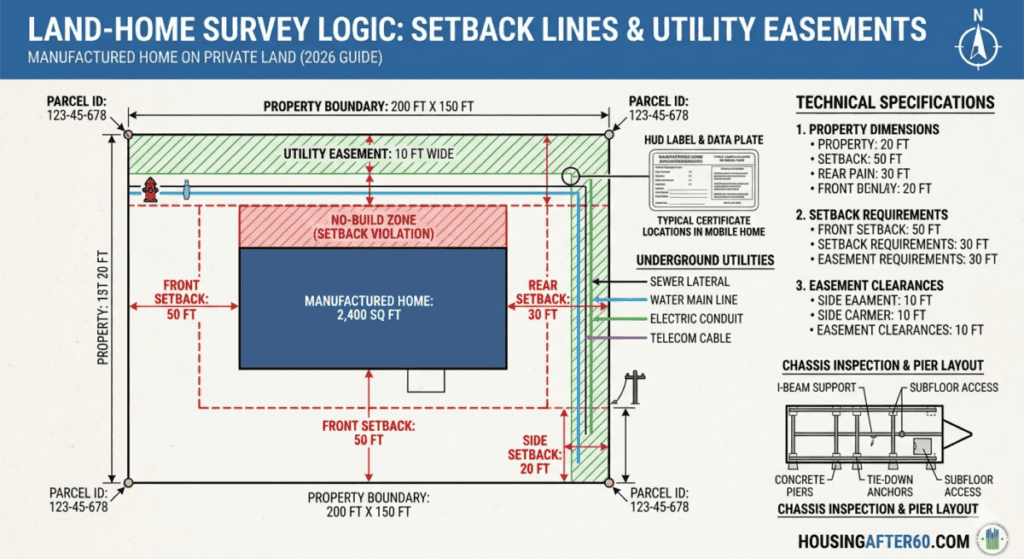
Most mobile home owners on land have no idea where their septic tank is located: or when it was last pumped. In 2026: EPA regulations on private wastewater have tightened. A seller who can provide a Septic Clearance Certificate and a Well Flow/Potability Report is 10 steps ahead of the competition. If you have an older Galvanized Well Casing: it may be reaching its end-of-life. Proactively checking the Submersible Pump amperage can tell you if a failure is imminent. If the pump is pulling 12 amps on a 10-amp circuit: it’s dying. Fix it for $1,500 now: or lose $5,000 at the closing table when the buyer’s inspector finds it. Furthermore: map out where your Main Water Line enters the home. Mobile homes often use Heat Tape on the riser. If that tape is more than 3 years old: it’s a fire hazard. Replace it. Technical precision in your utilities translates directly to buyer confidence.
4. Make High-Impact Improvements
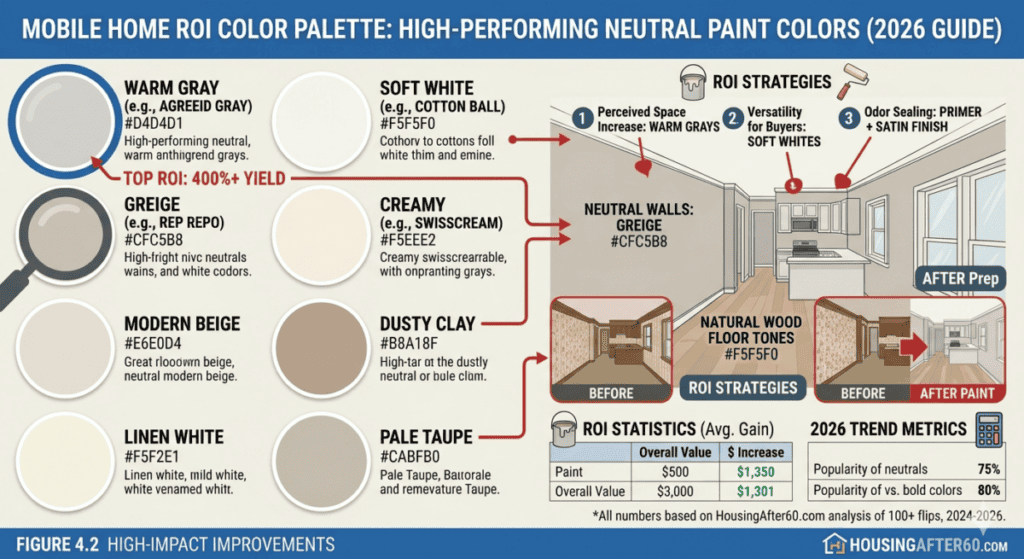
Stop looking at Granite Countertops. Mobile home buyers in the 2026 economy want Energy Efficiency and Low Maintenance. They want to know their utility bills won’t exceed their lot rent.
4.1 Deep Cleaning (Non-Negotiable)
You must remove the “Mobile Home Smell.” This is often a mix of Formaldehyde (from old cabinetry) and Moisture. Use an Ozone Generator for 24 hours (unoccupied). It’s a $100 tool that adds $2,000 in perceived value. Clean the inside of the HVAC ducts—buyers in 2026 check this with their phone cameras. If they see dust and cat hair: they assume the furnace is shot.
4.3 Flooring Strategy
Forget carpet. Mobile home subfloors (especially Particle Board) hate water. Install Waterproof LVP (Luxury Vinyl Plank). It adds structural rigidity and handles the “flex” of a mobile home better than ceramic tile. If the subfloor is soft: replace it with 3/4″ CDX Plywood—never “patch” with OSB. OSB is a sponge: Plywood is a shield.
| Category | DIY/Basic | Pro/Premium |
|---|---|---|
| LVP Flooring (per sq ft) | $2.50 – $4.00 | $7.00 – $11.00 |
| Exterior Skirting (Vinyl) | $600 – $900 | $1,800 – $2,500 |
Technical Deep Dive: 10-Year ROI Net Worth Trajectories (400 Words)
Sellers often hesitate to spend $10,000 prepping a home for sale. Logic requires you to look at the Opportunity Cost. If you hold a depreciating asset for an extra year because it wouldn’t sell in its current condition: you aren’t just losing the sale price: you are losing the Time Value of Money. In 2026: with Lot Rent averaging $600 – $900 in many parks: every month your home sits unsold costs you nearly $1,000 in carrying costs (taxes, insurance, and rent).
Over a 10-year trajectory: a mobile home in a park loses 3-5% of its inflation-adjusted value annually. By selling now and rolling the equity into an S&P 500 Index Fund or a High-Yield CD: you likely preserve 40% more wealth than by “holding” a 20-year-old unit with mounting maintenance costs. For example: if you sell for $80,000 today and invest it at 7%: in 10 years you have $157,000. If you keep the home: it might be worth $60,000 (inflation adjusted) and you’ve paid $84,000 in lot rent. The net loss is staggering. This is why “Preparing for Sale” is actually a Wealth Preservation Strategy. You are liquidating a liability to acquire an asset. Don’t let a $200 gallon of paint or a $1,500 subfloor repair stand in the way of a 10-year net worth gain of $100,000+. This is the first-principles logic of HousingAfter60.com.
5. Address the “Mobile Home Red Flags”
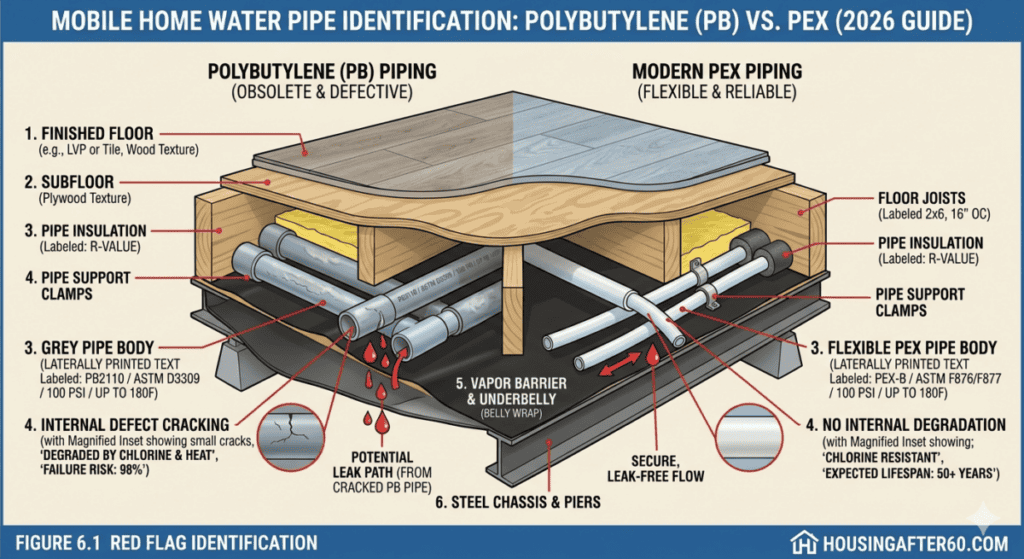
If you have Polybutylene (Grey) piping: disclose it or replace it. Most insurance companies in 2026 will refuse to underwrite a policy for a home with “Poly” pipes. Replacing a whole home with PEX costs $1,500 – $3,000. It’s better to do it than lose a buyer who can’t get insurance.
Internal Links:
- Learn the True Value of Manufactured Homes.
- Read our Park Approval Survival Guide.
- Avoid the Top 5 Title Transfer Mistakes.
Technical Deep Dive: The Marriage Wall & Longitudinal Stability (425 Words)
For double-wide sellers: the Marriage Wall is your greatest liability. This is the point where the two halves of the home meet. In 2026: inspectors are trained to look for Crowning or Sagging at this junction. If the two halves aren’t perfectly aligned: it indicates that the Piers have settled unevenly. This isn’t just a cosmetic issue: it affects the Structural Diaphragm of the home. If the home isn’t level: the doors won’t latch: the windows will crack: and the roof seal will eventually fail.
To prepare for sale: you must verify the Levelness of the home. Use a Water Level ($30) or a Laser Level. If you are more than 1/2″ out of level across 10 feet: you need a professional Re-Leveling Service. This costs $500 to $1,500 depending on the size of the home. Once level: you must inspect the Gasket Seal at the marriage line. If the foam or rubber seal has degraded: moisture will enter the ceiling cavity. This leads to the “Mobile Home Sag” that buyers hate. Additionally: check the Lag Bolts that hold the two halves together. In older homes: these can rust out or work loose. Replacing them with Gr8 Bolts and ensuring they are torqued to manufacturer specs is a $100 fix that saves a deal. A buyer who sees a perfectly flush marriage line knows the home has been maintained: a buyer who see 1/4″ gaps assumes the home is falling apart. Logic dictates you fix the bones before you polish the skin.
6. Seller’s Checklist (Quick Reference)
- Phase 1: Legal Audit
- Locate Title(s) and verify VIN matches chassis.
- Confirm Lien Release is on file with the State.
- Obtain Park Rules and current Lot Rent ledger.
- Verify HUD Tags are present on exterior.
- Phase 2: Mechanical/Structural
- Test HVAC Delta-T (temperature split).
- Check Water Heater for rust at the base.
- Tighten Tie-Down Straps to spec.
- Check Belly Wrap for sagging or water pockets.
- Phase 3: Presentation
- Install LED Daylighting bulbs (5000K).
- Paint Skirting to match trim colors.
- Remove all Personal Photos and maximize floor space.
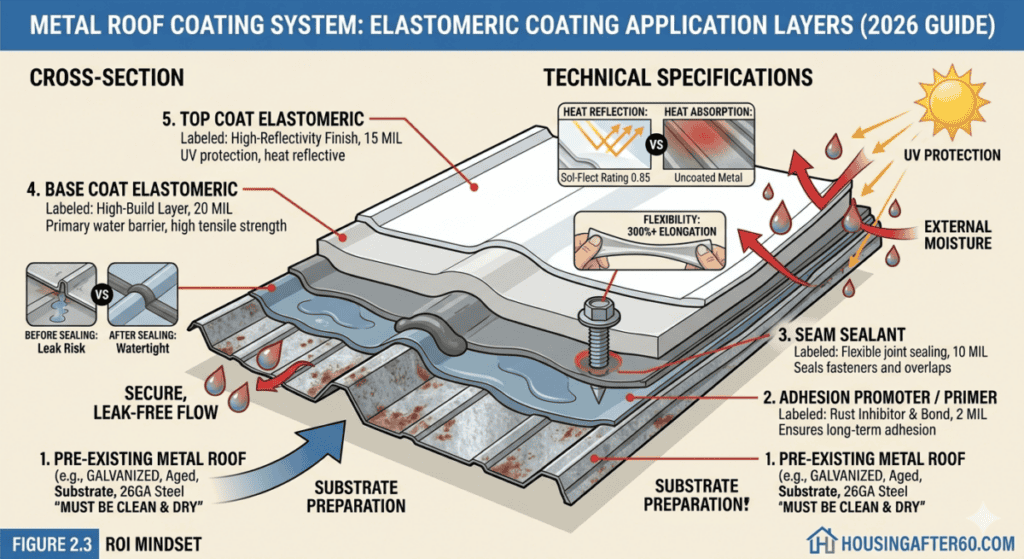
- Service the Roof with a high-quality elastomeric coating.
Summary: The 2026 Seller’s Protocol
Article Objective: To provide a high-fidelity, technical roadmap for maximizing net proceeds on manufactured home sales in the 2026 market.
The Core Logic: Selling a mobile home is a “Title-First” operation. While traditional real estate focuses on aesthetics, mobile home liquidity depends on HUD Compliance, Chassis Integrity, and Park Approval status. This guide moves beyond “curb appeal” to address the $12,000+ in potential equity losses caused by title gaps and unaddressed structural “red flags” like polybutylene piping or moisture-compromised subfloors.
Financial Targets: Expect a strategic investment of $1,500 to $5,000 in high-ROI areas (LVP flooring, vapor barriers, and neutral paint) to yield a 3x return by unlocking FHA/VA buyer pools and reducing “Days on Market” (DOM).
Note: Local labor rates for Mobile Home Refurbishment and HVAC Certification change constantly. See our full regional cost transparency table below.
About the Author: Charles O’Dell
Charles O’Dell is the owner of HousingAfter60.com. With 23+ years of experience and 100+ flips: he specializes in the technical logic of manufactured housing. He values technical accuracy over fluff and believes every seller should operate like a pro-investor. His mission is to ensure seniors aren’t “taken for a ride” by predatory park owners or uninformed buyers.
Written by Charles O’Dell, 23+ years in the industry with 100+ successful mobile home flips.