
Table of Contents
Introduction
Updated for 2025+: This article has been reviewed and expanded to reflect current manufactured housing standards, exterior remodeling options, zoning considerations, and buyer expectations as of 2025. Terminology, materials, and regulatory considerations have been updated to help homeowners, buyers, and investors make informed exterior improvement decisions.
Often, many people have had negative views on the look and feel of a mobile (manufactured) home. Sometimes, the memories of crowded mobile home parks, or run-down areas of town come to mind. Many stereotypes can be overcome by displaying a home that is contrary to popularly misleading conceptions!
Manufactured homes are now built to a standard never before seen. Many of these models come from the factory looking very much like a traditional stickbuilt home. Like any home, the individualization and customization we put into our homes will do wonders to set it apart from stereotypical mobile homes.
In this post, to keep things neat and tidy, we’ll concentrate on what we can do on the outside of the manufactured home. We’ll save the interior for another post.
Video Guide Overview
Disclosure: This article may contain affiliate links. If you choose to purchase through these links, MobileHomeFriend.com may earn a small commission at no additional cost to you.
The Short Answer
Short Answer: A mobile or manufactured home can be made to look like a traditional site-built house by improving exterior elements such as skirting, roofing profile, siding materials, porch structures, window trim, and landscaping. Results depend on local zoning rules, foundation type, budget, and whether changes are cosmetic or structural.
Ground-Set Or (Pit Set) The Home
This is generally something done at the time the manufactured home is first set up on the property. Keeping it at ground-level, rather than 30 plus inches in the air makes the home appear much more like a stick-built home.
Landscaping
This is one of the easiest and least expensive things that can be done, as well as being one of the most impactful to the appearance of any home.
Siding
If a mobile home still has old aluminum siding, or 1980s or 1990s T-111 wood siding, updating the home with modern siding will enhance the appeal of any home.
Porches and Decks
Adding a quality porch or deck creates architectural distinction to the home, losing much of the long rectangle look most manufactured homes have.
Pop-Outs, Additions, And Miscellaneous Exterior Adornment
If there is room on your lot, creating a room addition breaks up the standard rectangle shape of manufactured homes, while also greatly adding to the feeling inside as well.
Carports And Garages
This is something that costs a bit of money, but really transforms the look of a manufactured home.
Ground-Set Or (Pit Set) The Home
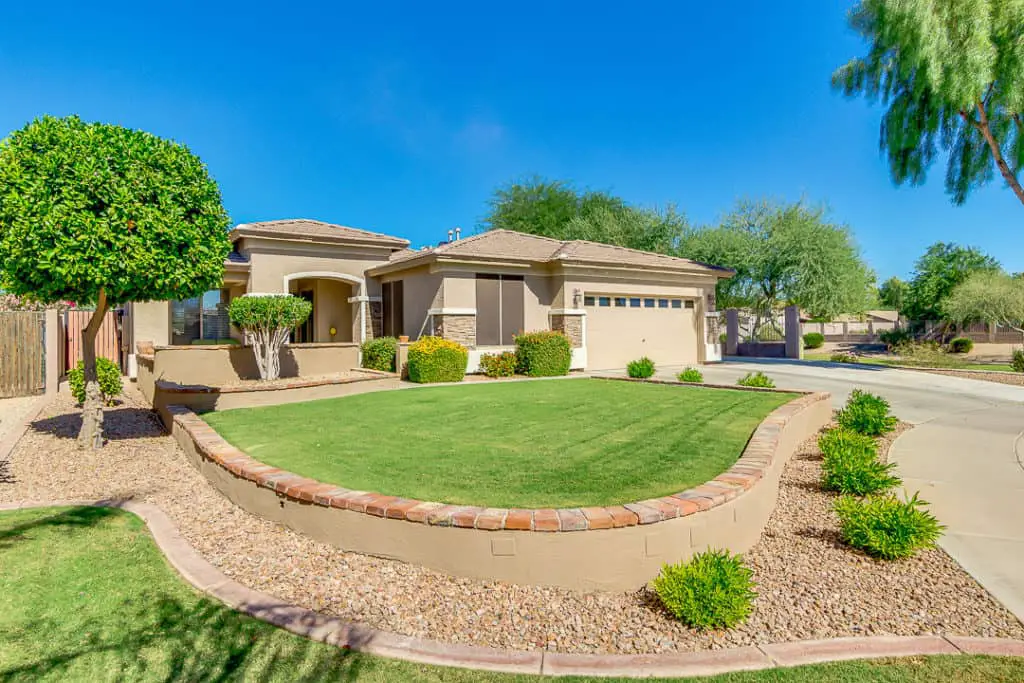
This is a decision that is made before the home is ever brought to the lot. In the southwest area where I live (Arizona) almost all stick-built traditional homes are built on a slab on grade foundation.
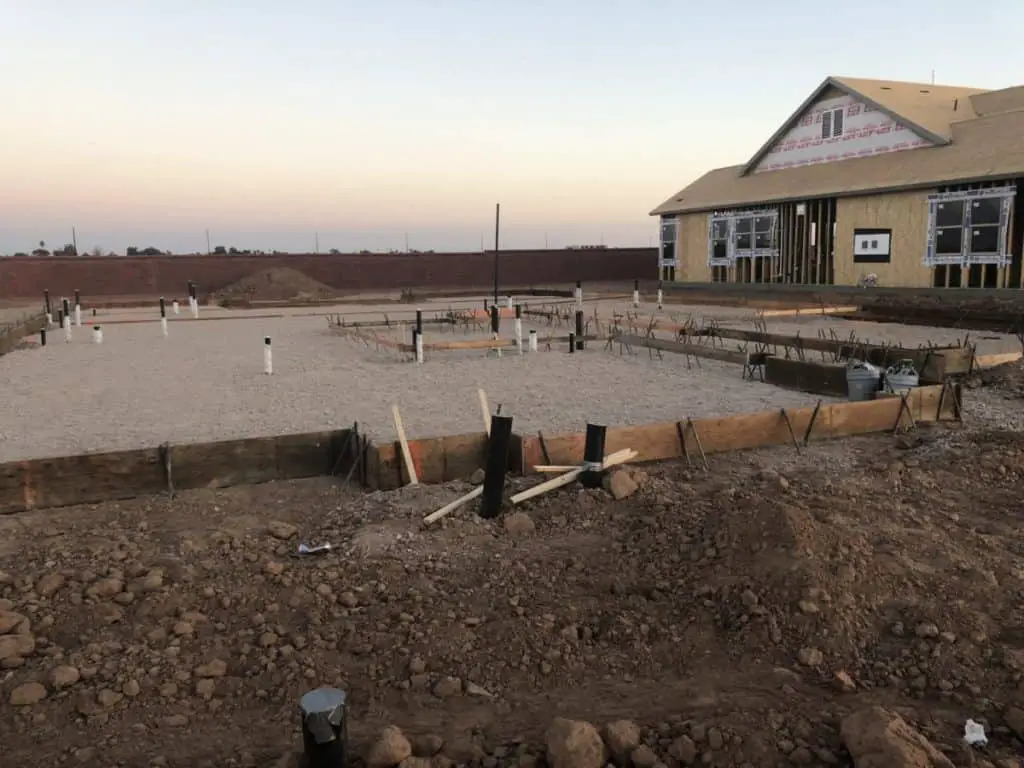
This means that when the home is completed, there is not a crawl space underneath the home, and there are no steps leading up to the home as it is generally just one step above the ground.
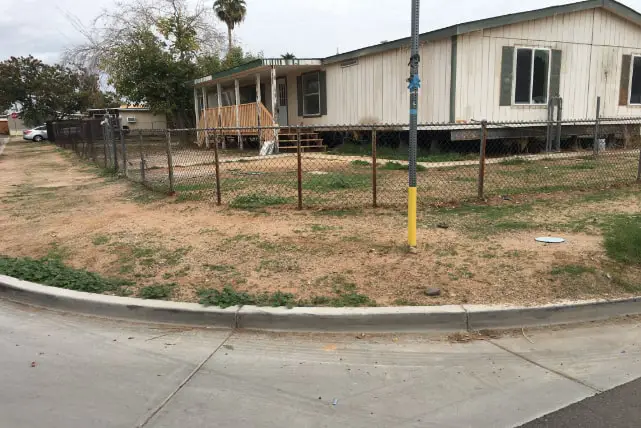
On the other hand, many manufactured homes are set above-ground, with a crawl space underneath. Generally they will sit anywhere from 30 to 40 inches above ground level. There will be steps leading up to the home.
Although it is more expensive, manufactured homes can be set at ground-level to have the feel of a more traditional home. If the home is to be ground-set, the area underneath the home must be dug out, and the home is backed into the resulting pit, placing it at ground level before setting it up.
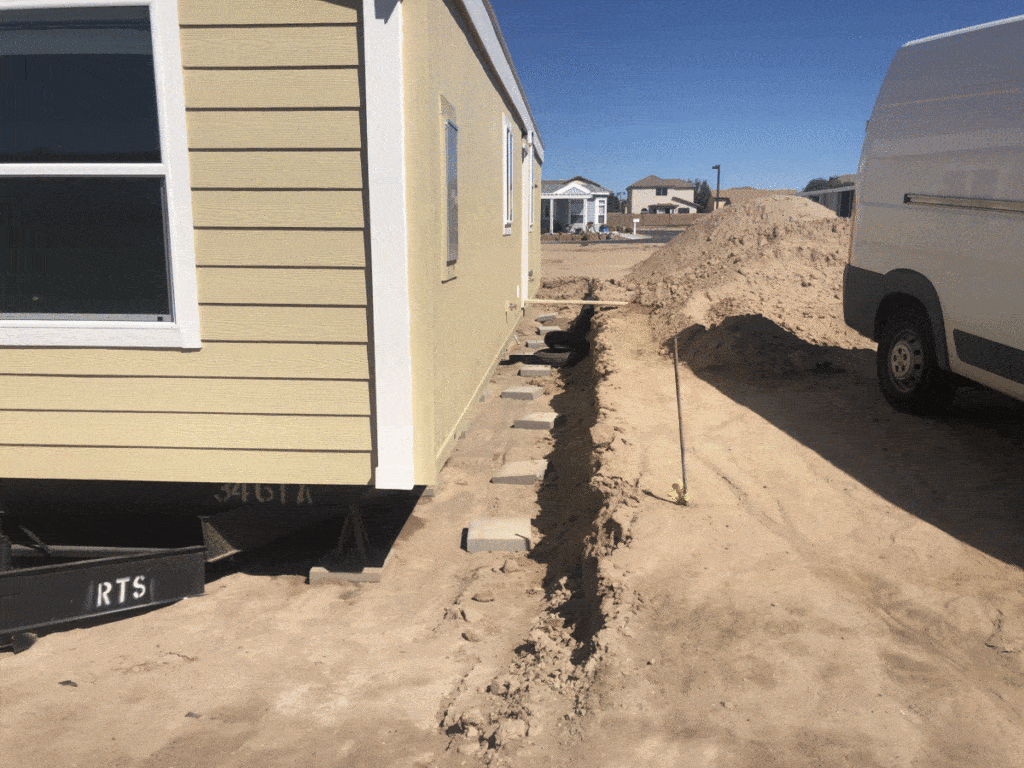
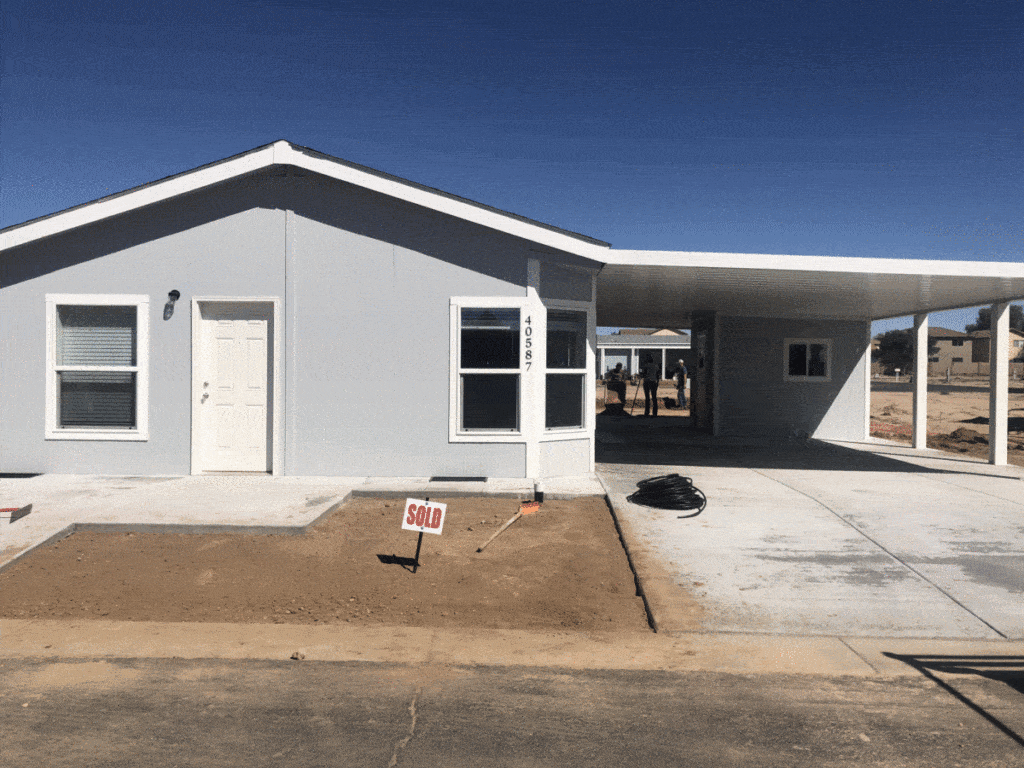
When doing a ground or pit set home, excavation work and retaining walls have to be installed which cost more than an above-ground home, but the look is much closer to that of a traditional home.
Skirting
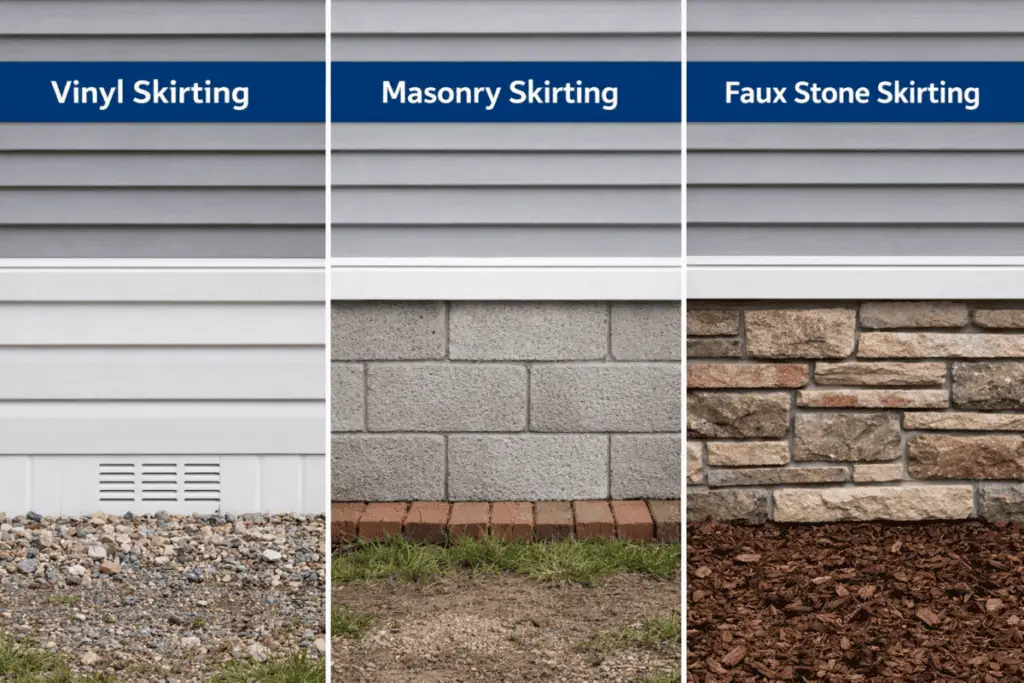
One of the most common misconceptions is that skirting is purely cosmetic. While visual improvement is important, skirting also affects ventilation, moisture control, pest access, and perceived permanence. In colder or wetter climates, improperly installed skirting can trap moisture and accelerate subfloor deterioration.
Acceptable skirting materials and installation requirements vary by state and local jurisdiction. Some areas require removable access panels, while others mandate permanent masonry-style skirting for financing eligibility. Before upgrading, homeowners should verify whether the home is classified as personal property or real property, as this can affect skirting material choices.
When upgrading skirting, verify vent spacing, ground vapor barriers, and access panel placement. Avoid sealing the crawlspace without confirming climate-appropriate moisture management practices.
Landscaping
Landscaping is one of the most cost-effective ways to visually anchor a manufactured home to its site. However, poor grading or plant placement can create drainage problems that affect skirting and foundation components.
In some states, landscaping improvements may affect setback compliance or drainage requirements. Hardscape additions should not obstruct required access points.
Verify grading slopes away from the home, maintain crawlspace access, and avoid planting that blocks ventilation openings.
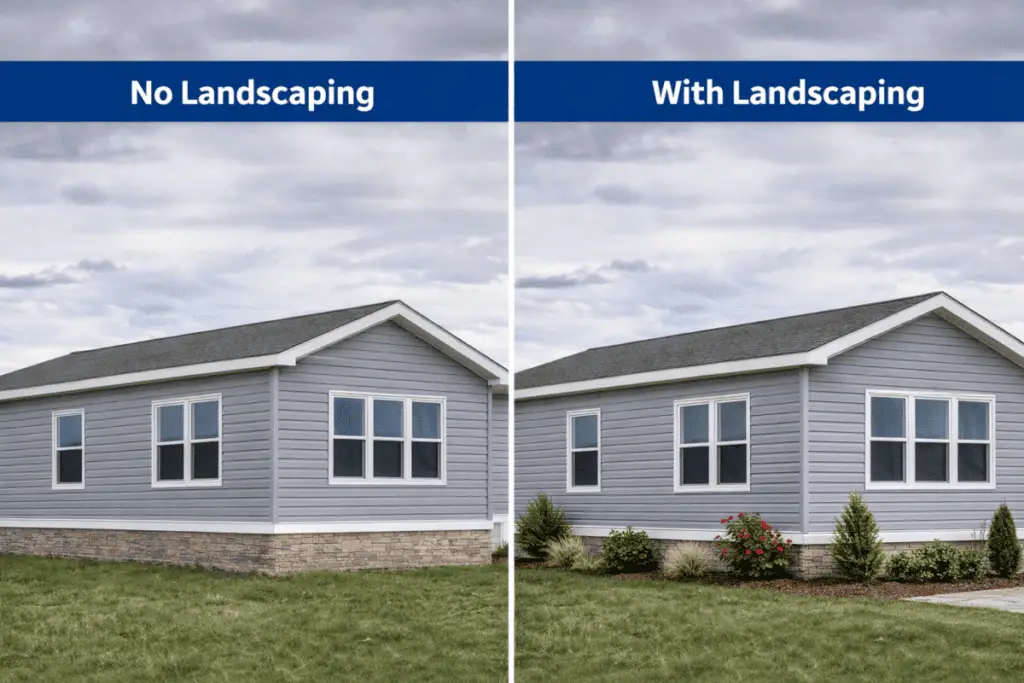
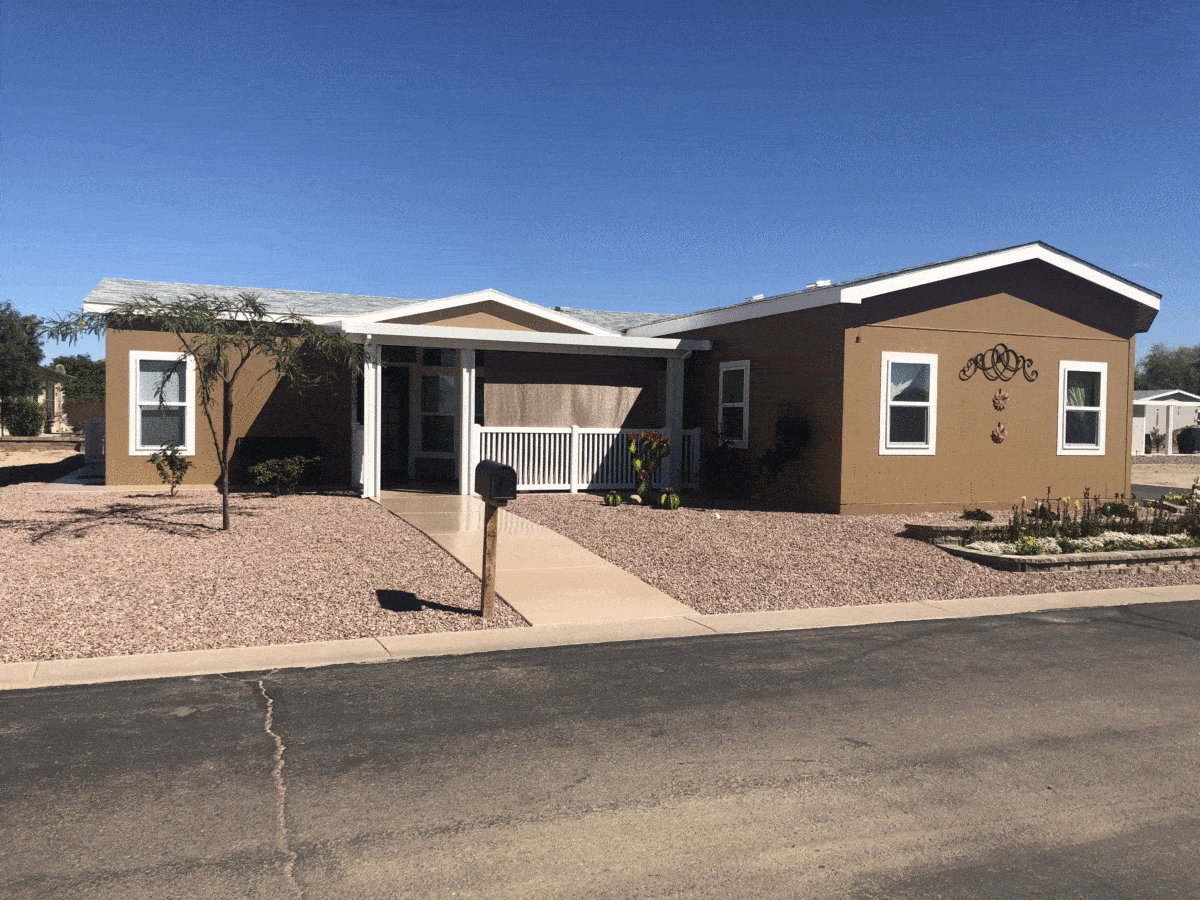
Regardless of the type of home, having a good landscaping package installed around the home makes any home more inviting. Often, manufactured homes may be seen on a large lot or in a park with little to no landscaping around them, truly detracting from the beauty the home might otherwise have.
To be effective, the landscaping package doesn’t need to be elaborate. If done right, even a simple package can beautify a home.
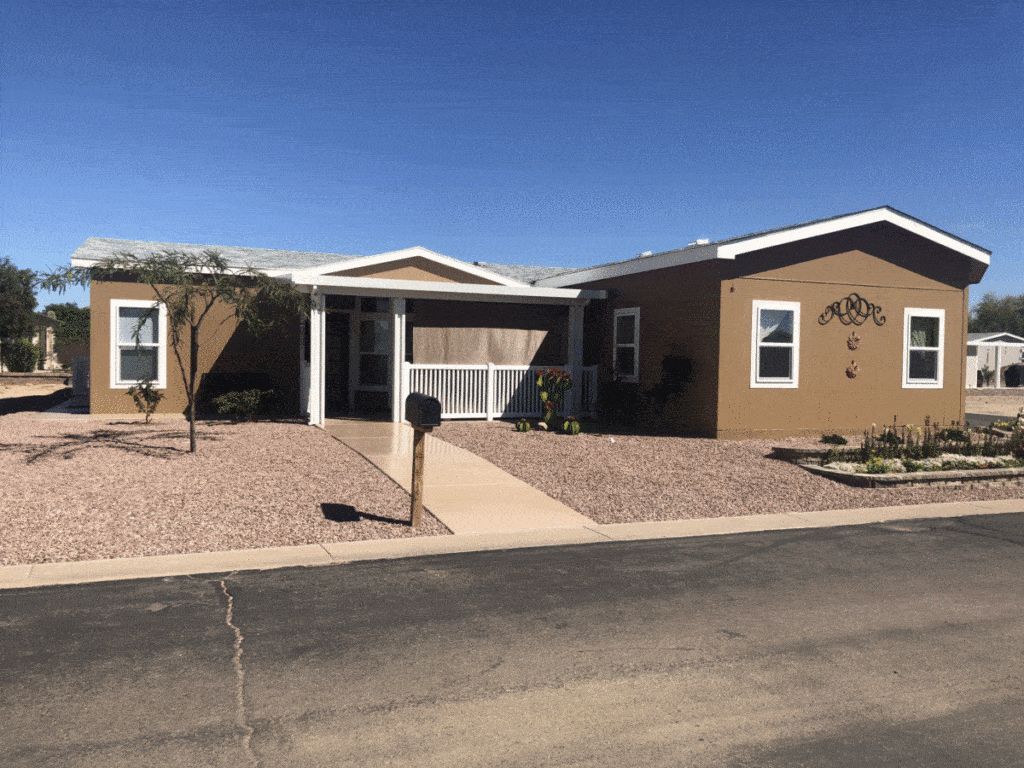
In other areas, a good design might include grass or something more elaborate. However, it isn’t necessary to go overboard, as this simple yard demonstrates. Site-built traditional homes are no different. We’ve all seen that house without any yard or landscaping, and it’s not a good look!
Siding
Siding upgrades are often assumed to be straightforward, but wall depth, stud spacing, and sheathing quality in manufactured homes differ from site-built construction. These differences can limit siding options or require additional furring.
Some states allow direct application of vinyl or fiber cement siding, while others require specific fastening methods or moisture barriers. In high-humidity or coastal regions, improper flashing and water management can lead to concealed rot.
Homeowners should confirm wall thickness, stud spacing, and fastening compatibility before selecting siding. Avoid products that exceed the fastening limits of the existing wall system.
The siding on the outer skin of a manufactured home plays a significant role in the look of the overall home. Having an older mobile home with aluminum siding screams loudly and clearly that this is a “mobile home”.
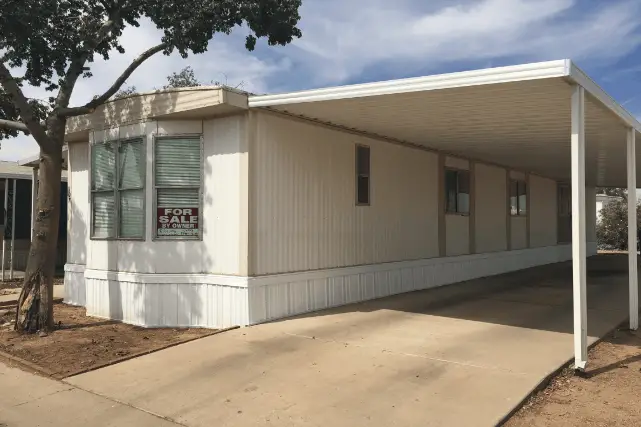
We flipped this mobile home a few years ago. The siding was the original aluminum and was in excellent condition; even the paint. We decided to leave it as is. But, the aluminum siding says loudly and clearly, “older mobile home”!
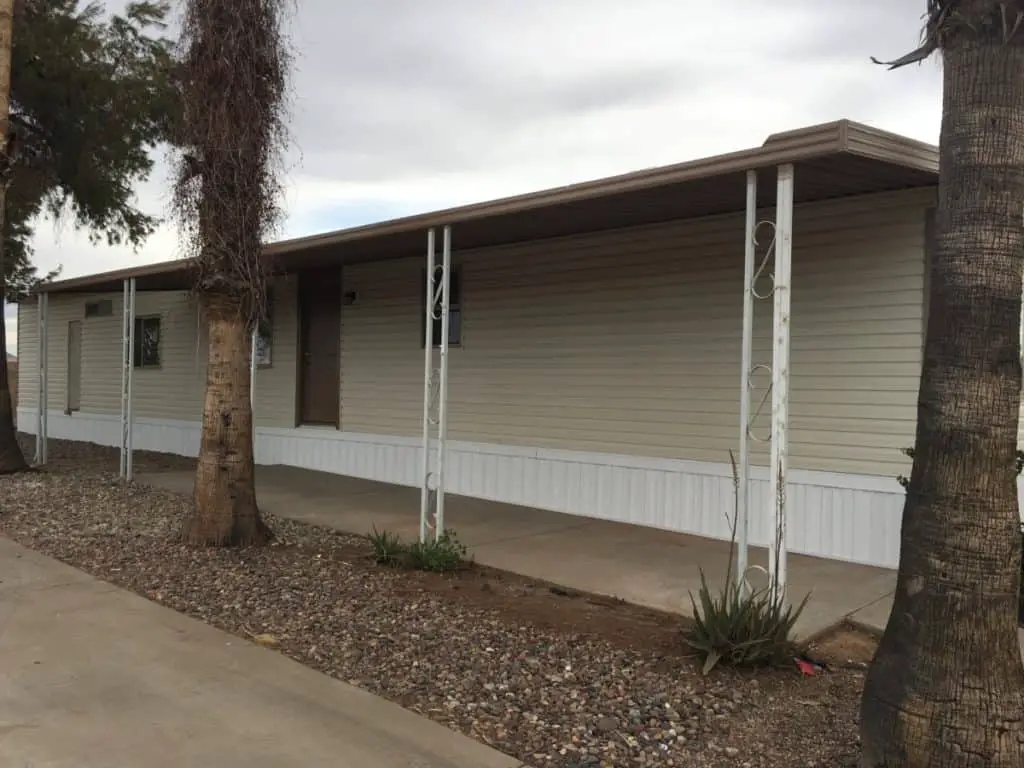
The above home is in the same mobile home park as the one before that retained its aluminum siding. The original siding on this 1979 home was in poor condition with dents all over it. We replaced the old aluminum siding with new vinyl. Notice the cleaner and more substantial look that it gives the home. The cost to do this home was about $3,000.
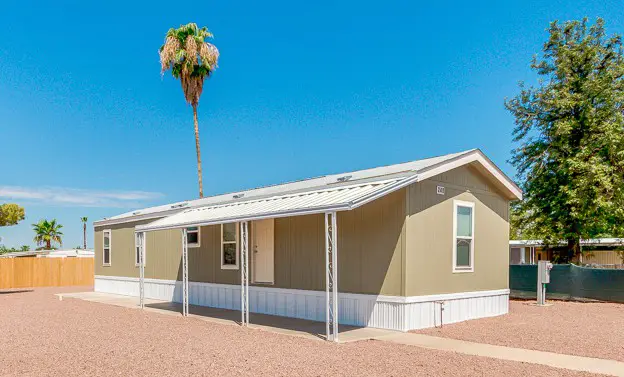
This is a new home that we set on a lot we owned. The previous home on this lot was an old early 1960s single-wide home that was not worth remodeling. Even though this is still a single-wide home, and set above-ground, the clean siding and simple landscaping with fencing makes this home feel above and beyond the stereotypical mobile home appearance.
Roofing
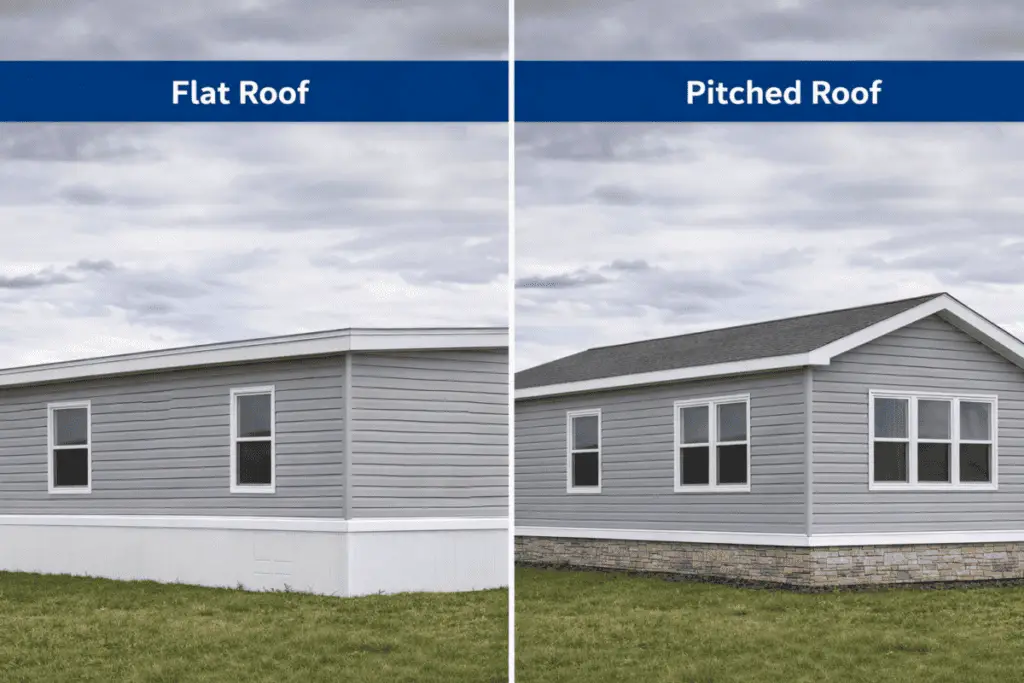
Roof profile plays a major role in whether a manufactured home visually resembles a site-built house. Low-pitch or flat rooflines are common in older mobile homes and are often associated with a “trailer” appearance.
However, increasing roof pitch or adding a secondary roof system can introduce structural loads that the original framing was not designed to support. Snow-load regions, wind zones, and hurricane-prone areas often have specific engineering requirements.
Before modifying roof structure, verify manufacturer load ratings, local wind zone requirements, and whether permits or engineered drawings are required. Cosmetic roof-over systems differ significantly from structural roof conversions.
Porches And Decks
Adding a porch or entry feature significantly changes the visual perception of a manufactured home, but it also introduces zoning, setback, and anchoring considerations. In many jurisdictions, attached structures are regulated separately from the home itself.
Freestanding porches may be treated differently than attached structures for tax and permitting purposes. Improper attachment can interfere with required movement allowances in manufactured homes.
Before construction, verify whether the porch must be structurally independent, whether permits are required, and how roof tie-ins are regulated locally.
Even if a home was ground-set, had landscaping, and was brand-new, the appearance of the home still can give a low-budget feeling if there isn’t any type of porch, deck, or patio attached to it. The same goes for a traditional stick-built home as well.
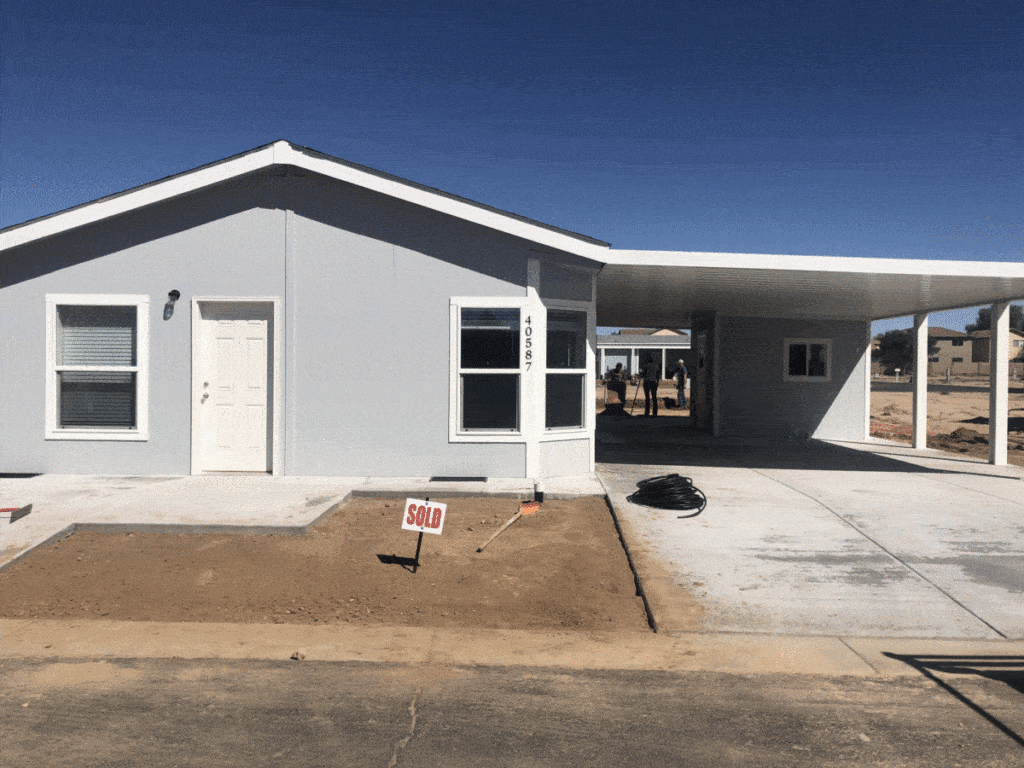
Even though this home is brand new, its appearance from the street is less desirable because of the way the front door area is uninviting without some type of a protective and attractive front porch or deck.
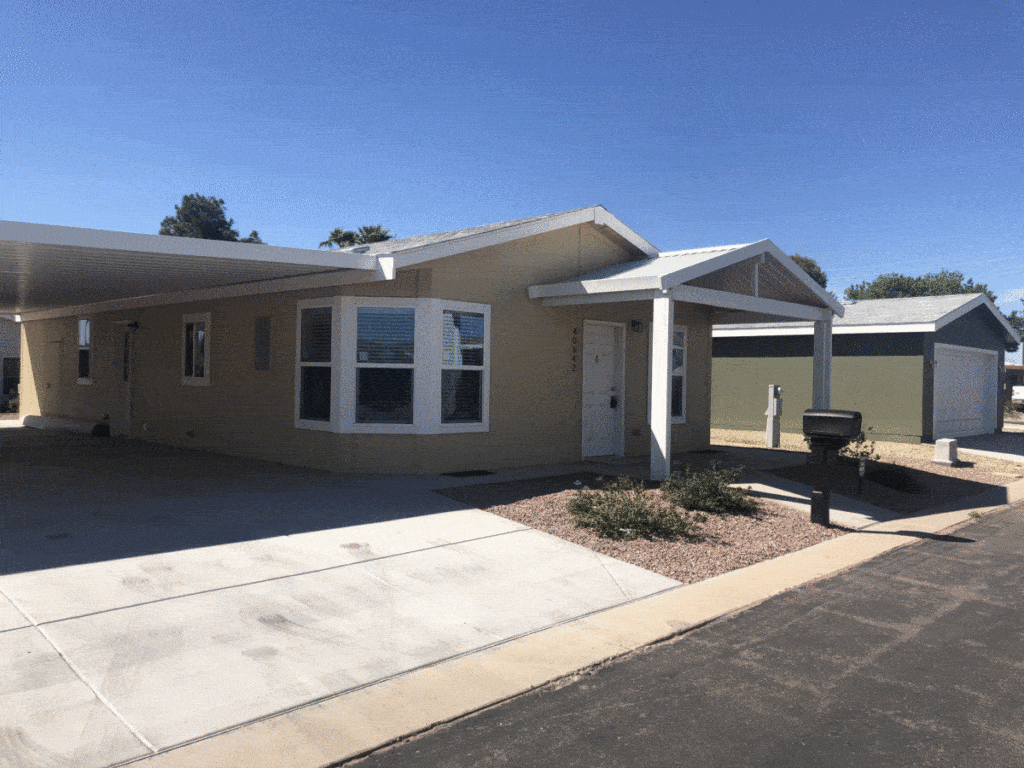
This is the same model of home as the one before, but this one has a front porch added to it. Notice how much more inviting and complete this home looks because of the porch.
Windows, Trim, and Exterior Details
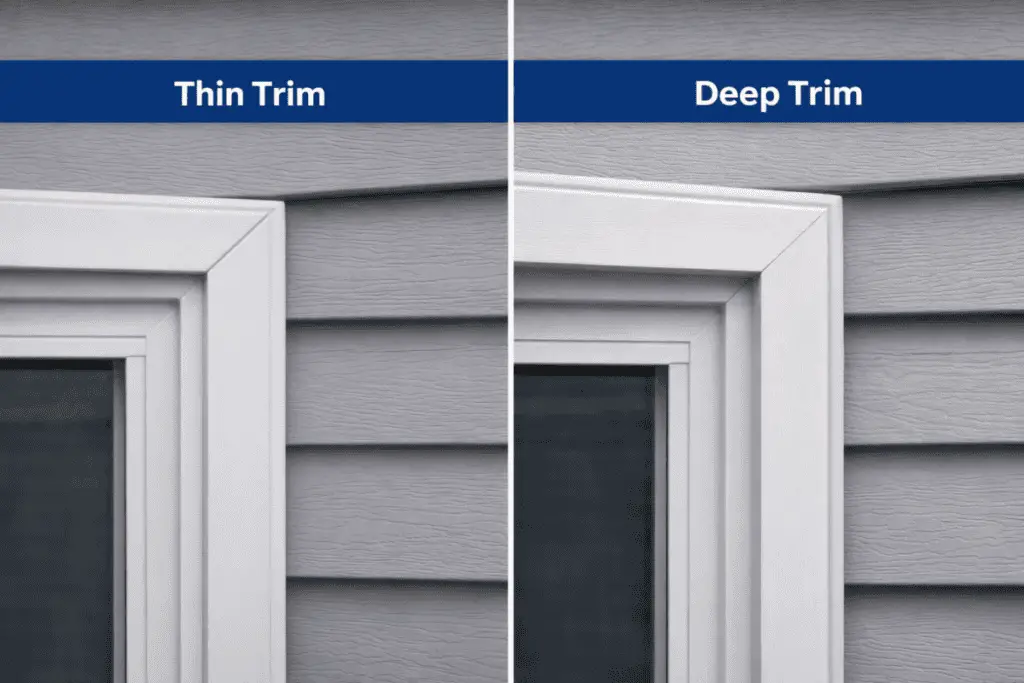
Exterior trim, shutters, and window proportions are often overlooked but strongly influence whether a home appears traditional. Narrow trim profiles and flush-mounted windows are common in manufactured homes and can signal non-site-built construction.
Thicker trim, window casing, and consistent color contrast can improve visual depth, but additions must not interfere with drainage planes or window flashing.
When upgrading trim, verify water-shedding details and avoid decorative elements that trap moisture against the wall surface.
Pop-Outs, Additions, And Miscellaneous Exterior Adornment
The exterior of most manufactured homes tends to be a simple rectangle. This is true whether the home is a single-wide or double-wide, and no matter the age of the home. If a home is new and ordered from the factory, there are often options to adorn the exterior of the home.
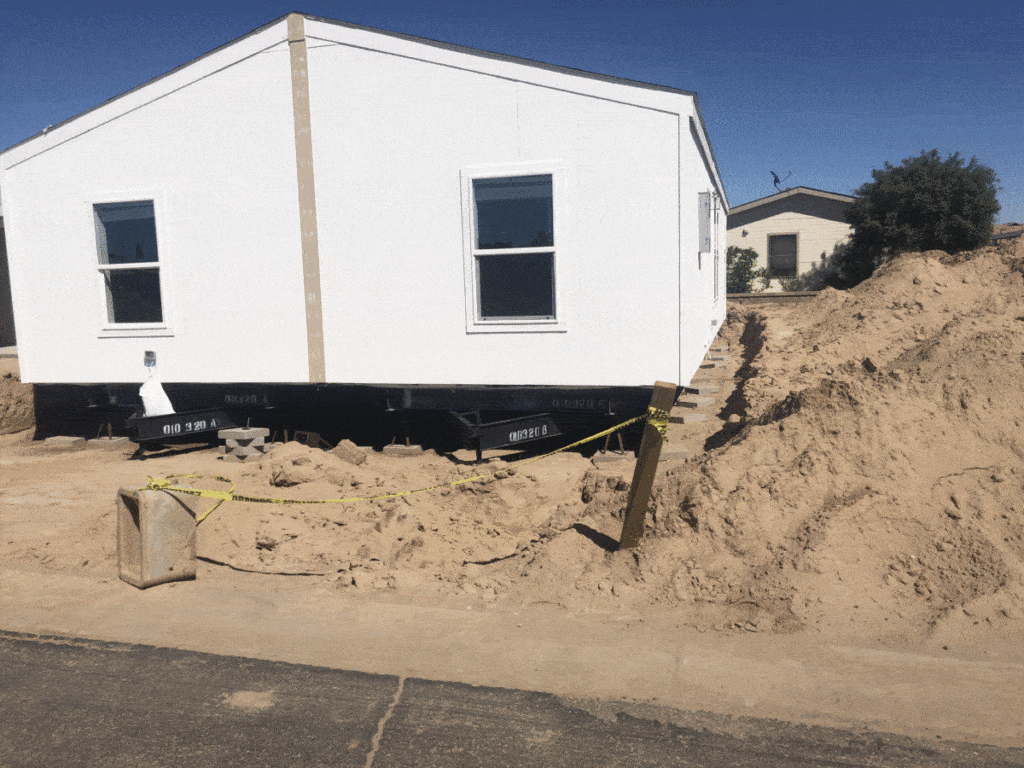
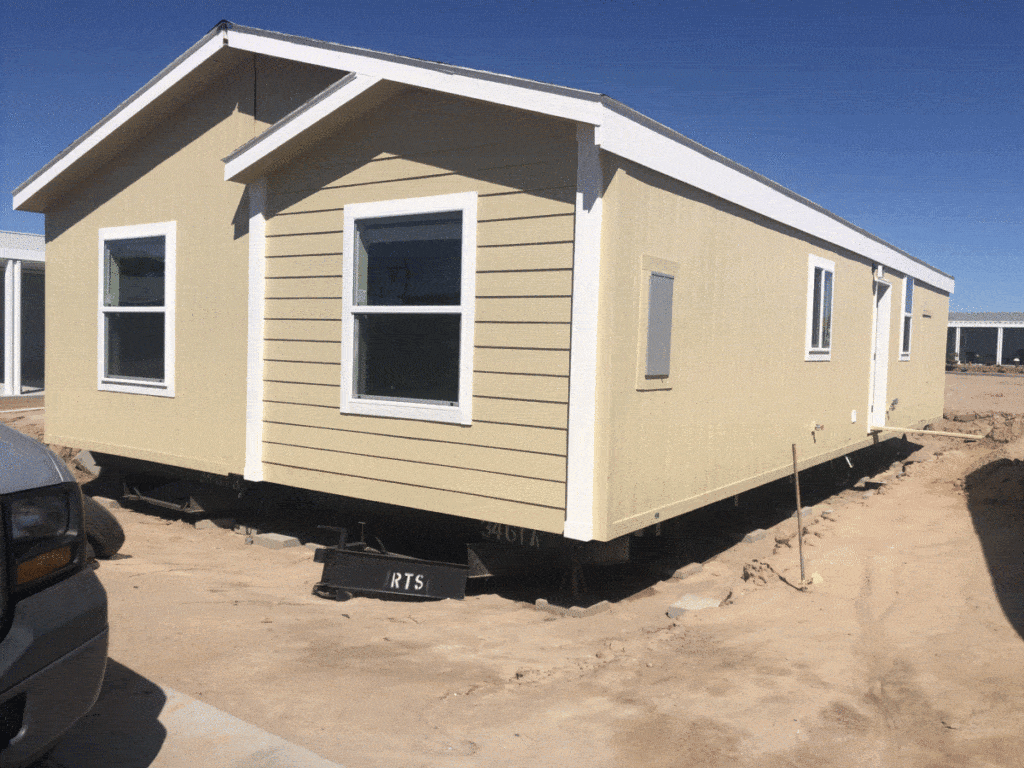
Both of the above homes are the same model. The lower one was ordered with an option to dress-up the exterior elevation of the home. Notice how the roof overhang, the extended gabled rood, varied siding, and trim add to the home when compared to the home above.
Even, if the home was already existing, it would be a fairly inexpensive and simple enhancement to do something similar to an older home.
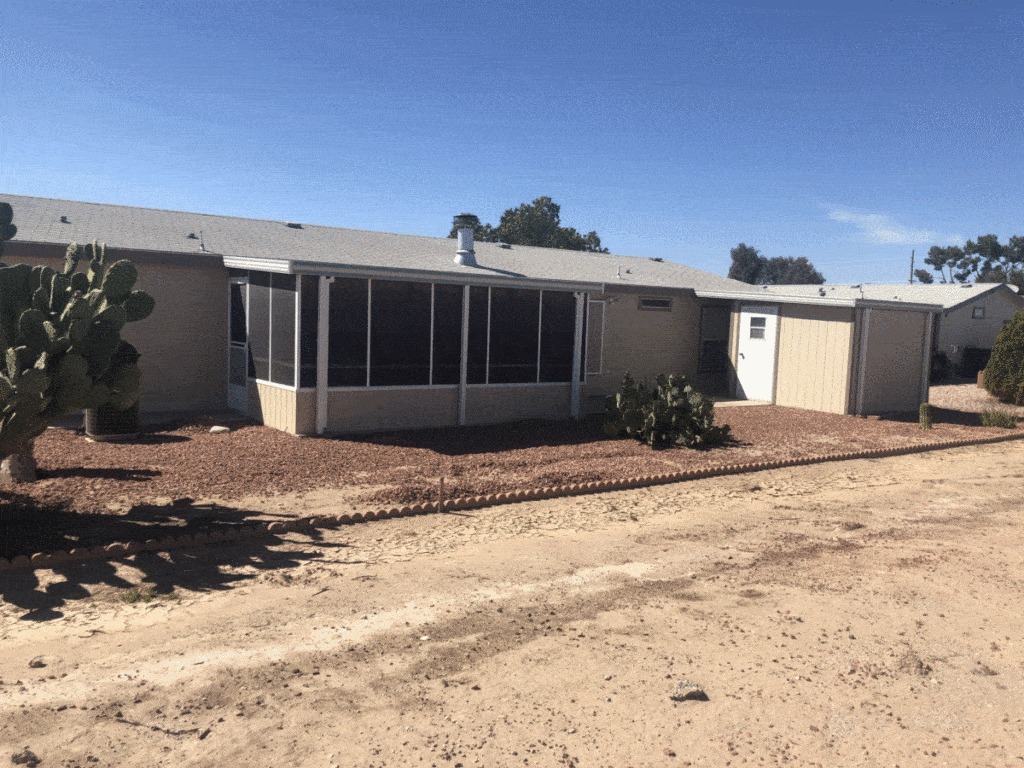
With the above home, the actual shape from the factory is a simple rectangle. This owner decided to add a screened-in rear porch and well as an attached storage room to the home. These customizations make the home feel more like a traditional stick-built home.
Carports And Garages
Although carport awnings and garages and be relatively expensive, they lend creditability to the manufactured home, making it feel very close to a traditional stick-built home. We’ve all seen manufactured homes without any covered parking, porches, or garages. They somehow feel unfinished. Even though there are some stick-built homes like this as well, the look and livability of the home is so much better with this modification.
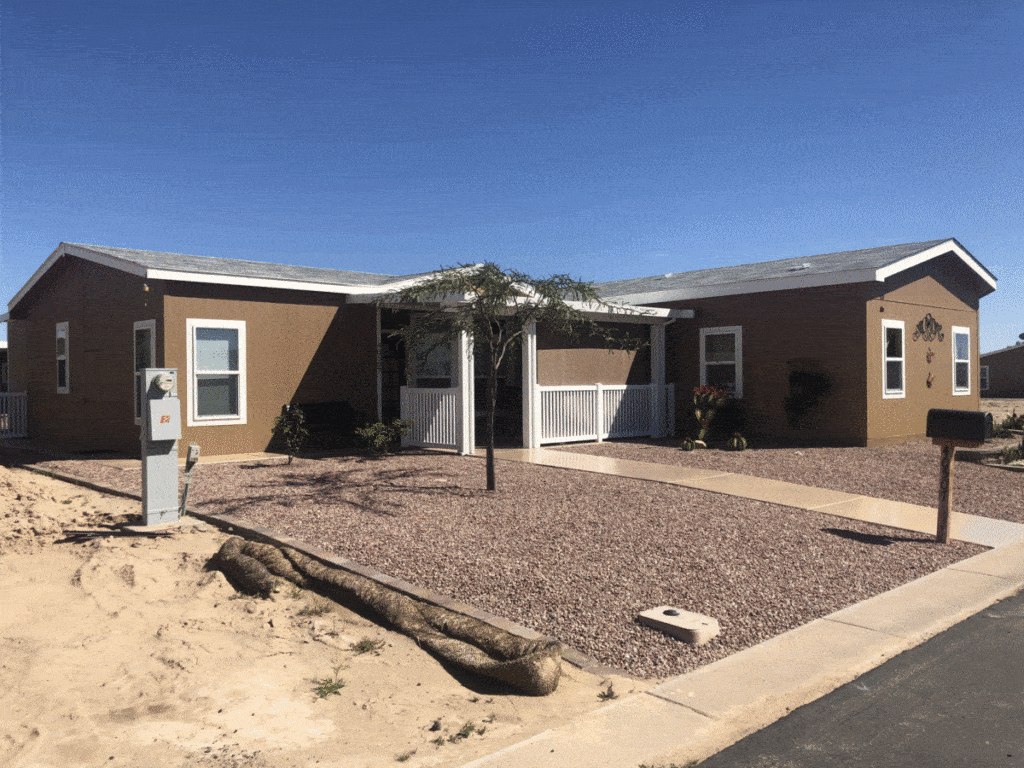
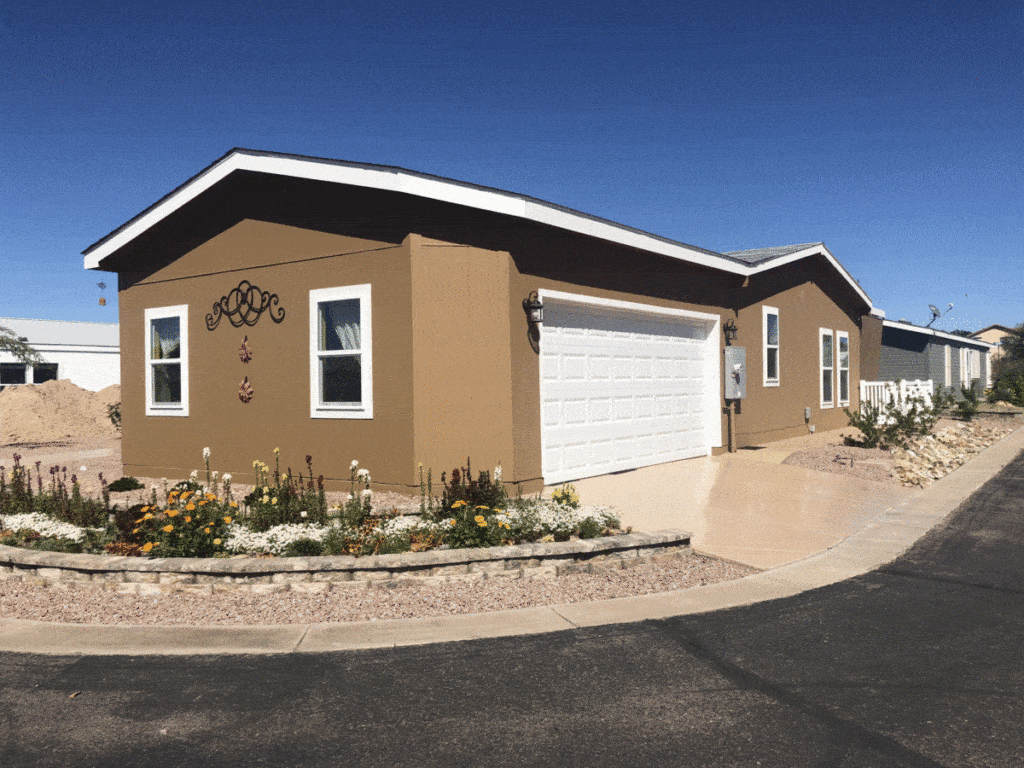
The added garage on this home really takes this manufactured home to the next level. Rather than the simple rectangle of the original home, this home had the attached garage added on to the from of the home. Notice how well integrated the garage is, with the roof flowing seamlessly into the roofline of the existing home.
Also, because this garage comes out towards the front of the home, the footprint of the home is more dimensionally pleasing than a simple rectangle. An integrated garage like this one will generally add significant value to the home. Of course that all depends on the values of the homes in the area.
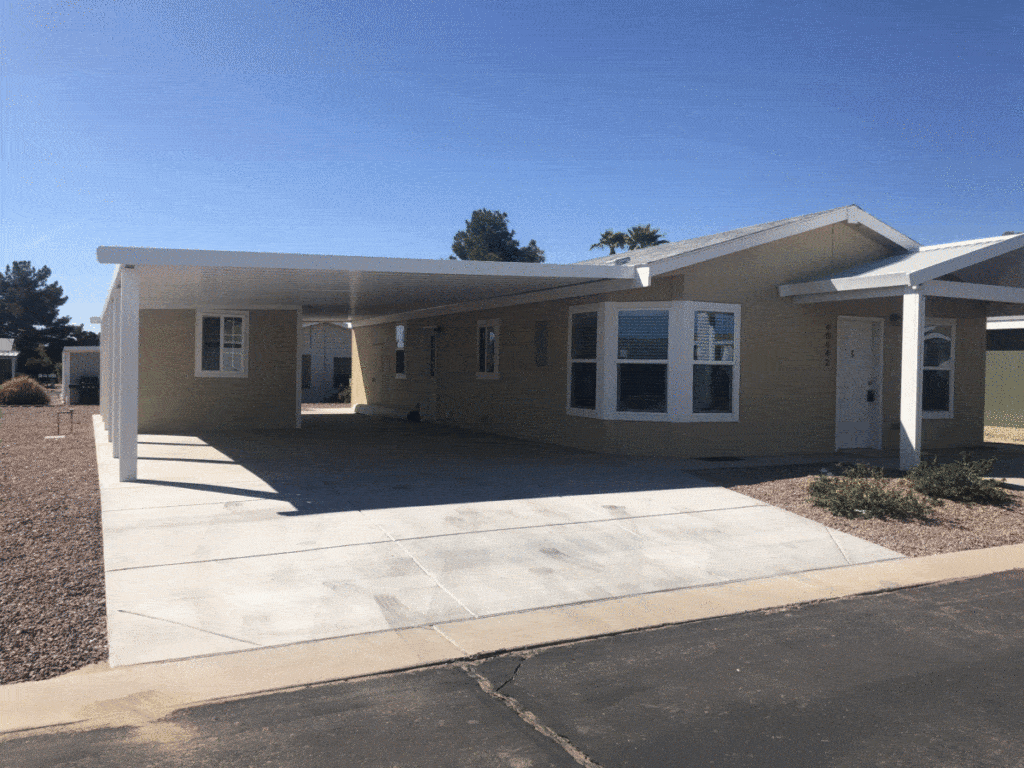
Although it may not be as desirable as an attached garage, the attached carport awning makes the home more attractive and functional. Notice on this home that the original footprint of the home is just the typical rectangle with very little visual interest. However, This home has an added front porch, carport awning, storage room, and simple landscaping package. All of these items increase the beauty, functionality, and value of the home.
Other Helpful Articles at Mobile Home Friend
For readers unfamiliar with how construction standards differ, see the differences between trailers, mobile homes, manufactured homes, and modular homes, which explains why exterior upgrades are regulated differently.
If foundation appearance is a concern, review whether a manufactured home in a park versus on owned land affects exterior improvements, particularly when permanent skirting or porches are added.
For structural limitations that affect siding and trim, see typical stud sizes in mobile homes before selecting heavier exterior materials.
Due Diligence Checklist
Exterior Upgrade Due Diligence Checklist
- Confirm whether the home is titled as personal or real property
- Verify local zoning and permit requirements for exterior changes
- Check wall thickness and stud spacing before selecting siding
- Confirm ventilation requirements for skirting systems
- Review wind, snow, and seismic load requirements before roof changes
- Ensure added structures do not interfere with required home movement
Helpful Products
Optional improvement: Some homeowners use lightweight faux stone skirting panels designed for manufactured homes to improve appearance without adding structural load. View example product on Amazon.
Additional Questions
Are Mobile Home Wood Decks Dangerous?
Most manufactured homes sit up off the ground with steps leading up to the doors. This often can make the home feel isolated from the outdoors. An elevated wood deck is a valuable addition to any manufactured home if it is built properly, but can be dangerous if it isn’t! How can you tell the difference?
Many mobile home decks are DIY weekend projects for homeowners. While the owner may mean well, there are simply millions of decks that are not built to local building codes.
Outdoor wooden decks are directly exposed to the elements and have a much shorter expectancy than the rest of the house. Because many decks are not built to professional standards and the materials are prone to rot, many mobile home outdoor decks are dangerous and in need of rebuilding or repair.
Should You Remodel An Older Mobile Home?
Older manufactured homes are far less expensive to buy than a new mobile home, and a fraction of the cost of a site-built home. Whether you plan to live in the home, flip it, or buy it as a rental investment, does it make sense to invest money into an older home?
At Mobile Home Friend, our answer to this question is a RESOUNDING “YES! We have done this with homes that were given to us, homes that we paid less than $1,000 for and homes that we’ve paid up to $10,000 for. We’ve yet to lose money on any of them! We will caution that if the home is a pre-HUD (built prior to June 1976) it may not be the wisest choice.
That said, approach remodeling any mobile home with CAUTION! There are lots of things to look out for in making the decision on how much remodeling you should do.
This article is written for educational purposes based on long-term experience with manufactured housing construction, remodeling constraints, and buyer evaluation considerations. It reflects common practices and regulatory patterns observed across multiple U.S. states but does not replace local code enforcement guidance or professional inspections.