

Table of Contents
Introduction
(Updated December 7, 2025) When I first started investing in manufactured homes, I quickly learned that the real money pit isn’t the roof—it’s what’s *under* the house. The underbelly is the most overlooked and most critical part of the home’s energy envelope. If your floor is cold in the winter and your utility bills are high, the problem is almost always poor insulation and improper ventilation beneath the skirting.
Fixing the underbelly is one of the highest ROI maintenance tasks you can perform. It protects your plumbing from freezing, prevents mold and dampness, and cuts heating and cooling costs immediately. I’ve broken down the cost, the required R-value, and the best materials so you can fix this problem the right way.
Video Guide Overview
Affiliate Disclosure: This guide contains affiliate links to materials used and recommended for mobile home underbelly insulation and venting. If you purchase through these links, Mobile Home Friend may earn a small commission, at no extra cost to you.
The Short Answer: Underbelly Insulation Costs (2025 Estimates)
There are two primary ways to approach underbelly energy efficiency: replacing existing insulation or adding new insulation and an upgraded vapor barrier. Here are the typical costs I see for a standard single-wide home:
| Scope of Work | Average Cost Range (Pro) | DIY Material Cost Only |
|---|---|---|
| Complete Batting Replacement (R-19) | $1,800 – $4,500 | $1,000 – $2,000 |
| Blowing In Cellulose/Fiberglass | $1,200 – $2,500 | N/A (Requires Machine) |
| Vapor Barrier Replacement Only | $800 – $1,800 | $300 – $700 |
If you have any suspicion of rodent or moisture damage, do not just patch the belly fabric. You must open it up, clean it out, and replace the insulation completely.
Understanding R-Value and Insulation Types

The R-Value is simply the measurement of thermal resistance—how well the insulation prevents heat transfer. Higher R-Value means better insulation. For the floor of a mobile home, the minimum R-value is determined by your climate zone, but as an investor, I always aim higher than the minimum for maximum energy savings.
Required and Recommended R-Values:
- HUD Minimums range from R-11 to R-22 for floors, depending on which zone the home was built in.
- For maximum efficiency in northern climates, I recommend pushing the R-Value up to R-30 if space allows.
Insulation Materials (Cost and Effectiveness):
You have two main viable material options for the underbelly:
- Fiberglass Batting (Rolls): The most common and cost-effective material. It’s installed between the floor joists and held in place by netting or wire. **This is what I use most often in flips.**
- Rigid Foam Board: Excellent R-value per inch, resistant to moisture, and easier for pests to avoid. It is significantly more expensive but offers superior long-term performance and is worth the investment in areas prone to dampness.
The outer fabric lining (often called “belly wrap”) holds the insulation in place. If this is torn or damaged, rodents and pests can get in and destroy your insulation, sometimes building nests that cost thousands to remove. If the belly wrap is damaged, **you must repair or replace it** using a durable, woven poly material to seal the system. For a complete, robust fix, I use these specialized mobile home underbelly repair panels and wrap for a permanent seal.
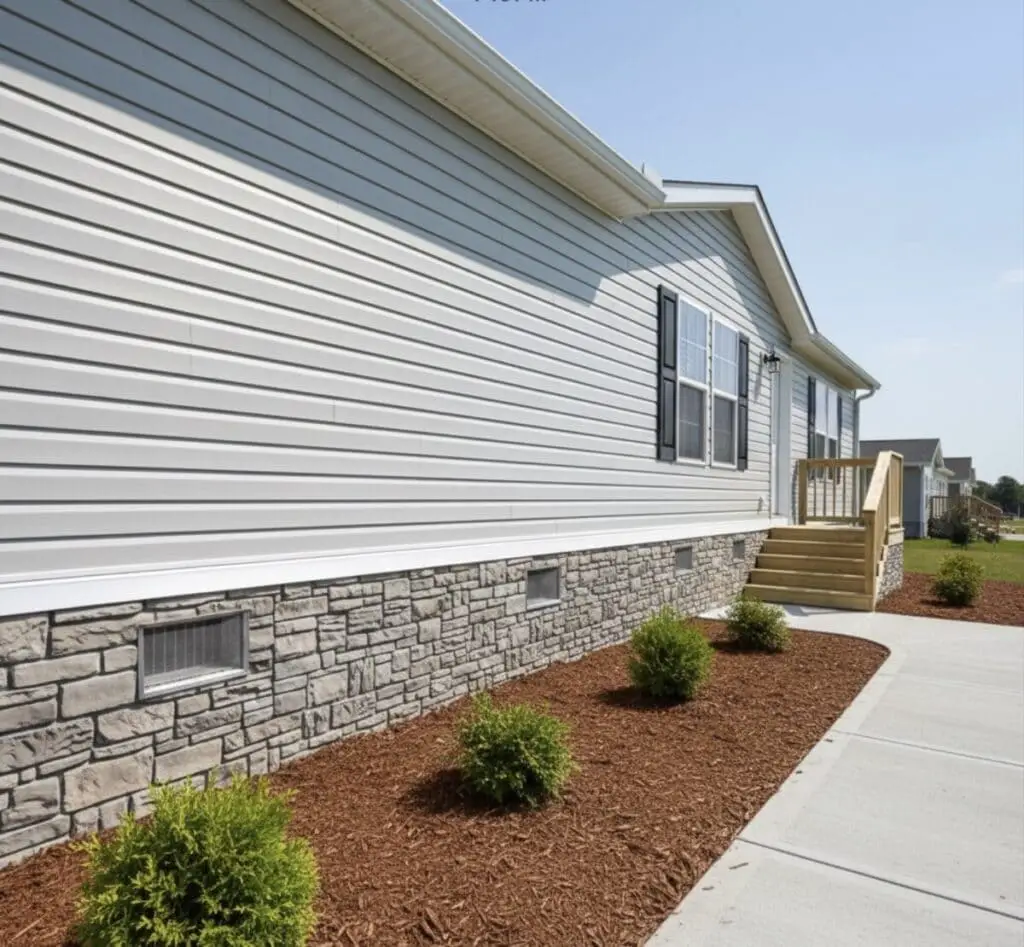
Skirting and Ventilation: Preventing the Rot
Insulation is worthless if the air under the house is saturated with moisture. This is why the skirting system and ventilation are absolutely vital. The purpose of skirting vents is to allow enough airflow to dry out the ground and prevent humidity from collecting and destroying the **underbelly fabric, insulation, and subfloor.**
I have seen expensive insulation jobs ruined in two years because the owner skimped on the vents. **This is not a negotiable item.**
The Skirting Venting Rule:
The general code standard is to provide 1 square foot of net-free ventilation area for every 150 square feet of floor space. If you install a full vapor barrier on the ground, you can sometimes reduce that ratio, but I always err on the side of more airflow.
Vents should be placed near the corners and equally distributed to promote cross-ventilation. Use adjustable, metal vents that allow you to close them partially in extreme winter conditions to help retain some heat while still moving air.
Vents should be placed near the corners and equally distributed to promote cross-ventilation. Use adjustable, metal vents that allow you to close them partially in extreme winter conditions to help retain some heat while still moving air. Find high-quality, adjustable metal skirting vents with bug screens here.
For a full cost breakdown on the materials we use for the exterior, check out my complete guide: Mobile Home Skirting Cost: Full Price Guide to Vinyl, Faux Stone, and Insulated Panels.

The Critical Role of the Ground Vapor Barrier
The single most destructive element under a mobile home is moisture rising from the ground. This moisture condenses on the cold floor structure, leading to dampness, mold, and rot. The vapor barrier stops this process.
A ground vapor barrier is nothing more than thick plastic sheeting laid directly on the ground in the crawl space. It should be extended past the perimeter of the home and properly sealed to your skirting system. If the ground is dry, the air is dry, and your underbelly insulation will last indefinitely.
Repairing or Replacing the Underbelly Fabric:
The outer fabric lining (often called “belly wrap”) holds the insulation in place. If this is torn or damaged, rodents and pests can get in and destroy your insulation, sometimes building nests that cost thousands to remove. If the belly wrap is damaged, you must repair or replace it using a durable, woven poly material to seal the system.
The ground vapor barrier must be a thick, durable plastic (at least 6-mil poly) to resist tears and last for decades. This material is the most important defense against mold and moisture rising into your structure. I recommend using this heavy-duty 6-mil plastic vapor barrier, which is essential for a proper install.
Summary
The long-term performance and efficiency of your mobile home rests entirely on the quality of its underbelly maintenance. My experience shows that investing in a high R-value insulation and proper venting is the best defense against high energy bills, pipe freezing, and the chronic moisture that destroys your subfloor. This isn’t just a repair—it’s a critical upgrade that maximizes your home’s value and reduces future liability.
Related Questions
- Can rodents and pests cause significant damage? Absolutely. Rodents will shred fiberglass insulation for nesting material, rendering it useless for energy retention. If you have any signs of pest activity, you must eliminate the infestation and seal all openings before replacing the insulation. Pests are one of the fastest ways to destroy a perfectly good underbelly.
- How can I prevent dampness and mold inside the home? Mold and dampness always start with high humidity, usually rising from the underbelly or a persistent leak. Once the underbelly is sealed and vented properly, you need to address the interior air quality. See my full guide on how to identify and prevent moisture problems: How to Get Rid of Dampness and Mold in a Mobile Home.
Written by a real estate investor who has successfully renovated over 100 properties, specializing in maximizing energy efficiency and solving moisture problems in manufactured homes.