
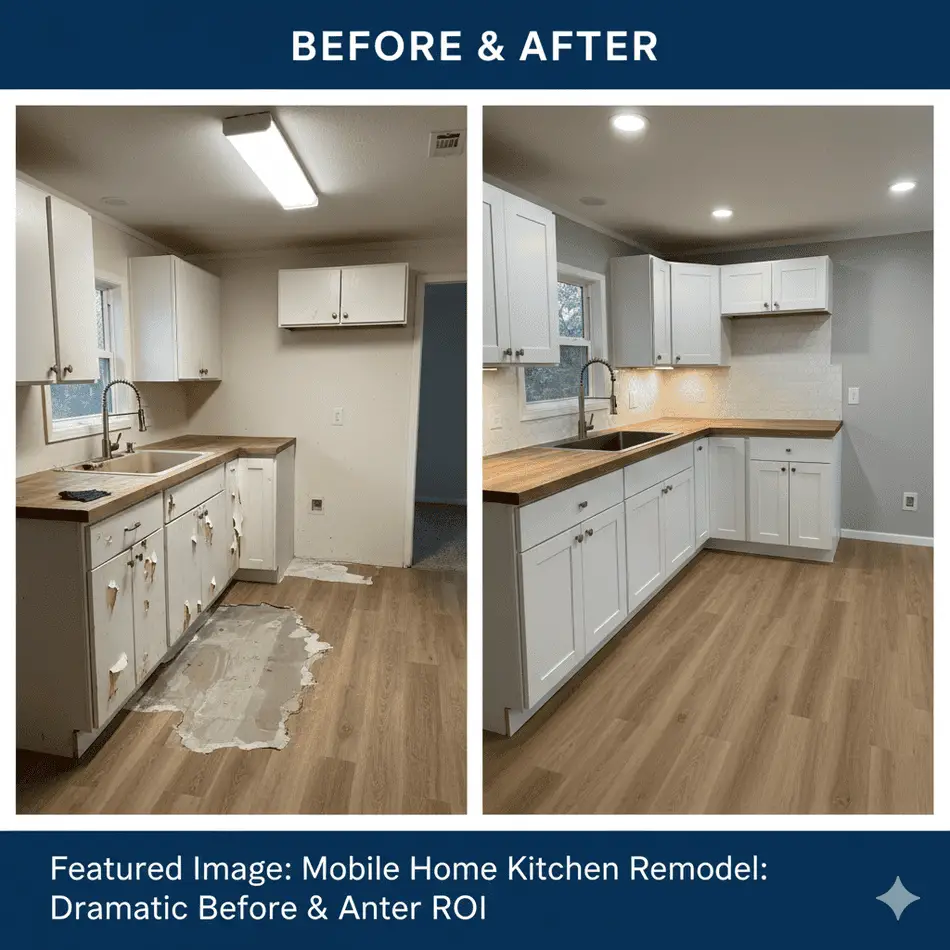
(Updated December 10, 2025) A buyer’s eyes land on the kitchen the moment they walk in. If the kitchen is dated, the entire house feels cheap. As an investor, the kitchen remodel is your highest-leverage cosmetic investment—it must look modern, clean, and durable, but without the custom price tag.
The average mobile home kitchen remodel costs between $7,000 and $15,000, although you can spend a lot more if you’re not careful, depending on the scope. I break down the strict financial logic: where to spend money (cabinets and counters) and where to save it (appliances and layout). Crucially, this upgrade is worthless if your plumbing and subfloor are failing; you must prioritize fixing the mechanicals before touching the cosmetics.
Table of Contents
Video Guide Overview
Affiliate Disclosure: This guide contains affiliate links to flooring materials (LVP), subfloor repair compounds, and tools used for high-ROI mobile home renovations. If you purchase through these links, Mobile Home Friend may earn a small commission, at no extra cost to you.
The Short Answer: Kitchen Remodel Costs (2025 Estimates)
The costs are grouped into three investor-focused tiers based on the depth of the renovation. Our goal is typically the Mid-Range Remodel.
| Remodel Scope | Average Total Cost Range | Investor ROI Focus |
|---|---|---|
| Basic Refresh (Paint, Hardware, Faucet) | $3,000 – $7,000 | Small rentals; quick cosmetic flip. |
| Mid-Range Remodel (New Cabinets/Counters/Floor) | $7,000 – $15,000 | Highest ROI for Flips (Our focus). |
| Full Gut (Layout Change, Structural Work) | $15,000 – $25,000+ | Only for high-end markets/personal residence. |
The ROI Sweet Spot: For a flip, aim for a mid-range remodel. You are replacing the core components (cabinets, counters) that buyers actually touch, which gives you the highest return while keeping the overall budget manageable.
My $25,000 Kitchen Lesson: The Real Cost of Cutting Corners
I want to share a costly mistake I made years ago that solidified my rule: The kitchen cannot be “just okay” in a flip.
The deal was a double-wide in a desirable park. It was a perfect candidate for a flip. When I assessed the kitchen, the cabinets were old, original, with that awful vinyl wrap, and the countertops were beige laminate from the 90s. My initial, rookie thought was, “The kitchen looks *okay* enough. It doesn’t look *great*, but let’s save the $8,000 and focus on the rest of the house.”
So, I focused on the high-ROI cosmetic elements: new interior doors, modern trim, a fresh, neutral paint job, and, critically, brand new Luxury Vinyl Plank (LVP) flooring throughout the entire house. I finished the renovation feeling great about the work. The LVP looked amazing, the paint was crisp, and the stainless steel appliances the previous owner had left behind shined.
Then I stepped back and looked at the finished product. The contrast was shocking. The gorgeous new LVP floor led straight into the dark, dated, peeling vinyl kitchen. The beautiful new paint made the old cabinets look dirtier. The kitchen, which I tried to save money on, became a massive, glaring bottleneck. It pulled the aesthetic value of the entire house down by fifty percent. I put the house on the market anyway, hoping the updated mechanicals and new flooring would carry the sale.
They didn’t. The offers I received were stubbornly low—much less than I knew the house should fetch based on comparable sales in the park. Buyers would walk in, their eyes would land on the kitchen, and they would immediately assume the entire house was a cheap cover-up. The new flooring, the fresh paint—it all faded into the background because the kitchen screamed “old and cheap.”
I pulled the house off the market. It was a painful, expensive decision, but I had to face the reality. I ripped out the old cabinets and countertops. Now, I had a new problem: I had to patch and re-lay the LVP flooring where the old cabinet footprint had been, adding another expense to the budget that could have been avoided entirely had I planned correctly from the start.
I invested $8,000 in new RTA Shaker cabinets and modern laminate counters. When the house went back on the market, the reaction was night and day. Buyers saw a brand-new, modern kitchen that matched the new flooring and paint. The offers came in immediately, and I sold the house for $25,000 more than the highest offer I had received the first time. The $8,000 kitchen investment made me an extra $17,000 in pure profit, plus the time and frustration of a botched first listing. The lesson is simple and brutal: The kitchen is the engine of the resale value. If you skip it, you are losing money, not saving it.
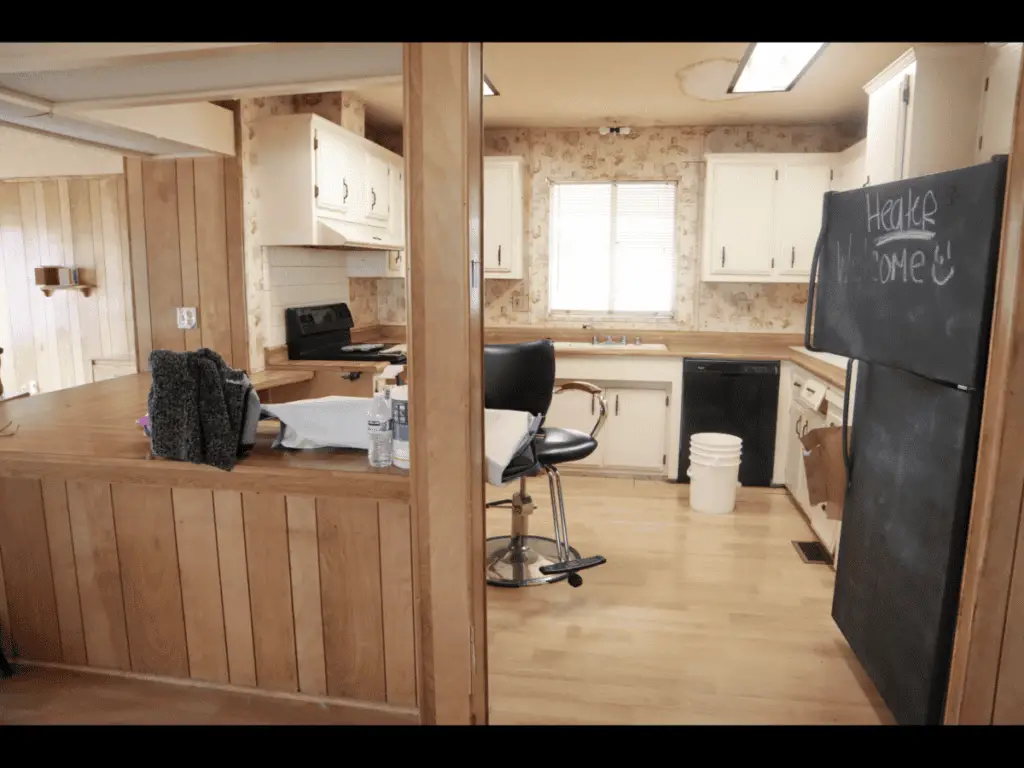
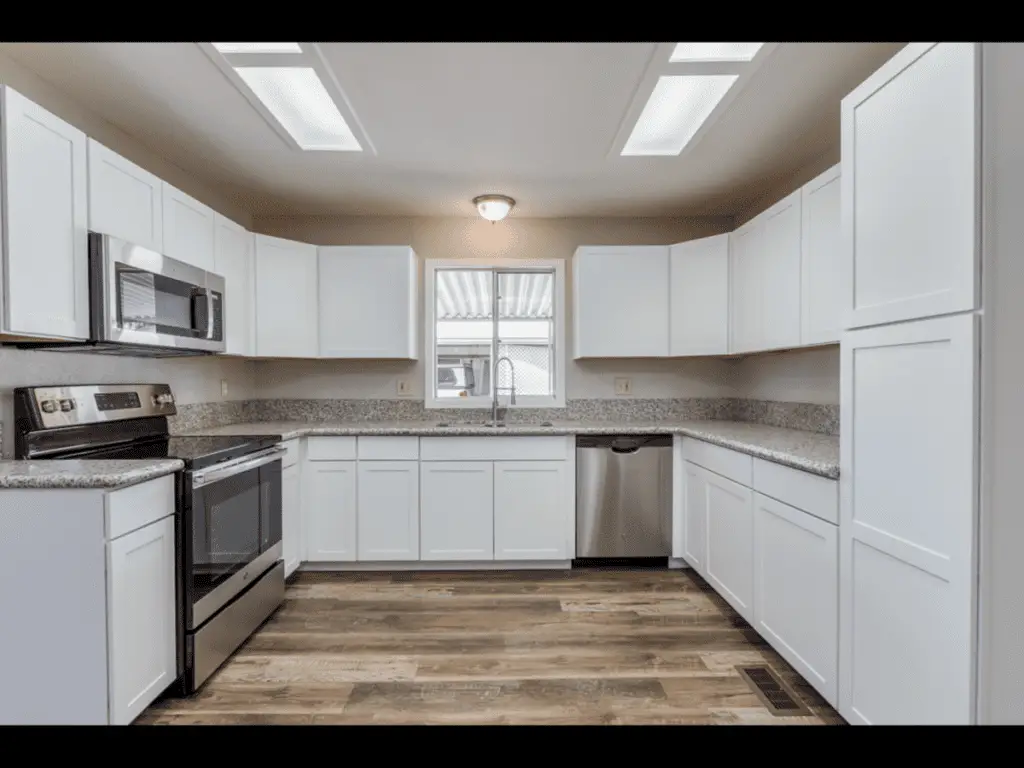
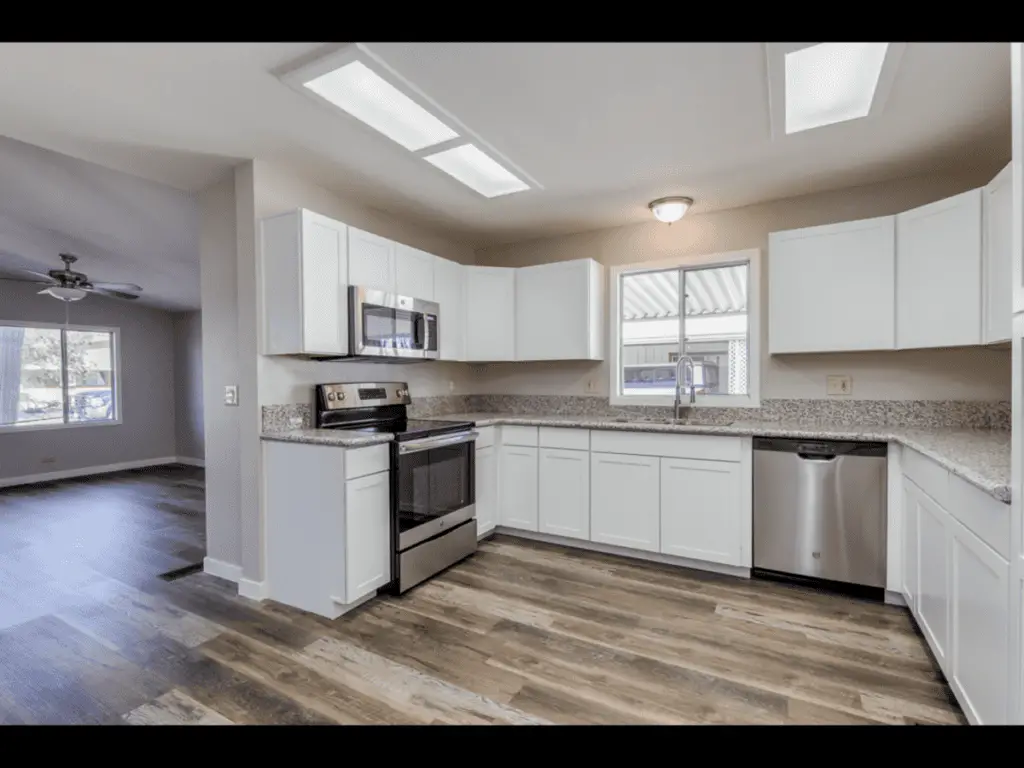
Kitchen Budget Breakdown: Where to Spend and Where to Save
A typical mobile home kitchen remodel sees the costs distribute unevenly. Spending priority should be given to items that demonstrate quality and durability.
| Cost Component | % of Total Budget | Investor Strategy |
|---|---|---|
| Cabinets & Installation | 30% – 40% | SPEND HERE: Use stock, ready-to-assemble (RTA) cabinets for durability. |
| Countertops & Backsplash | 15% – 20% | SPEND HERE: Laminate/Butcher Block for mid-range, not custom quartz. |
| New Appliances | 10% – 15% | SAVE HERE: Buy matching stainless steel *entry-level* appliances in a package deal. |
| Flooring (LVP) | 5% – 10% | SPEND HERE: Waterproof LVP is mandatory. See my full guide on LVP for mobile homes: Mobile Home Flooring Replacement Cost. |
| Plumbing/Electrical (Labor) | 5% – 10% | RISK: If repiping is needed, this category jumps. See: PEX Repiping Cost. |
Cabinets: The Non-Negotiable Decision Point
The old vinyl-wrapped cabinets in most mobile homes are structurally flimsy, and the vinyl peel is guaranteed to repel buyers. You have two options, and only one is a true investment:
Option 1: Replacing with Stock RTA Cabinets (Recommended)
Buying stock-sized, ready-to-assemble (RTA) shaker-style cabinets from a big-box store or online supplier is the highest ROI move. These are typically plywood construction, not particle board, and cost $1,000–$3,000 for a small kitchen. They look identical to mid-range custom cabinets once installed but cost a third of the price.
Option 2: Painting or Refacing (Rental Only)
Painting old vinyl cabinets is cheap, but the paint will chip, peel, and show wear faster than any other surface. Refacing (applying new doors to old boxes) is often just as expensive as new RTA cabinets without any of the structural benefits. Do not use paint or refacing for a flip; it tells the buyer you cut corners.
The Layout Problem (And Why You Keep It)
Mobile home kitchens are designed around structural supports. Moving walls or sinks often requires complex structural work and extensive plumbing/electrical changes, pushing you into the $25,000+ Full Gut category. Stick to the existing footprint. It saves $10,000+ in labor and unnecessary complexity.
Pre-Remodel Mandatory Checks: Structural Before Cosmetic
A new kitchen installed over failing infrastructure is guaranteed to be a financial disaster. Before you hang a single cabinet, verify and correct the following:
- The Water Supply: If the home has Polybutylene pipe, you must repipe to PEX first. A leak behind new cabinets or a backsplash is a nightmare. See: Mobile Home Whole-House Repiping Cost.
- The Subfloor Integrity: Subfloor rot is most common at the sink, dishwasher, and refrigerator. Check for soft spots. Any structural issue must be addressed before the heavy cabinets and countertops are installed. For detailed repair steps, see: The Complete Guide to Mobile Home Subfloor Repair.
- The Appliances: Always confirm your electrical panel has enough amperage to support the new appliances and that the range hood vents to the exterior, not back into the ceiling cavity.
Investor Directive: Allocate 15% of your total kitchen budget for unexpected plumbing or subfloor repairs found during demolition. This contingency is non-negotiable.
?️ Key Product Recommendations for Kitchen ROI
These two products directly drive the highest aesthetic return on investment, making your kitchen look modern without forcing you into custom cabinet prices.
✅ Option 1: The Essential RTA Shaker-Style Cabinet
Shaker cabinets are timeless and appeal to nearly every buyer. Investing in RTA (Ready-to-Assemble) units saves substantially on labor while providing a sturdy plywood base. This Stock RTA Shaker-Style Base Cabinet is the perfect anchor for a high-ROI kitchen flip.
✅ Option 2: High-Impact Faucet and Sink Combo
Nothing screams “cheap” louder than an old, leaky faucet. Replacing the sink and faucet is a low-cost, high-visual-impact upgrade. This Modern Kitchen Faucet and Sink Combo is stylish, easy to install, and provides the necessary visual pop for buyers.
Summary
The kitchen is your biggest cosmetic ROI opportunity. To maximize profit, focus your budget on replacing old cabinets with stock RTA units and using durable, low-cost countertops like laminate or butcher block. Keep the existing layout and, most importantly, ensure the plumbing and subfloor are permanent assets, not liabilities, before the beautiful cabinets arrive.
Related Questions
- Can I install Granite or Quartz Countertops? You can, but it is rarely a good investment in mobile homes under $100,000. Quartz and granite are extremely heavy and may require extra cabinet support. Butcher block or high-quality laminate offers 90% of the buyer appeal for 30% of the cost.
- Should I remove the drop ceiling? Yes. Many older mobile homes have a low, dropped ceiling in the kitchen. Removing it adds crucial visual height and modernizes the space instantly. It is a messy job but has a high visual ROI.
Written by a real estate investor who has successfully renovated over 100 properties, specializing in maximizing mobile home resale value through high-leverage cosmetic upgrades like kitchen remodels.