

Table of Contents
Introduction
The relationship between a mobile home owner and a park landlord is a unique legal contract. You own a high value asset that sits on land owned by another entity. This creates a scenario where you are both a homeowner and a tenant. In 2025, corporate ownership of parks has increased the frequency of legal filings. Understanding the specific triggers for eviction is essential to protecting your housing security and your financial equity.
Video Guide Overview
Affiliate Disclosure
In compliance with 2025 FTC guidelines and to maintain total transparency with my readers, I want to disclose that mobilehomefriend.com participates in various affiliate marketing programs. This means that if you click on a link to a product—such as the skirting kits or security cameras mentioned in this guide—and make a purchase, I may receive a small commission at no additional cost to you. These commissions help cover the costs of maintaining this site and allow me to continue providing free, technical deep-dives for the mobile home community. I only recommend products based on first-principles logic and their ability to solve specific maintenance or legal challenges facing mobile home owners today.

The Short Answer
Yes. You can be evicted from a mobile home park even if you own your home outright. The eviction applies to your right to occupy the specific lot of land. If a court grants the eviction, you must move the home from the property or sell it to a qualified buyer. Failure to do so within the court ordered timeframe may result in the home being declared abandoned and seized by the park.
Top Affiliate Products for Park Compliance
| Product Name | Integration Point | Benefit |
|---|---|---|
| Heavy Duty Vinyl Skirting Kits | Maintenance Standards | Resolves aesthetic violations that trigger 14-day notices. |
| Wireless Outdoor Motion Cameras | Security and Rule Compliance | Provides video evidence to disprove false nuisance claims. |
| Lease and Receipt Organizer | Legal Protection | Keeps all 2025 rent records and notices ready for court defense. |
Common Reasons for Eviction in 2025
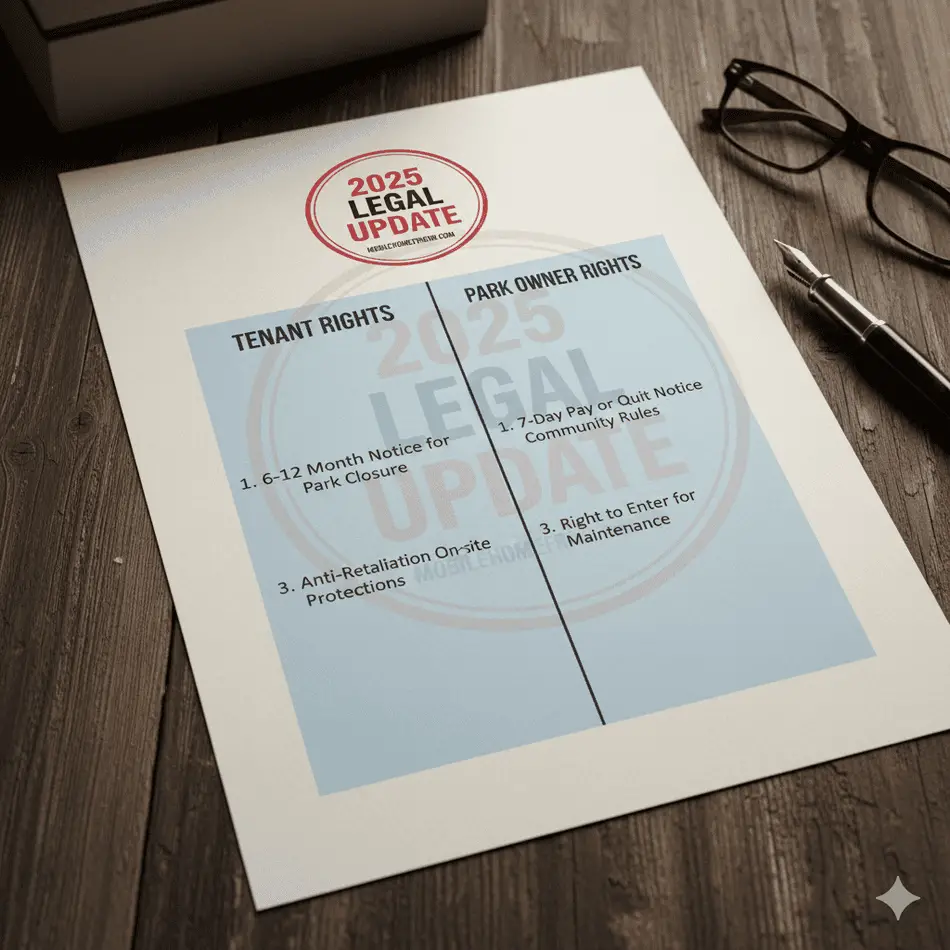
Landlords must cite “Good Cause” to terminate your residency. The 2025 updates to the Landlord-Tenant Act limit the reasons a park can remove an owner.
1. Non-Payment of Lot Rent
This is the most common cause. Most 2025 leases specify a 7-day period to pay or vacate. If the payment is not received, the park may file for eviction immediately after the notice expires.
2. Material Non-Compliance with Rules
Parks have specific “Rules and Regulations” regarding home appearance. Common violations include:
- Unrepaired skirting or damaged siding.
- Unauthorized occupants or long-term guests not on the lease.
- Maintaining an “eyesore” lot with debris or unwashed vehicles.
3. Endangering Health and Safety
Issues like leaking septic lines or hazardous electrical setups allow for expedited 2025 eviction proceedings. These are viewed as a liability to the entire park community.
2025 Cost Transparency Table
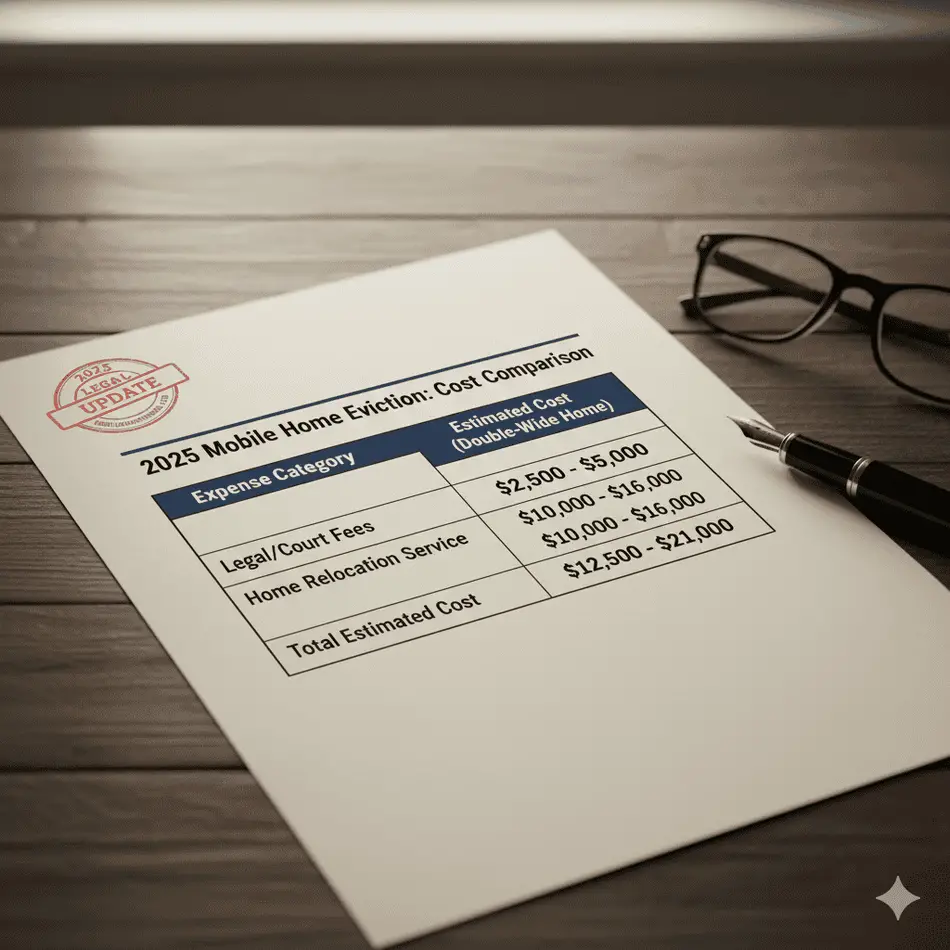
Eviction involves significant financial loss for the homeowner. These figures represent 2025 national averages for mobile home legal actions.
| Expense Item | Tenant/Owner Cost | Park Owner Cost |
|---|---|---|
| Legal Defense Fees | $1,500 to $4,000 | $2,500 to $5,500 |
| Court Filing Fees | $75 to $200 | $350 to $700 |
| Single-Wide Move Cost | $6,500 to $10,000 | $0 |
| Double-Wide Move Cost | $11,000 to $16,000 | $0 |
Technical Deep-Dive: The Writ of Restitution
A Writ of Restitution is the final order issued by a judge. In 2025, many states have streamlined this process. Once the writ is signed, the Sheriff provides a final deadline, often only 5 to 7 days, for the tenant to leave the premises. For a mobile home owner, this presents a physical impossibility. Moving a home requires permits, contractors, and transport equipment that cannot be secured in a week. This technical bottleneck is why most homeowners choose to sell their home “in place” at a massive discount rather than losing the structure to the park.
Actionable Defense Checklist
- Review your 2025 lease for specific notice requirements.
- Document the condition of your home with photos every 30 days.
- Ensure all lot rent payments are made via traceable methods like certified checks.
- Consult a local attorney if you receive a “Notice to Cure” to ensure your response is legally valid.
Internal links for further reading: Check our guides on skirting maintenance and roofing repair standards to avoid maintenance-based evictions.
Summary
Owning your mobile home does not grant you immunity from park regulations. The lot lease is a binding contract that must be followed. To protect your home equity in 2025, you must prioritize lot rent and maintain the exterior of your home to the standards specified in your agreement.
Related Questions
Can I sell my home after being served an eviction notice?
Yes. Many owners choose to sell the home to a third party who is qualified by the park. This allows you to recover your equity and avoids a permanent eviction record.
Is the park owner required to help move the home?
No. Unless the eviction is due to a “Change of Use” (the park closing), the owner is responsible for all relocation costs.
About Chuck O’Dell Chuck O’Dell is the founder of mobilehomefriend.com and an expert in the technical and legal nuances of manufactured housing. He provides homeowners with direct, data-driven advice to protect their investments and maintain their properties.
Chuck O’Dell utilizes first-principles logic to break down the 2025 Mobile Home Parks Residential Landlord and Tenant Act.