
Table of Contents
Introduction
I have spent over two decades in the trenches of the manufactured housing industry. I have purchased, renovated, and sold more than 100 properties. Even in Arizona, I have seen what happens when a 70-mph straight-line wind hits a home that was not properly anchored. I’ve also seen modern, HUD-compliant homes stand tall while the stick-built garage next door was reduced to toothpicks.
The question of safety in high winds is the single most common concern I hear from new investors and families looking to buy. There is a lot of “old school” fear-mongering out there, but there is also a dangerous level of complacency among some owners. If you want to know if your home is a safe haven or a liability when the sirens start wailing, you need to understand first-principles engineering, not just anecdotes. We are going to break down the physics, the law, and the 2026 reality of wind safety.
Video Guide Overview
Affiliate Disclosure
I believe in transparency. Some of the links in this article are affiliate links. This means if you click a link and buy a product, I might earn a small commission at no extra cost to you. I only recommend tools and gear that I personally use on my job sites or in my own properties. This helps me keep the lights on here at MobileHomeFriend.com and continue providing free, high-quality advice for the community.
The Short Answer
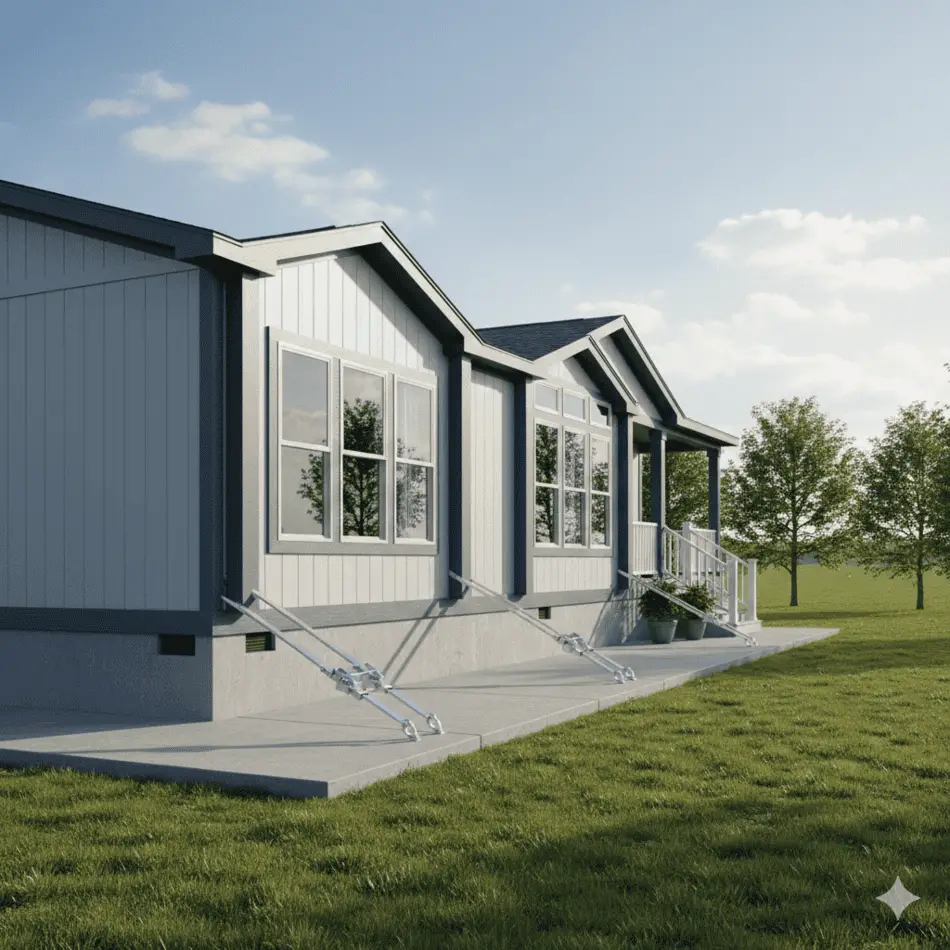
Yes, modern manufactured homes built after 1994 are designed to be as safe as site-built homes in high winds, provided they are installed and anchored correctly. However, “safe” is a relative term. No standard residential structure, whether it is made of brick or a steel chassis, is designed to survive a direct hit from an EF-4 or EF-5 tornado with winds exceeding 200 mph. For the vast majority of wind events, a properly maintained home in the correct HUD Wind Zone is significantly more resilient than the public perceives. If your home was built before 1976 or has corroded tie-downs, the answer is a firm no: it is not safe.
The HUD Code Evolution: Why 1994 Changed Everything
I tell my investors all the time that you cannot judge a book by its cover, and you certainly cannot judge a 2026 manufactured home by the “mobile homes” of the 1970s. The industry underwent a massive shift following Hurricane Andrew in 1992. The devastation showed that the existing standards were insufficient for coastal and high-wind areas.
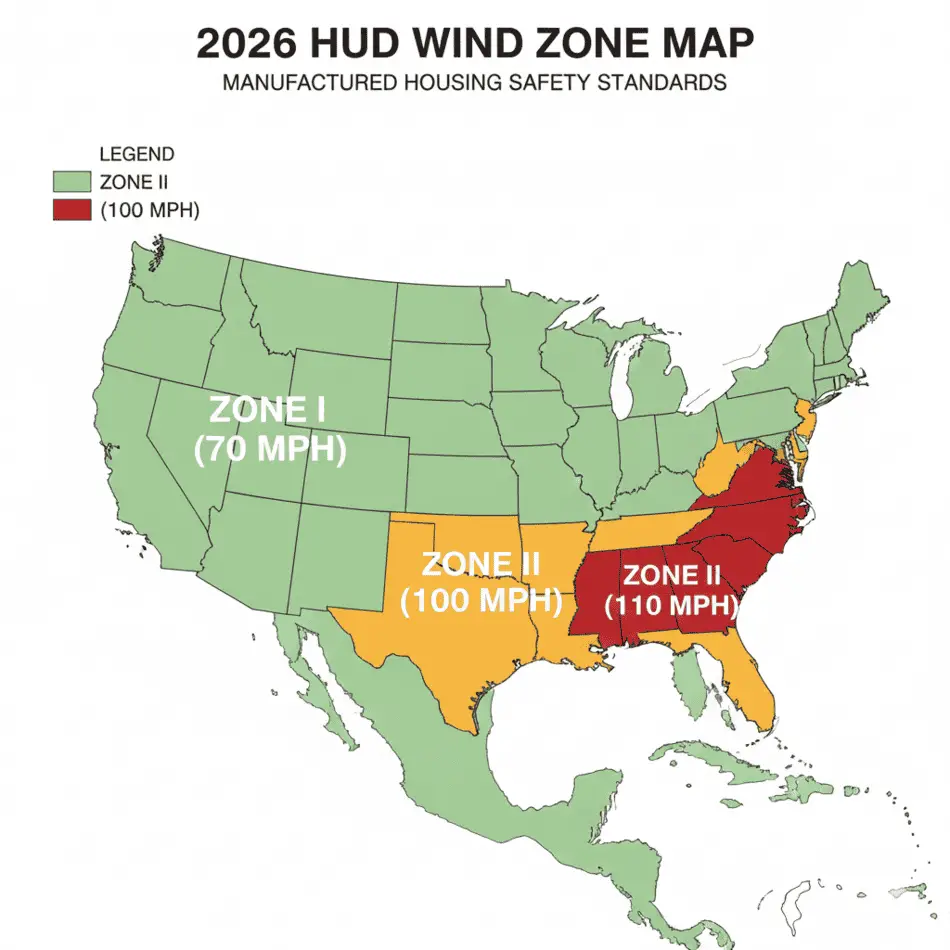
In 1994, HUD updated its Wind Zone standards. They divided the country into three distinct zones based on the probability of high-wind events. Wind Zone I covers most of the interior U.S., designed for 70 mph winds. Wind Zone II covers coastal areas prone to 100 mph winds. Wind Zone III covers the most extreme coastal areas, like the Florida Keys and Gulf Coast, designed for 110 mph sustained winds.
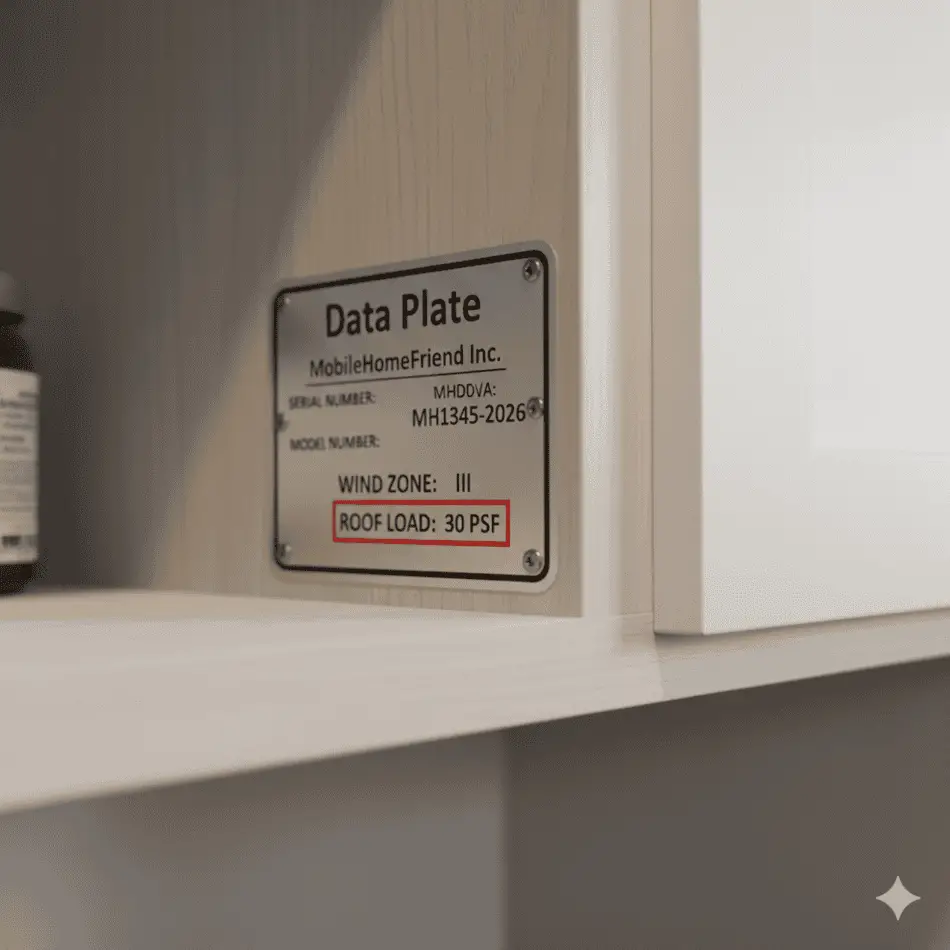
When I am walking a property for a potential flip, the first thing I do is check the Data Plate. This is usually found in a kitchen cabinet, a bedroom closet, or near the main electrical panel. If that home is rated for Zone I but sitting in a Zone III area, I walk away. It is illegal, uninsurable, and a death trap. A Zone III home features reinforced wall-to-floor connections, extra roof trusses, and more robust fastening systems. It is quite literally a different machine than a standard interior unit.
Understanding the Physics of Wind Lift
Wind does not just push against a home; it tries to lift it. This is Bernoulli’s principle in action. As wind speeds over the roof, it creates a low-pressure zone. Meanwhile, air getting under the skirting creates high pressure. This pressure differential creates aerodynamic lift. In my experience, most wind-related failures aren’t caused by the walls collapsing; they are caused by the home sliding off its piers or being lifted because the tie-downs failed.
Foundations and Anchoring: The Secret Sauce
You can have the strongest walls in the world, but if they aren’t bolted to the earth, they are just a very expensive kite. This is where most homeowners fail. I have seen 10-year-old anchors that have rusted through because they were sitting in standing water under the home.
Types of Anchors Used in 2026
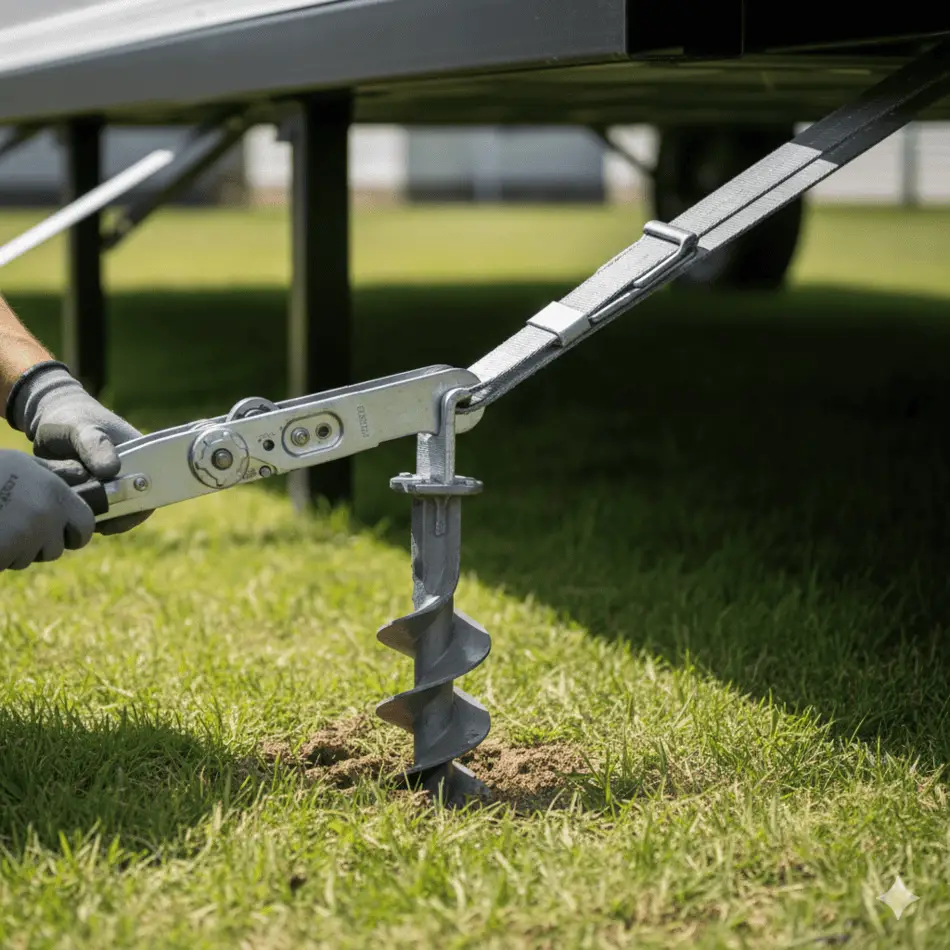
In 2026, we have moved beyond simple “corkscrew” augers for every soil type. Professional installers now use specialized equipment based on the soil’s torque rating. Auger anchors are still the standard for many soils, but in rocky terrain, we use drive-rock anchors. If you are on a concrete slab, we use expansion bolts.
One of the biggest mistakes I see is the “diagonal-only” approach. For maximum safety, you need both diagonal and vertical ties. Diagonal ties prevent the home from sliding or “racking,” while vertical ties prevent the uplift I mentioned earlier. If you live in an older home, you might only have diagonal straps. I highly recommend retrofitting with a modern Longitudinal Stabilizing System. This adds a level of rigidity that turns a shaky home into a rock-solid structure. You can read more about this in our guide on Mobile Home Foundation Repair.
The Importance of Skirting and Vapor Barriers
Skirting isn’t just for looks. It acts as a windbreak. If your skirting is full of holes or missing entirely, you are inviting high-pressure air to build up under your floor joists. During a storm, this acts like a hydraulic jack. I always install insulated, reinforced skirting on my rentals. It keeps the temperature stable and prevents wind from getting a “grip” on the underside of the chassis.
Cost Transparency Table (2026 Estimates)
Safety has a price, but it is much lower than the cost of a total loss. These are the current market rates I am seeing for professional safety upgrades in 2026.
| Service / Item | Estimated Cost (USD) | Benefit |
|---|---|---|
| Full Anchor Inspection | $250 – $450 | Identifies rusted straps or loose anchors before a storm. |
| Tie-Down Retrofit (Full Set) | $1,500 – $3,500 | Brings an older home up to modern Zone II/III standards. |
| Longitudinal Stabilizing System | $1,200 – $2,000 | Prevents the home from shifting end-to-end in high winds. |
| Reinforced Insulated Skirting | $2,500 – $5,000 | Reduces wind uplift and protects the plumbing from freezing. |
| Impact-Resistant Window Filming | $800 – $1,500 | Prevents glass shards and maintains internal pressure. |
Affiliate Products Table
When I am working on these properties, I use specific tools to ensure the job is done right. Here are three products I recommend for any serious owner or investor.
| Product Name | Use Case | Why I Recommend It |
|---|---|---|
| Steel-Titan PEX Cinch Tool | Plumbing Retrofits | After a wind event, plumbing shifts are common. This tool is foolproof for quick, leak-proof repairs. |
| Level-Right Digital Kit | Foundation Maintenance | You cannot check a 60-foot home with a 4-foot bubble level. This water-level system is essential for precision. |
| Guardian Smart-Lock (Storm Grade) | Security and Safety | Reinforced strike plates that withstand frame torque during high winds, ensuring the door stays shut. |
Tornadoes: The Uncomfortable Truth
I am going to give it to you straight: There is no such thing as a “tornado-proof” residential home. If an EF-5 tornado with 250 mph winds passes directly over a site-built home, that home will be erased down to the slab. The same applies to a manufactured home.
However, the danger in a manufactured home is disproportionately higher for two reasons. First, many older units are not anchored at all. Second, manufactured homes are lightweight structures. Once the wind gets underneath them, they can become airborne. A site-built home with a basement provides a refuge that most manufactured homes lack.
The Golden Rule: If there is a Tornado Warning, you do not stay in the home. I don’t care if it is a 2026 triple-wide with every anchor in the book. You get to a pre-designated storm shelter or a sturdy site-built building. In many mobile home parks, there are installed community storm shelters for this exact reason. If your park doesn’t have one, you need a plan. For more on park living, check out our article on Park Rules and Regulations.
The “Flying Home” Myth vs. Reality
The media loves the image of a mobile home flipped upside down. What they don’t tell you is that 90% of those flipped homes were pre-HUD (pre-1976) or had zero functioning tie-downs. Modern homes are remarkably resilient to peripheral tornado winds (EF-0 to EF-1). The steel chassis acts as a giant structural beam that actually holds the house together better than some traditional stick-built frames which rely on 2x4s and nails alone. But again, this resilience depends entirely on the connection to the ground.
Actionable Checklist: Wind-Proofing Your Home
If you live in a high-wind area, do not wait for the clouds to turn green. Go through this list today.
- Check the Data Plate: Confirm your home’s Wind Zone rating matches your current location.
- Inspect Straps and Bolts: Crawl under the home. Look for rust, loose nuts, or straps that have “slack.” They should be as tight as a guitar string.
- Check Soil Conditions: If the ground under your anchors is muddy or ponding water, those anchors will pull out like a hot nail in butter. Fix the drainage first.
- Tighten the Skirting: Ensure all panels are secure and that the “track” is bolted to the ground.
- Trim Overhanging Branches: In most wind events, it’s the falling oak tree that destroys the home, not the wind itself.
- Secure Outdoor Items: Patio furniture, grills, and sheds become unguided missiles in 80 mph winds. Bolt them down or have a plan to move them inside.
- Update Your Insurance: Make sure your policy covers “Windstorm” damage specifically. Some “Standard” policies in coastal areas exclude it. See our Insurance Guide for details.
Technical Deep Dive: The Steel Chassis Factor
One advantage manufactured homes have is the integrated steel I-beam chassis. In a site-built home, the “foundation” is often just a wooden sill plate bolted to concrete. In a manufactured home, the entire floor system is built on two to four heavy steel beams.
During high winds, a house experiences “shear” forces—the wind trying to push the top of the house in one direction while the bottom stays put. The steel chassis provides a level of lateral rigidity that is actually superior to some modular or stick-built designs. The failure point is almost always the connection between the chassis and the anchor. In my 20 years, I have never seen the steel beam itself fail; I have only seen the ground anchors fail. This is why I am obsessed with anchor maintenance. It is the only thing that matters when the wind hits 90 mph.
Window and Door Vulnerabilities
When wind breaks a window, it changes the internal pressure of the home instantly. This “internal pressurization” can literally blow the roof off from the inside out. If you are in Wind Zone II or III, you should have impact-rated windows or at least pre-cut plywood shutters numbered for each window stored in your shed. Do not use the “X” tape method; it is a myth and does nothing but make the glass shards bigger and more dangerous.
Internal Resources
If you found this guide helpful, you should check out these other deep dives on MobileHomeFriend.com:
- The Complete Guide to Mobile Home Setup Costs in 2026
- How to Inspect a Mobile Home Chassis for Structural Damage
- The Best Skirting Options for Durability and Wind Resistance
Summary
The safety of a mobile home in high winds is not a matter of luck; it is a matter of engineering and maintenance. If you are in a HUD-compliant home built after 1994, and you have spent the time and money to ensure your anchors are modern, tight, and corrosion-free, you are in a structure that can handle significant wind events.
However, the physics of a tornado are a different beast. No manufactured home should be used as a shelter during a tornado warning. Your life is worth more than your property. Invest in your foundation, maintain your tie-downs, and always have an evacuation plan. That is the only way to truly stay safe in “Tornado Alley” or on the coast.
About Chuck O’Dell
I am Chuck O’Dell, the founder of MobileHomeFriend.com. With over 20 years of experience in the manufactured housing industry, I have flipped more than 100 properties and managed dozens of mobile home parks. My goal is to provide first-principles, honest advice to help you navigate the world of mobile home investing and ownership without the fluff or the sales pitch. I’ve seen the best and the worst of this industry, and I’m here to make sure you stay on the right side of that line.
With almost 25 years in the industry, Chuck O’Dell provides expert insight into how modern engineering has changed mobile home safety—and where the risks still remain.