
Table of Contents
Introduction
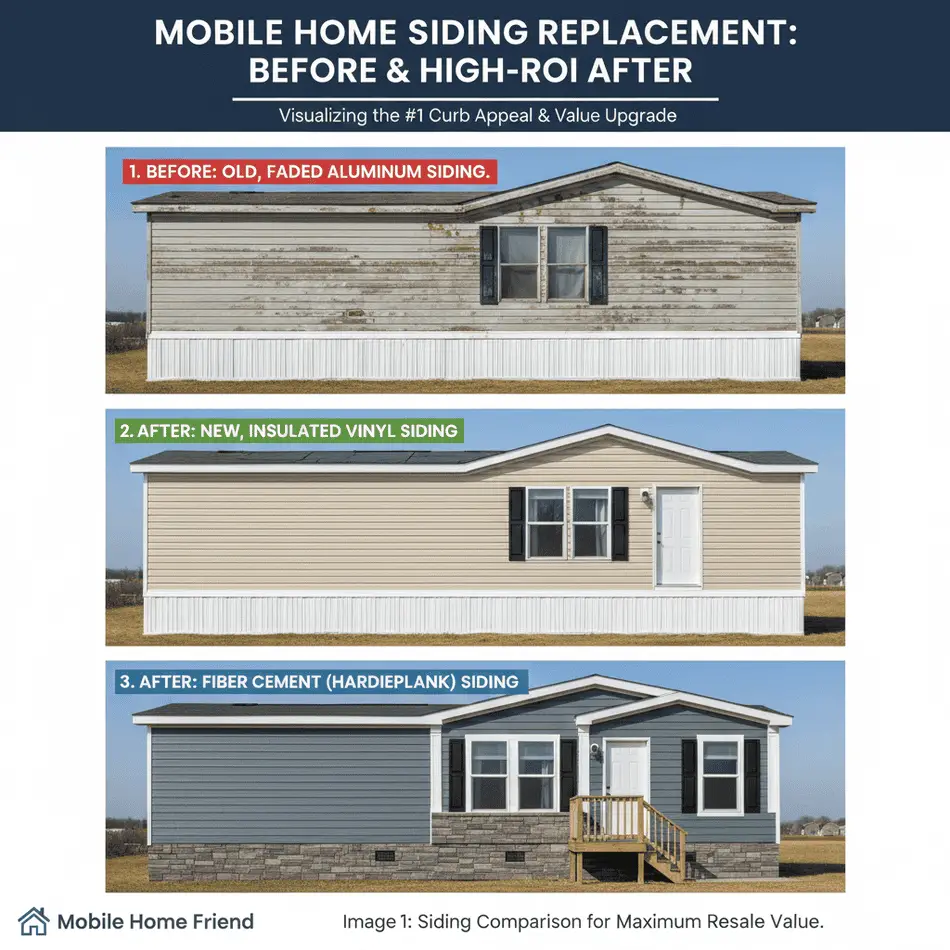
(Updated December 14, 2025) Nothing hurts a mobile home’s resale value more than faded, warped, or cracked siding. The siding is the largest visible surface area on the home, making it the single most effective investment for increasing curb appeal and achieving a top-tier selling price.
The cost for mobile home siding replacement ranges from $3,000 to $12,000+ depending on the material, but the ROI on high-end materials can exceed 150%. This guide breaks down the true installed cost per square foot for the three materials that generate the highest profit for investors: standard vinyl, durable fiber cement, and impactful manufactured stone veneer.
Video Guide Overview
Affiliate Disclosure: This guide contains affiliate links to specialized manufactured housing products and essential tools. If you purchase through these links, Mobile Home Friend may earn a small commission, at no extra cost to you.
Understanding the “Cost Per Square Foot” Siding Calculation
In construction, the term “square foot” has two different meanings. It is vital to use the correct one when estimating siding to avoid a 10% to 15% budget overrun. The cost figures in this guide use the material square footage required for installation, not the internal living area of the mobile home.
The Calculation That Matters: Total Wall Surface Area
- Measure All Exterior Walls: Measure the length and height of every exterior wall (front, back, and both sides). Multiply length by height to get the square footage of each wall.
- Subtract Openings (Optional but Recommended): Measure the square footage of large openings like doors and windows, and subtract them from the total. While some contractors do not subtract minor openings, it provides a more accurate material count.
- Add Waste Factor: The result is the net square footage. You must then add a 10% to 15% waste factor to cover trimming, overlapping, miscuts, and breakage. This is the actual material square footage you must buy.
When we state an installed cost of $5.00 per sq. ft., we mean that the final bill will be calculated based on the total surface area of material and labor required to complete the wall, including that 10% waste factor.
Pro Tip: Siding is often purchased by the “Square,” which equals 100 square feet of coverage. Always verify coverage and required pieces with your supplier.
The Short Answer: Siding Replacement Costs (2025 Estimates)
The total cost is highly dependent on the material chosen and whether you hire out or manage a skilled crew. The difference in material cost drives the difference in final resale value.
| Siding Material | Installed Cost per Sq. Ft. (Pro) | Investor Goal/ROI |
|---|---|---|
| Standard Vinyl Siding | $3.00 – $5.00 | Budget-friendly, quick flip, immediate aesthetic fix. |
| Premium/Insulated Vinyl | $5.00 – $7.50 | Best balance of cost, durability, and energy efficiency. |
| Fiber Cement (e.g., HardiePlank) | $7.00 – $12.00+ | Highest perceived value; fire and impact resistant. Turns mobile home into site-built home. |
Investor Directive: Do not default to the cheapest vinyl. If you are targeting a high-end market, Fiber Cement is a mandatory upgrade that justifies a $15k+ price jump on the final listing.
Standard vs. Premium Vinyl: The Quickest Flip Solution
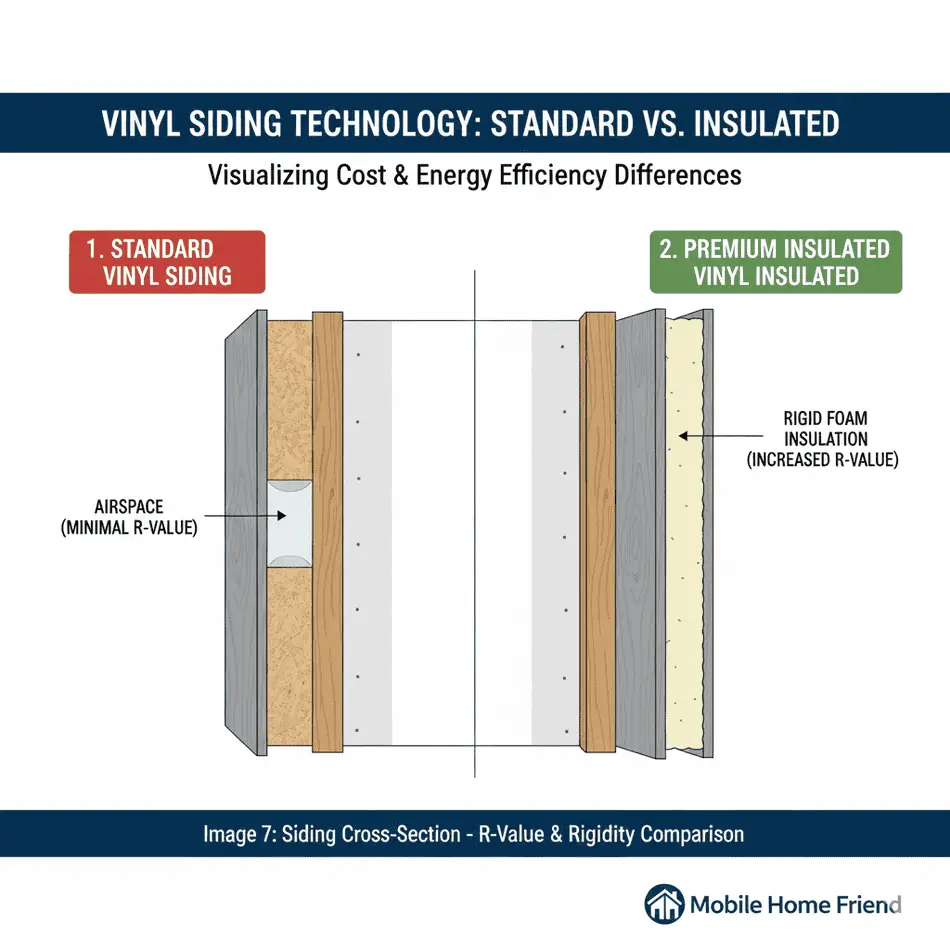
Vinyl is the default choice for mobile homes because it is cheap, lightweight, and easy to install. However, the quality gap between standard and premium is massive, impacting both the look and the home’s energy performance.
- Standard Vinyl: This is the thinnest material, prone to cracking in cold weather and warping in extreme heat. Cost: $3.00 – $5.00 per sq. ft. installed. Only use this on the tightest budget flips.
- Premium Insulated Vinyl: This includes a layer of rigid foam insulation bonded to the back of the siding. This drastically improves the R-value and rigidity, making the walls feel solid. Cost: $5.00 – $7.50 per sq. ft. installed. This is the preferred solution for a mid-market flip. For full energy efficiency calculations, see: Mobile Home Underbelly, Ductwork, and Insulation Cost.
Installation Note: Always use J-channel and correct trim around all doors and windows to prevent water intrusion. This protects your drywall investment.
Fiber Cement: The Site-Built Look and ROI Engine
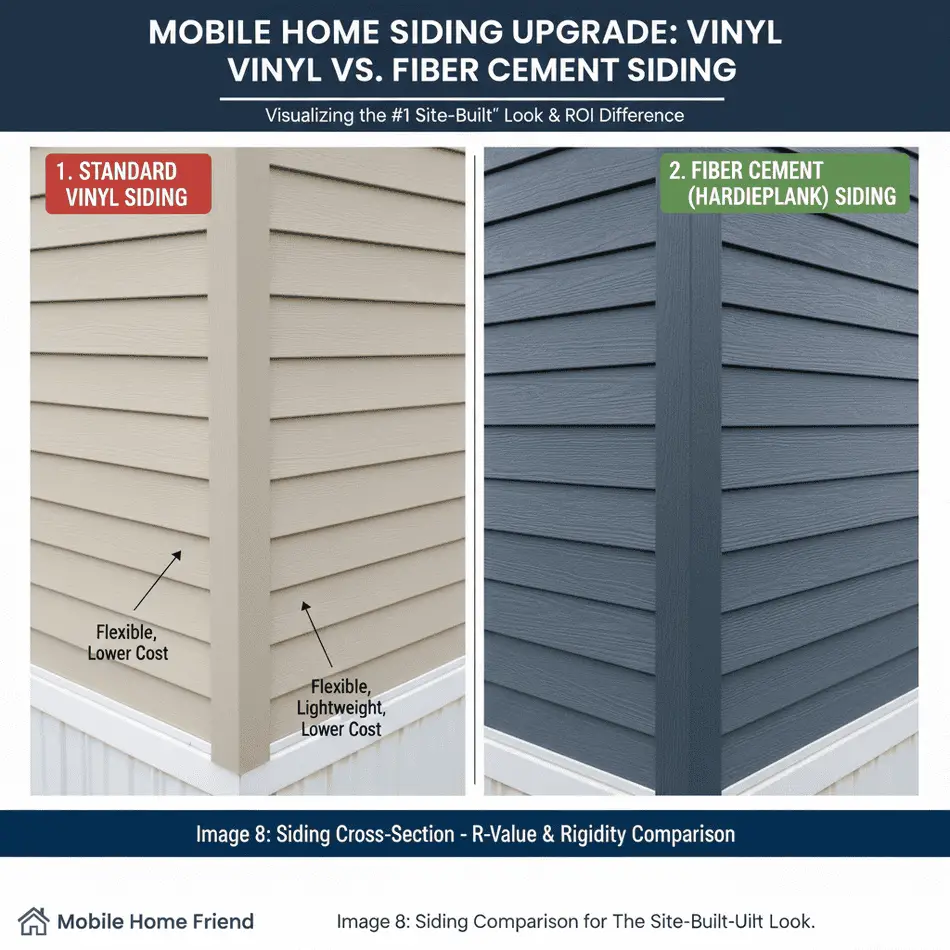
Fiber Cement (commonly referred to by the brand name HardiePlank) is a cement, sand, and cellulose mix. It is heavy, difficult to install, and expensive, but it delivers the highest ROI on exterior upgrades.
- Perceived Value: When paired with a permanent foundation and quality skirting, fiber cement completely removes the “mobile home” stigma. Buyers see it as a site-built home.
- Durability and Fire Rating: It is fire-resistant and holds up exceptionally well to hail and impacts, often leading to lower insurance premiums for the buyer.
- Cost Breakdown: Material cost is $3.00 – $6.00 per sq. ft. The high installation cost ($4.00 – $6.00 per sq. ft.) is due to specialized tools (cement shears) and the weight of the material. Total Installed Cost: $7.00 – $12.00+ per sq. ft.
Investor Directive: Reserve fiber cement for flips targeting the FHA-loan, conventional mortgage market. The cost is justified by the higher appraisal value and massive pool of conventional buyers.
Manufactured Stone Veneer: Strategic Curb Appeal
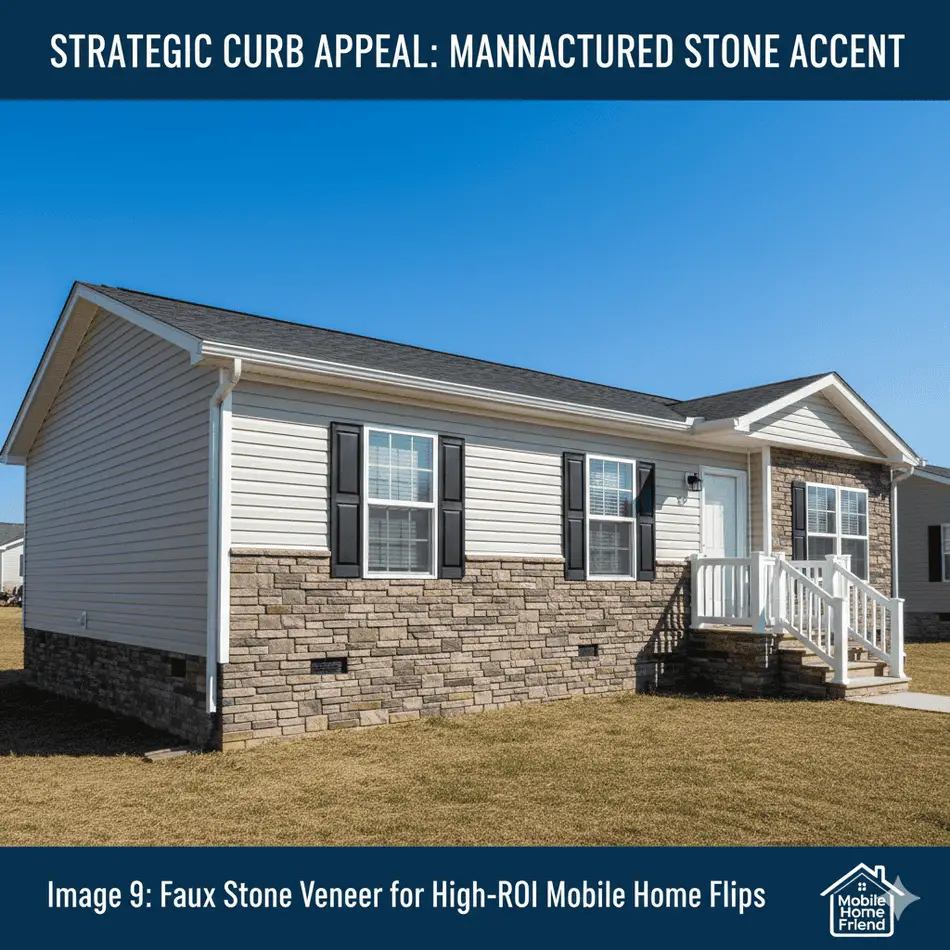
You do not need to cover the entire house in stone to maximize curb appeal. Use manufactured stone veneer strategically as an accent to achieve maximum visual impact at a fraction of the cost.
- Best Placement: The highest ROI placement is on the front entry wall, around the primary door, and tying it into the high-end skirting. This makes the home feel grand and permanent.
- Weight and Installation: Manufactured stone is lighter than natural stone, making it suitable for a mobile home’s framing, but it is still installed one piece at a time. The installation cost is the highest of all options.
Cost Impact: Budget $15.00 – $30.00 per sq. ft. installed for high-quality faux stone or brick veneer. Even a small area (50 sq. ft.) can cost \$1,500, but the visual return is instantaneous.
?️ Essential Tools and Materials for Professional Siding Installation
These two products are mandatory for either the high-ROI Fiber Cement installation or for correctly weather-proofing the entire exterior envelope, which protects your underlying investment.
✅ Option 1: Fiber Cement Cutting Tool (The Professional’s Choice)
Fiber Cement cannot be reliably cut with standard tools. Using a Specialized Fiber Cement Cutting Shear ensures clean cuts without creating hazardous silica dust, speeding up installation and protecting your crew.
✅ Option 2: Professional-Grade Exterior Caulk and Sealant
No siding job is complete without proper sealing. Use a high-quality, paintable, and durable Exterior Caulking and Sealant around all windows, doors, and trim to prevent water intrusion, which is the number one cause of costly subfloor and drywall rot.
Summary
Your siding choice must align with your exit strategy. For a quick, affordable flip, use premium vinyl siding for insulation and aesthetics. If you are converting the home to real property for a conventional buyer, Fiber Cement is a non-negotiable expense that unlocks the highest possible appraisal price. Always coordinate the siding with your roofing and skirting materials for a seamless look.
Related Questions
- Can I install siding over the old metal mobile home siding? In most cases, yes. It is easier to install vinyl or fiber cement over the existing siding than to remove the original metal/aluminum siding. However, you must first secure any loose original panels and ensure the walls are perfectly flat and level.
- Does new siding help with insulation? Only if you use insulated vinyl siding or if you apply a layer of foam board insulation to the exterior walls before installing the new siding. Without insulation, the impact on R-value is minimal, though it will help block air infiltration.
Written by a real estate investor who specializes in manufactured home flips and leverages fiber cement siding to achieve a site-built look and top-tier appraisal values.