
(Updated December 14, 2025) For an investor buying a mobile home on acreage, the biggest risk is always the hidden cost of utilities. Unlike city sewer and water, the septic system and well are independent, high-maintenance mechanical systems that can cost anywhere from $10,000 to over $40,000 to install or replace.
A failed septic system or a non-producing well is a deal-killer. They must be professionally inspected and factored into the purchase price. This guide breaks down the true cost of conventional, aerobic, and engineered septic systems, and the variable price of drilling and outfitting a modern residential water well.
Affiliate Disclosure: This guide contains affiliate links to specialized manufactured housing products and essential utility systems. If you purchase through these links, Mobile Home Friend may earn a small commission, at no extra cost to you.
Table of Contents
The Short Answer: Septic and Well Installation Costs (2025 Estimates)
The cost is extremely site-dependent, driven by soil conditions (the percolation or ‘perc’ rate) and the depth required for the well.
| Scope of Work | Average Installed Cost Range (Pro) | Risk and Requirement |
|---|---|---|
| Conventional Gravity-Fed Septic System | $3,500 – $8,500 | Requires good soil and ample drainage space. Low maintenance. |
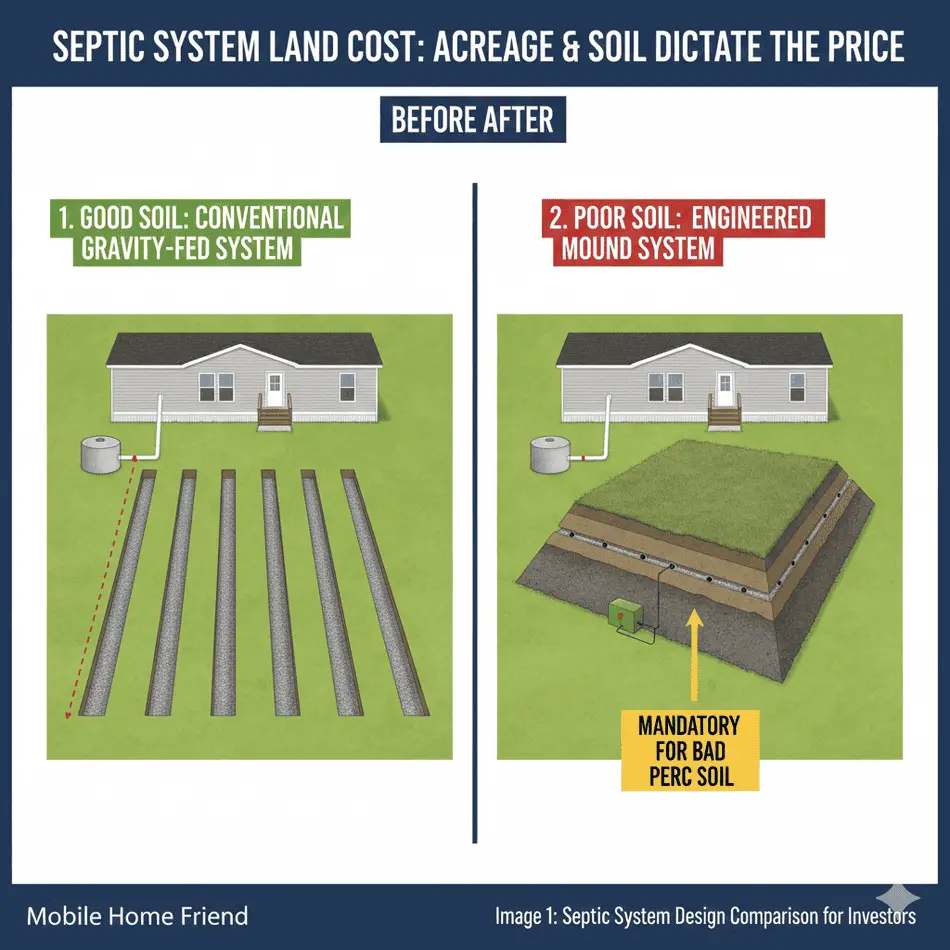
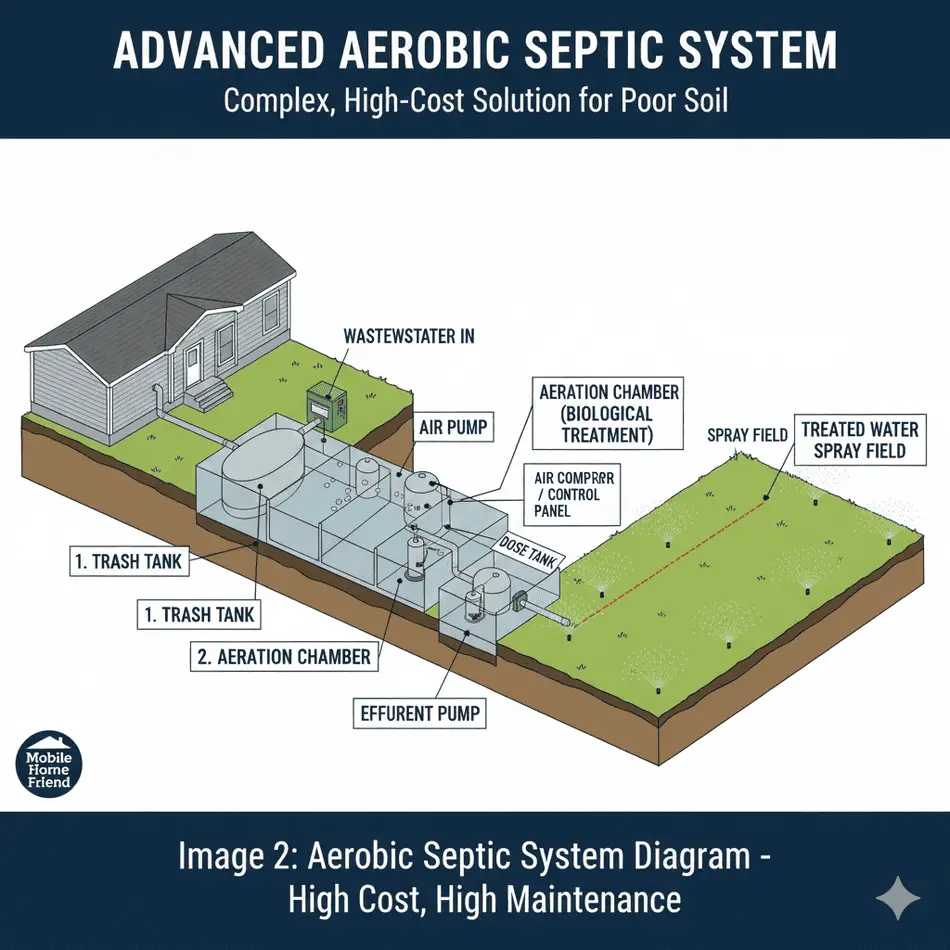
| Advanced Aerobic or Mound Septic System | $10,000 – $25,000+ | Mandatory for poor soil (“bad perc”) or high water table. High maintenance. |
| New Residential Water Well (Complete System) | $6,000 – $16,000 | Cost is directly proportional to drilling depth and required casing. |
Rule of Thumb: Assume the site requires the most expensive septic option until proven otherwise by a positive percolation (perc) test. Always budget 50% more than the low estimate.

Septic Systems: The Soil Dictates the Price
The most important factor influencing septic cost is the percolation rate (how fast water drains through the soil). If the soil drains quickly, you can use a cheap gravity-fed system. If it drains slowly, you are forced into an expensive engineered solution.
Three Main System Types:
- Conventional Anaerobic (Gravity-Fed): The gold standard. Waste flows by gravity from the tank to a large drain field. Cost: $3,500 – $8,500. This requires a successful perc test and a large amount of available land.
- Aerobic Treatment Units (ATU): These systems use air pumps to inject oxygen into the tank, speeding up waste decomposition. The effluent is cleaner, allowing it to be sprayed onto the yard. Cost: $10,000 – $20,000. This is necessary for poor perc soil, but requires electricity and mandatory yearly maintenance contracts.
- Mound System: Used when the water table is high or the soil is too shallow. The drain field is built above ground using sand and gravel fill. Cost: $15,000 – $30,000+. This is the most expensive and visually intrusive option.
Investor Directive: Never buy a property requiring a septic system without a current, successful perc test and a detailed design from a septic engineer. A failed perc test can render the land unusable.

Water Wells: Cost is Per Foot, Complexity is in the Components
The cost of a new water well is determined primarily by the depth of the drilling, but the reliability of the system comes from the internal components.
- Drilling Cost: This averages $30 – $65 per foot for a complete residential well. A typical well for a mobile home might be 150 to 250 feet deep. Rocky ground, remote locations, and the need for specialty drilling push the cost toward $100 per foot.
- Casing and Grouting: The well needs protective casing (PVC or steel) to keep the shaft open and clean. This is a mandatory component and costs up to $20 per foot.
- The Pump System: This is the heart of the well. A submersible pump (placed inside the well) is most common. You must also include the cost of the pressure tank, pressure switch, and electrical wiring run from the home. For electrical capacity planning, see: Mobile Home Electrical Panel and Wiring Replacement Cost.
- Water Quality Testing: Mandatory. The water must be tested for bacteria (E. coli) and mineral content. This usually costs $100 to $600.
Investor Directive: Always include a budget for a whole-house water filtration system (reverse osmosis or iron filters). The well water might be clean but mineral-heavy, which stains fixtures and reduces water heater efficiency.
The Non-Negotiable Step: Permits, Engineering, and Site Prep
Utility installation is heavily regulated and requires professional engineering and permitting. Skipping these steps is illegal and results in massive liability.
- The Percolation Test (Perc Test): This is the foundation of the septic design. A soil scientist or engineer must perform this test to determine soil permeability. Cost: \$500 – \$1,500.
- Engineering and Design: For any non-conventional system, an engineer must design the septic layout. Cost: \$1,000 – \$3,000.
- Permitting: Local health departments require permits for both septic and well work to ensure they are properly distanced from each other, property lines, and water sources. Cost: \$250 – \$1,800.
- Excavation and Land Clearing: The most variable cost. If the site is heavily wooded, rocky, or requires extensive grading, excavation fees (around \$100 – \$300 per hour for equipment/operator) will increase the total cost significantly.
Warning: Ensure the contractor is licensed for both septic and well installation in your state. This is highly specialized work that is not covered by a standard handyman license.
🛠️ Key Product Recommendations for Utility System Maintenance
These two products cover the essential maintenance for keeping your septic system operational and ensuring your well water is safe and clean for the mobile home.
✅ Option 1: Septic Tank Bacteria Additive
Routine maintenance is mandatory to prevent costly septic backups. This High-Concentration Septic Tank Bacteria Additive helps break down solid waste, maintaining the system’s efficiency and extending the time between expensive professional pumpings.
✅ Option 2: Whole-House Water Filtration System
Well water often contains high levels of iron, sulfur, or sediment that damage pipes and fixtures. A High-Capacity Whole-House Water Filtration System protects the home’s plumbing and improves water quality, which is critical for buyer satisfaction and long-term asset protection.

Summary
Utility infrastructure on a land-based mobile home is a high-cost, high-risk variable. Never rely on the seller’s assurances. Get an independent septic inspection (including pumping) and a well inspection (including flow and water quality test). Budget for the likelihood of an expensive engineered septic system and a deep well with a modern pump system to protect your profit margin.
Related Questions
- How often do I have to pump the septic tank? A conventional septic tank should be professionally pumped every 3 to 5 years, depending on the number of residents in the home. Aerobic systems may require pumping every 1-3 years and also have mandatory annual service contracts.
- Can I connect a mobile home to city sewer/water? Yes, if the property is within a reasonable distance (e.g., less than 300 feet) of the municipal tap. The cost to trench and connect can still be \$5,000 to \$15,000 but eliminates the long-term maintenance risk of a septic/well system.
Written by a real estate investor who specializes in land-based manufactured homes and has successfully managed the installation and repair of multiple septic and well systems.