

Table of Contents
Introduction
(Updated December 7, 2025) As an investor, I only look at major upgrades that solve two problems: high utility bills and aging systems. Moving from an older furnace and separate AC unit to a modern heat pump is the single most effective way to solve both problems, especially in mobile homes.
A heat pump doesn’t “create” heat; it “moves” heat, making it vastly more efficient than a furnace. But the cost is substantial, and the installation must be done correctly for manufactured housing. I’ve broken down the true costs, the hidden variables (like ductwork), and the exact moment when the replacement cost is justified by the energy savings.
Video Guide Overview
Affiliate Disclosure: This guide contains affiliate links to packaged heat pump units, mini-split systems, and tools used for mobile home HVAC upgrades. If you purchase through these links, Mobile Home Friend may earn a small commission, at no extra cost to you.
The Short Answer: Heat Pump Installation Costs (2025 Estimates)
The cost to install a mobile home heat pump varies dramatically based on type (Packaged, Split, or Ductless) and whether you are replacing an existing furnace/AC or installing a new system where ductwork is needed.
| Heat Pump System Type | Average Installed Cost Range (Pro) | Best Use Case |
|---|---|---|
| Packaged Heat Pump Unit | $4,000 – $7,500 | Direct replacement for old packaged systems. |
| Split System Heat Pump | $5,500 – $9,500 | Highest efficiency, uses existing downflow ductwork. |
| Ductless Mini-Split (Multi-Zone) | $6,000 – $12,000 | No existing ductwork or severely damaged ducts. |
In mild to moderate climates (where temperatures rarely drop below freezing), a heat pump will pay for itself in 5 to 8 years through energy savings alone.
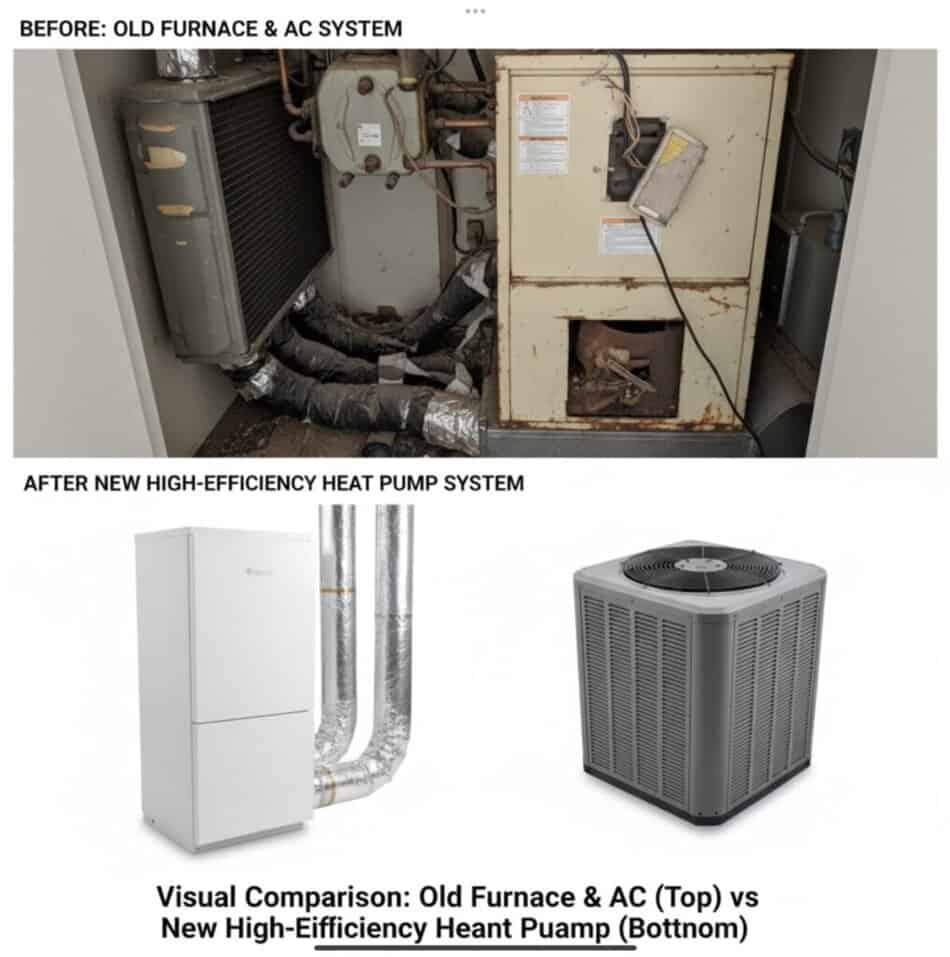
The Investor View: Heat Pump vs. Gas/Electric Furnace
The decision to switch is purely a financial calculation based on efficiency, not on comfort. Here is the strict comparison:
Efficiency (The Highest ROI)
A gas furnace is, at best, 98% efficient (meaning 2% of the energy is lost). A heat pump, by moving heat instead of creating it, can operate at 300% to 400% efficiency in moderate temperatures. This massive efficiency difference is what drives your long-term savings.
Hidden Costs of Replacement
When replacing an old furnace/AC combo, you must budget for more than just the new unit:
- Electrical Upgrades: Heat pumps have different electrical requirements than old furnaces, often requiring a breaker panel upgrade ($500–$1,500).
- Ductwork Repair: A new high-efficiency heat pump will be crippled by old, leaking, and damaged ductwork under the home. You must repair the ducts before installing the new unit. See my full guide on verifying your system: The True Cost of Mobile Home HVAC Ductwork Repair.
Why You Cannot Use a Standard Residential Heat Pump
Mobile homes require specific HVAC systems, usually classified as “manufactured home-approved” or “HUD-approved.” This is not a suggestion; it is a necessity for performance and compliance.
Key Differences for Manufactured Housing:
- Downflow Configuration: Most mobile homes require air to be forced “down” into the floor ductwork. Standard home units are often upflow.
- External Access: Many mobile homes use packaged units (all-in-one heating/cooling) that sit outside, simplifying installation and maintenance.
- Tonnage (Sizing): Mobile homes often require less tonnage than site-built homes of the same square footage due to smaller internal volume and lower ceilings. An oversized heat pump will cause expensive short-cycling.
Never let a contractor install a non-HUD-approved system. It will lead to performance issues and may void future warranties.
If your existing ductwork is in good shape, replacing your old unit with a high-efficiency packaged unit is the simplest swap. This 3-Ton High-SEER Mobile Home Packaged Unit is HUD-approved and offers excellent energy efficiency for immediate returns.
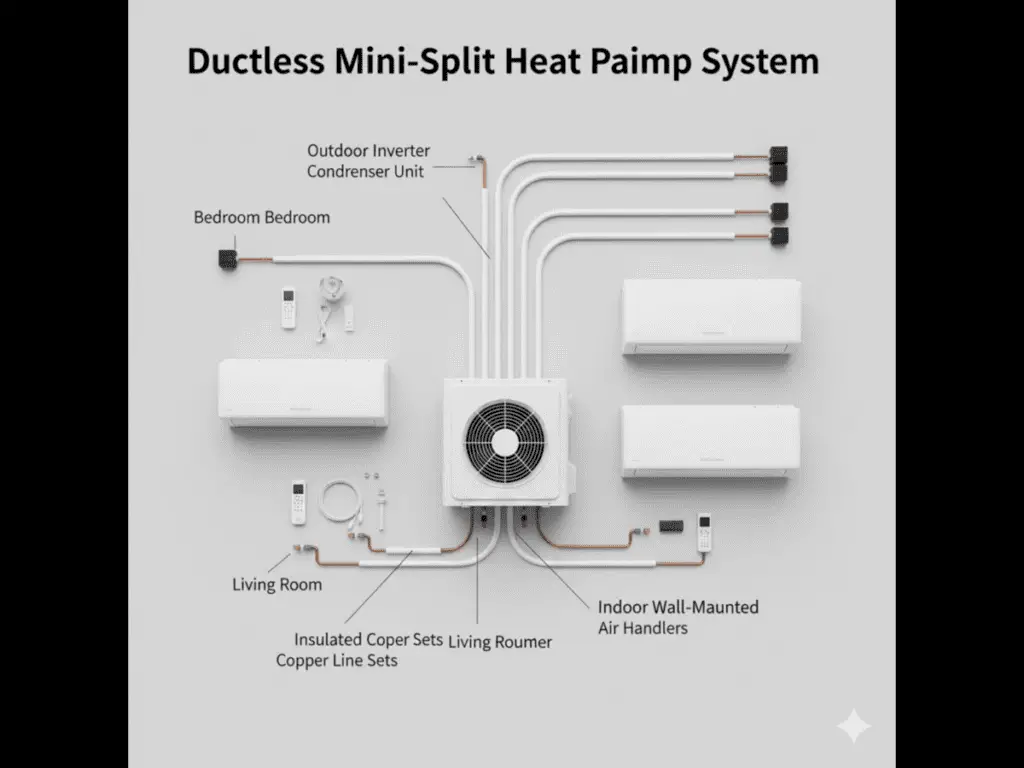
The Ductless Mini-Split: The Ultimate Solution for Bad Ducts
If your underbelly ductwork is ruined—infested by pests, separated beyond repair, or simply collapsing—a ductless mini-split system can be the most cost-effective solution.
Mini-splits consist of a small outdoor unit connected to multiple indoor air handlers mounted on the walls. They completely bypass the need for ductwork, saving you thousands on underbelly repair.
- Cost: Installing a multi-zone mini-split costs $6,000 to $12,000, which is comparable to a split-system replacement plus full duct repair.
- Zoning: You can heat or cool only the rooms you are using, saving even more on energy bills—a major financial advantage.
Proper airflow is also dependent on a sealed and dry environment under the home. Before any HVAC upgrade, you must ensure your subfloor is protected. Review my guide on preventing damage: The True Cost of Mobile Home Underbelly Insulation.
If your ductwork is compromised, go ductless. A DIY-friendly kit can save you thousands in labor. This specific 2.5 Ton 17 SEER Multi-Zone Mini Split Kit is a reliable choice for a 1,200–1,500 sq ft double-wide.
Summary
Replacing an old system with a heat pump is an expensive but highly profitable investment. It immediately enhances your property’s value, provides year-round comfort, and offers substantial, guaranteed returns via utility savings. The key to successful installation is “proper sizing” and “verifying the integrity of your ductwork and electrical service” before the unit arrives.
Related Questions
- Can I qualify for government rebates for a heat pump? Yes. The federal Inflation Reduction Act (IRA) and many state programs offer substantial tax credits and rebates for installing high-efficiency heat pumps. Always consult a certified HVAC installer to ensure the unit you choose qualifies for the maximum available credit.
- What is the SEER/HSPF rating? SEER (Seasonal Energy Efficiency Ratio) measures cooling efficiency, and HSPF (Heating Seasonal Performance Factor) measures heating efficiency. The higher the numbers, the more efficient the unit, and the more money you save.
Written by a real estate investor who has successfully renovated over 100 properties, specializing in maximizing mobile home HVAC efficiency and navigating high-ticket system replacements.