
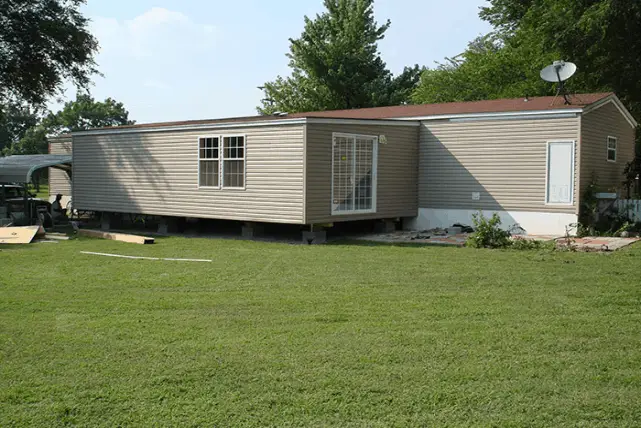
I have spent more than 20 years in the mobile home industry. In that time, I have flipped over 100 properties and consulted on countless renovations. I have seen it all: from masterfully engineered sunrooms that doubled a home’s value to DIY nightmares that led to structural collapse and total insurance denial. When you decide to add square footage to a manufactured home, you are entering a world of federal regulation that most site-built contractors do not understand. You are not just building a room; you are modifying a structure that was built to a specific federal performance code. If you do not understand the relationship between your local building department and the Department of Housing and Urban Development (HUD), you are headed for a financial disaster. This guide is built on first-principles logic and two decades of “boots on the ground” experience to ensure your project adds value, not liability.
Table of Contents
Video Guide Overview
Affiliate Disclosure
In the interest of full transparency, this article contains affiliate links. If you purchase products through these links, I may receive a small commission at no additional cost to you. I only recommend high-grade tools and materials—like heavy-duty leveling systems and specialized sealants—that I personally use on my own investment properties and job sites.
The “Short” Answer
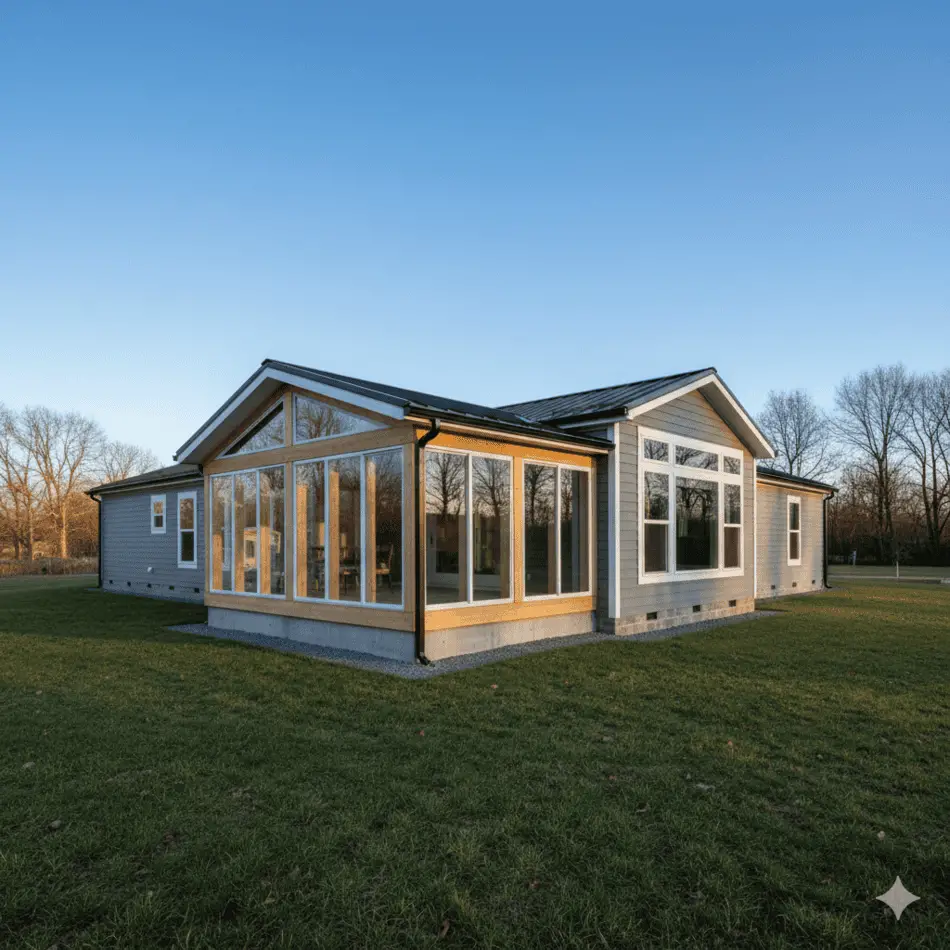
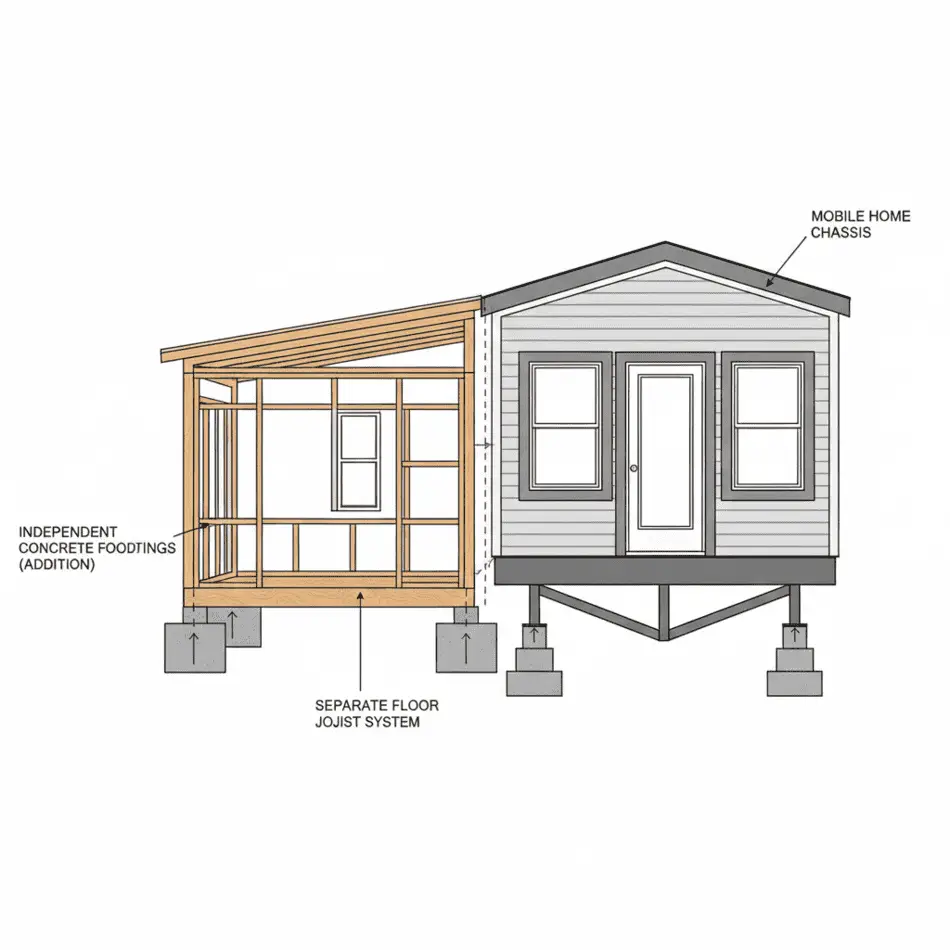
The absolute, non-negotiable rule for mobile home additions is structural independence. Under HUD Title 24 CFR Part 3280, a manufactured home is a self-contained structural entity. It was engineered at the factory to support its own weight and environmental loads (wind, snow, etc.) based on its specific “Zone” rating. The moment you “attach” an addition—meaning you allow the new structure to transfer any weight onto the mobile home’s walls, roof, or chassis—you have violated the home’s original certification. To remain compliant, the addition must stand on its own foundation system, with its own roof support and floor joists. The only connection allowed is a non-structural, flexible weather seal designed to allow the two buildings to move independently of one another. Failure to follow this rule makes the home unfinanceable and potentially illegal to occupy.
Section 1: Understanding the HUD Code and the 1976 Threshold
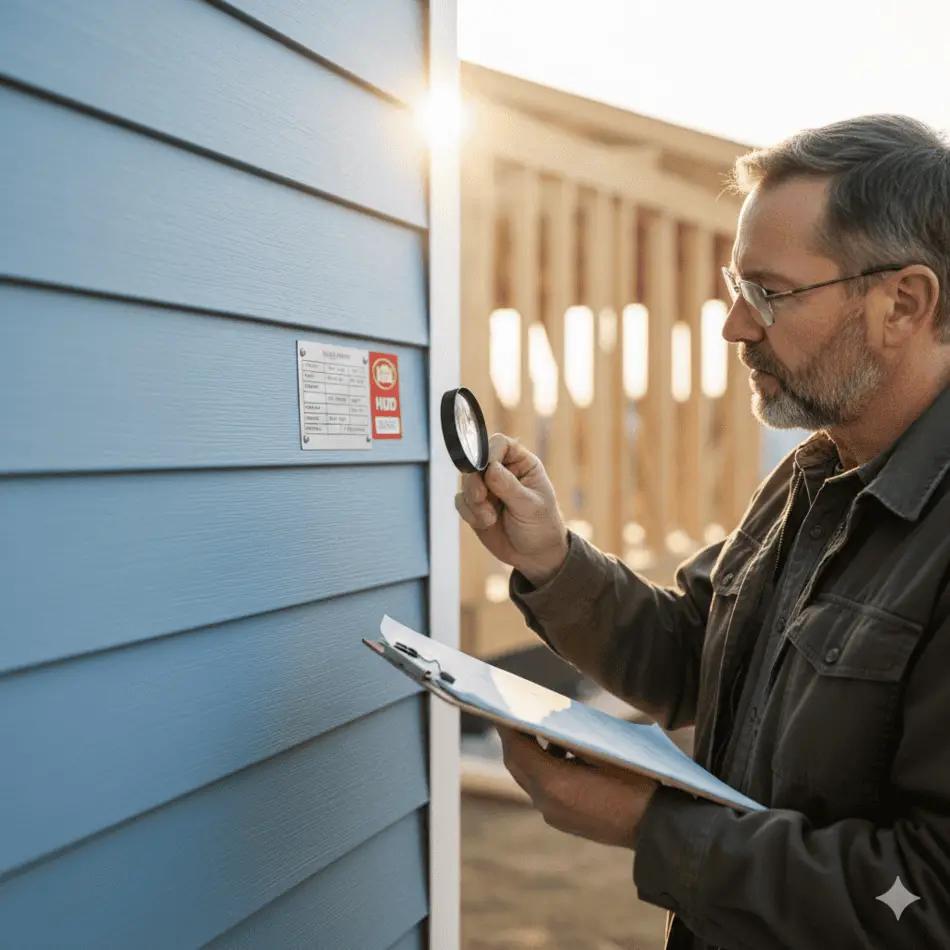
To understand why the rules are so strict today, we have to look at the history. Before June 15, 1976, “mobile homes” were largely unregulated. They were often flimsy and dangerous. On that date, the Federal Manufactured Home Construction and Safety Standards (the HUD Code) went into effect. Every home built after that date must have a HUD Tag—a small metal plate on the exterior—and a Data Plate inside.
The HUD Code is unique because it preempts local building codes. Your town’s building inspector cannot tell the factory how to build the home, but they do have jurisdiction over the land the home sits on and any structures built next to it. This creates a regulatory gap. When you build an addition, you are building a “site-built” structure that must meet local International Residential Code (IRC) standards, while the home it sits next to must remain in compliance with HUD standards. If your addition leans on the home, the home is no longer a “HUD-compliant” structure. This is the primary reason why banks will refuse to provide a mortgage on a modified mobile home unless a licensed structural engineer certifies that the addition is independent.
The 2026 Regulatory Landscape
In 2026, we are seeing a shift. HUD has introduced more flexibility for multi-unit manufactured housing, but they have actually tightened the screws on unpermitted additions. With the rise of modular construction, inspectors are trained to look for “load-bearing connections.” If you have bolted a ledger board directly to the rim joist of your double-wide to support a deck or a room, you are in violation. I have seen 2026 appraisals come back at $0 because of an illegal porch. You must treat the mobile home as a “ship in a dock”—it stays in its place, and the dock (your addition) stays in its own.
Section 2: The Engineering of Structural Independence
Why am I so obsessed with independence? It comes down to Differential Settlement. A mobile home is supported by a steel chassis resting on piers. An addition is typically built on concrete footings or a slab. These two structures will settle into the ground at different rates and move differently during wind events or temperature shifts.
Foundation Systems
For a 2026-compliant addition, you have three primary options for foundations, ranked from “Best” to “Bare Minimum”:
- Deep Concrete Piers: These should be poured below the frost line (which varies by state). By using adjustable pier heads, you can re-level the addition independently of the home.
- Thickened Edge Slab: If your soil has high bearing capacity, a slab can work. However, you must ensure the slab is physically separated from the mobile home’s footings by an expansion joint.
- Helical Piles: These are becoming the gold standard in 2026 for mobile home additions. They are screwed deep into the earth and offer incredible stability with zero “heave.”
The Separation Joint
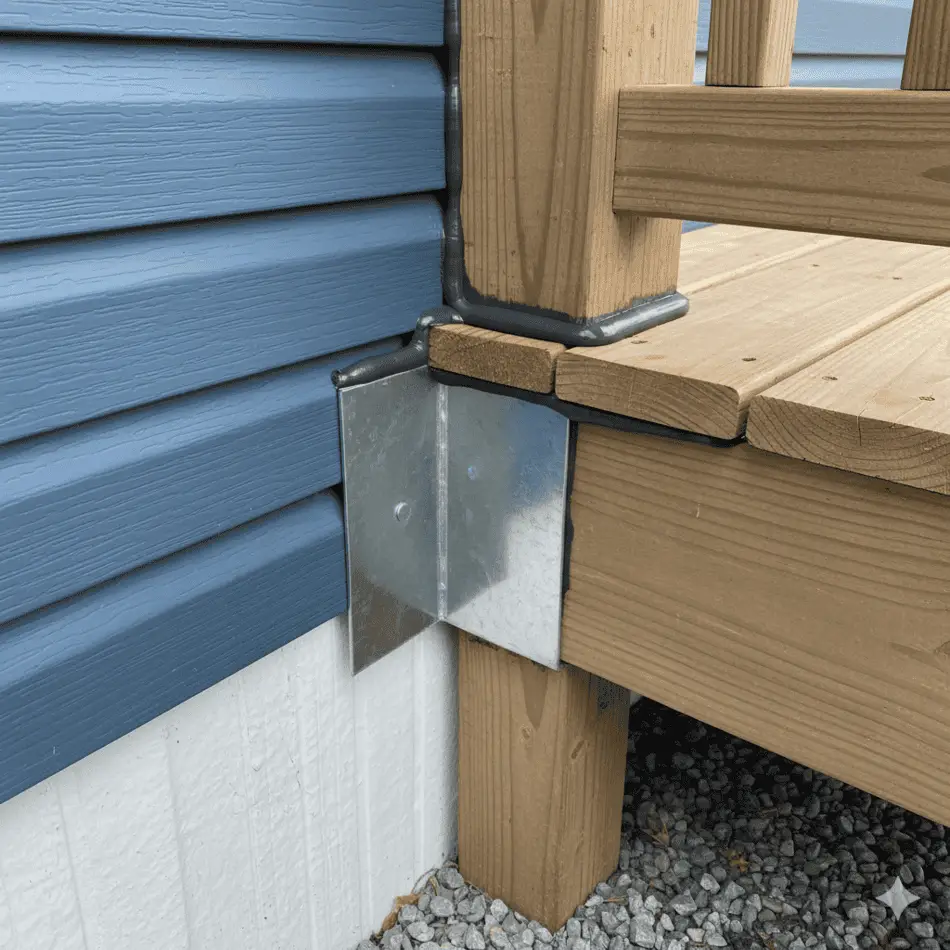
The “connection” between the home and the addition should be a flashing detail, not a structural one. I use a heavy-duty vinyl or rubber gasket system. The addition’s wall should be built about 1 to 2 inches away from the mobile home’s wall. This gap is then bridged with flexible flashing and siding. If the home settles half an inch, the flashing flexes. If the wall was bolted, that half-inch shift would rip the siding or crack the drywall in both structures.
Section 3: HVAC, Electrical, and Plumbing Integration
One of the biggest mistakes I see in my 100+ flips is the “parasitic” utility connection. People try to save money by tapping into the existing systems, but this often leads to system failure.
Electrical Load Calculations
Most manufactured homes come with 100-amp or 150-amp panels. In a modern 2026 home, between the electric vehicle charger, the dryer, and the AC, you are already pushing the limit. When you add a new bedroom or a “man cave,” you are adding a new branch of circuits. You must perform a load calculation. If the addition pushes you over the limit, do not “double-tap” breakers. You need a sub-panel. In many jurisdictions, the addition must have its own dedicated circuits originating from a sub-panel to meet IRC 2024/2026 standards.
The HVAC Dilemma
A mobile home furnace is sized precisely for the square footage of the unit. If you cut a hole in the trunk line and run a duct to your new addition, two things happen: 1) The original home becomes under-heated/cooled, and 2) The blower motor in the furnace wears out prematurely because it isn’t designed for the extra static pressure. My professional advice? Install a Mini-Split. It provides independent climate control for the addition and keeps you from messing with the HUD-certified HVAC system in the main home.
Section 4: Cost Transparency Table (2026 Reality)
Prices have shifted. Labor is the primary driver of cost in 2026. Here is what you should budget for a professional-grade, HUD-compliant addition.
| Project Type | Permits & Engineering | Material Cost | Total Pro-Installed |
|---|---|---|---|
| 200 sq. ft. Bedroom Addition | $1,500 – $3,000 | $12,000 | $35,000+ |
| 12×20 Covered Deck (Independent) | $500 – $1,200 | $5,500 | $14,000+ |
| Attached Garage (Fire-Rated Wall) | $2,500 – $4,500 | $18,000 | $50,000+ |
Section 5: Affiliate Products Table
These are the specific tools and kits I require my crews to use when working on additions. Using the wrong fasteners or leveling equipment is the fastest way to fail an inspection.
| Product | Application | Why It’s Essential |
|---|---|---|
| Titan Helical Pier Foundation Kit | Addition Foundation | Eliminates the need for massive concrete pours and ensures zero movement. HUD inspectors love seeing these. |
| Pioneer Ductless Mini-Split (12,000 BTU) | Climate Control | Keeps the addition’s HVAC independent, protecting the main home’s furnace and meeting 2026 energy codes. |
| SikaFlex Self-Leveling Sealant (Bulk) | Separation Joint | The best material for creating that “flexible bridge” between the addition and the home. Stays elastic for 20+ years. |
Section 6: The Step-by-Step Approval Process
Do not hammer a single nail until you have followed this sequence. I have seen homes demolished because someone built a “beautiful” addition without a permit.
Step 1: The Site Plan and Zoning
First, check your setbacks. Most mobile home parks and rural lots have “setback” requirements. If you build your addition 3 feet from the property line and the code requires 10 feet, you will be forced to tear it down. Get a survey if you aren’t 100% sure.
Step 2: Structural Engineering Certification
This is the most important step for your future resale. Hire an engineer to provide a “Letter of Structural Independence.” This letter will state that the addition is self-supporting and does not rely on the manufactured home for any structural integrity. You will need this letter to sell the home later. Most FHA and VA buyers will require it.
Step 3: The Building Permit
Take your engineer’s plans to the local building department. You are applying for a “Site-Built Addition” permit. Be prepared for them to ask how you are sealing the connection. Show them your flexible flashing plan.
Step 4: Inspections
You will typically have three major inspections: 1) Footing/Foundation, 2) Rough-in (Electrical/Plumbing/Framing), and 3) Final Inspection. If you are doing the work yourself, do not cover your walls with drywall until the inspector has signed off on the wiring. I have seen people have to rip out $2,000 worth of drywall because they missed the rough-in inspection.
Section 7: Common Pitfalls and Expert Advice
Over the last 100 properties, I have learned that the “little things” are what kill a project. Here are my top three warnings:
The Roofline Conflict
If your addition’s roof is higher than the mobile home’s roof, snow can shed off the addition and onto the mobile home. A mobile home roof is only rated for a certain “live load” (usually 20 to 30 lbs per square foot in standard zones). If your addition dumps 2 feet of snow onto the mobile home’s roof, the trusses will fail. Your roof design must account for drainage and snow shed. Never direct water or snow from one roof onto the other.
Egress Requirements
If you are adding a bedroom, HUD and IRC codes both require “egress.” This means a window large enough for a person to climb out of and a firefighter to climb into. In 2026, these requirements are even stricter regarding window height from the floor. Do not buy “standard” mobile home windows for a site-built addition; they often do not meet egress for new construction.
Vapor Barriers and Airflow
When you put an addition next to a mobile home, you change the way air moves under the home. You must ensure that the crawl space under the addition is properly ventilated and has a 6-mil poly vapor barrier. If you trap moisture between the addition’s foundation and the home’s skirt, you will have rot and mold in your floor joists within three years. I have seen it happen, and it is a nightmare to fix.
Actionable Checklist for Homeowners
- Locate your HUD Tags: If you don’t have them, stop. Contact the IBTS for a label verification letter first.
- Consult your Insurance Agent: Ask them if an independent addition will change your premium or if they have specific requirements for coverage.
- Verify Electrical Capacity: Have an electrician check if your main breaker can handle an additional 20-40 amps of load.
- Design for “The Gap”: Ensure your contractor understands the 1-inch separation rule. If they say “we can just bolt it to the rim,” fire them.
- Plan for Resale: Keep a digital folder with your permit, your engineer’s letter, and photos of the foundation. This is your “equity insurance” for when you sell.
Internal Resources
If you found this guide helpful, you need to read these related articles to protect your investment:
- The HUD Tag Survival Guide: What to Do If Your Labels Are Missing
- Mobile Home Leveling 101: Why Your Addition Is Pulling Away
- Understanding Wind Zones: Can Your Home Handle a New Roofline?
Summary
An addition to your manufactured home is a fantastic way to upgrade your lifestyle without moving. However, you must respect the federal nature of your home. By following the “Independence Rule,” securing professional engineering, and refusing to take shortcuts on utilities, you protect your family and your wallet. I have seen the consequences of “cowboy” contracting in this industry for 20 years. It always ends in a loss. Build it right, build it independent, and keep your HUD status intact. Your future self will thank you when it comes time to sign the closing papers on a profitable sale.
Bio: Chuck O’Dell
Chuck O’Dell is a veteran real estate investor, park owner, and the voice behind MobileHomeFriend.com. With over two decades of experience and more than 100 successful mobile home flips, Chuck specializes in the technical and regulatory aspects of manufactured housing. His mission is to provide homeowners with the “no-fluff” truth about maintaining, renovating, and profiting from mobile homes. He lives and works by the philosophy that structural integrity and legal compliance are the only true paths to real estate wealth.
With over 30 years of hands-on experience in the manufactured housing industry, Chuck O’Dell provides expert clarity on navigating complex HUD regulations and structural engineering requirements for home additions.