

Table of Contents
Introduction
I have spent the last 20 years crawling under chassis and inspecting roof bows. I have flipped over 100 manufactured properties. I have seen units from the 1960s that look pristine and 5-year-old units ready for the scrap heap. If you are looking for a fluffy marketing answer, you are in the wrong place. I deal in structural reality and first-principles logic.
The lifespan of a mobile home is not a fixed number. It is a variable determined by the era of construction, the quality of the site prep, and the discipline of the owner. Most people cite 30 to 55 years as the standard range. In my experience, that is a lazy estimate. With the right intervention, these structures can easily exceed 60 or 70 years. Without it, they can fail in 15. We are going to break down exactly what determines that timeline.
Video Guide Overview
Affiliate Disclosure
I believe in transparency. Some of the links in this article are affiliate links. This means if you click a link and buy a product, I may receive a small commission at no extra cost to you. I only recommend tools and products that I personally use on my investment properties or recommend to my consulting clients.
The Short Answer
A modern manufactured home built after 1976 (HUD Code) has a design life of 30 to 50 years, but a functional life of 70+ years if maintained. Pre-HUD homes (built before June 15, 1976) typically last 20 to 30 years due to inferior materials and lack of federal oversight. The three pillars of longevity are moisture control, foundation stability, and roof integrity. If you master these three, the home will likely outlive your mortgage.
The Era Breakdown: How Age Affects Durability
The Pre-HUD Era (Pre-1976)
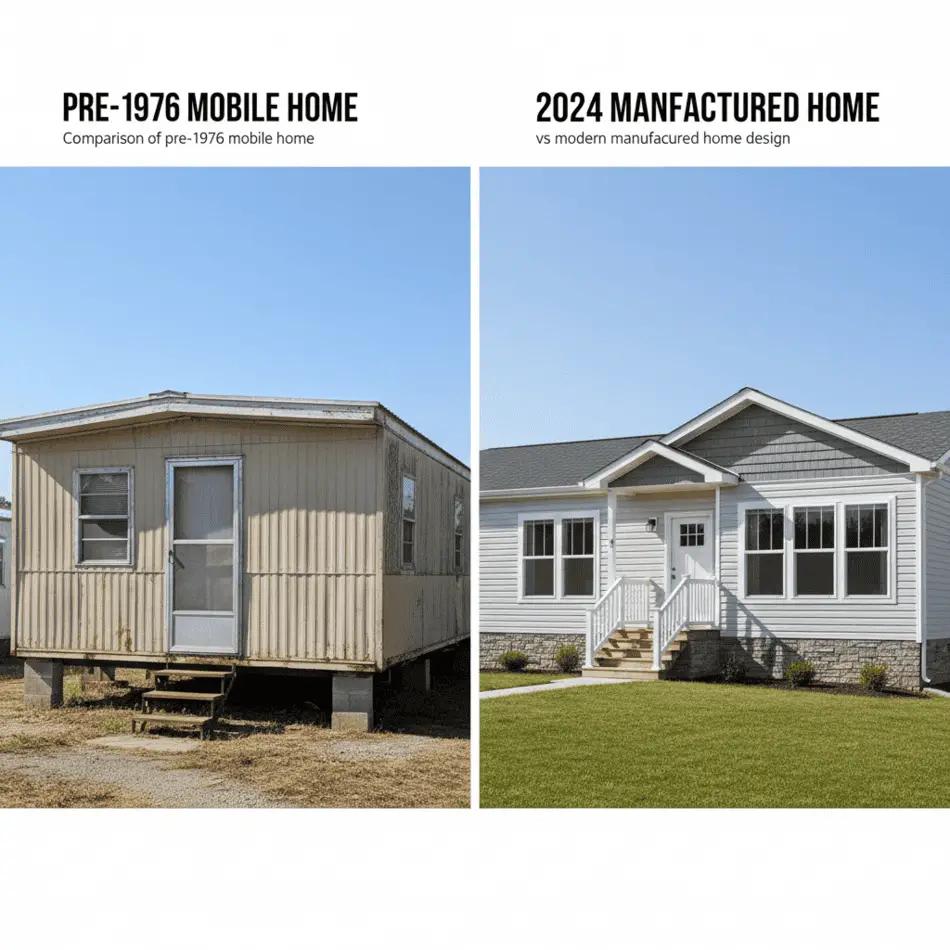
These are the “trailers” of the past. Before the HUD Code took effect in June 1976, there were no federal standards for construction. Manufacturers used 2×2 wall studs, aluminum wiring, and thin jalousie windows. The floors were often made of particle board that dissolves when it touches water. I generally advise investors to be extremely cautious with these. Unless it has been completely gutted and retrofitted, a 1970 model is at the end of its natural life cycle in 2026.
The Post-HUD Era (1976 to 1994)
This was a massive leap forward. Federal standards mandated better fire safety, structural plumbing, and electrical systems. However, these homes still suffered from poor insulation and bowstring trusses that are prone to leaking. If you find a home from the 1980s, the chassis is likely still strong, but the “skin” (siding and roof) has probably reached its limit. These are the prime candidates for my “Rebuild to Last” strategy.
The Modern Era (1995 to Present)
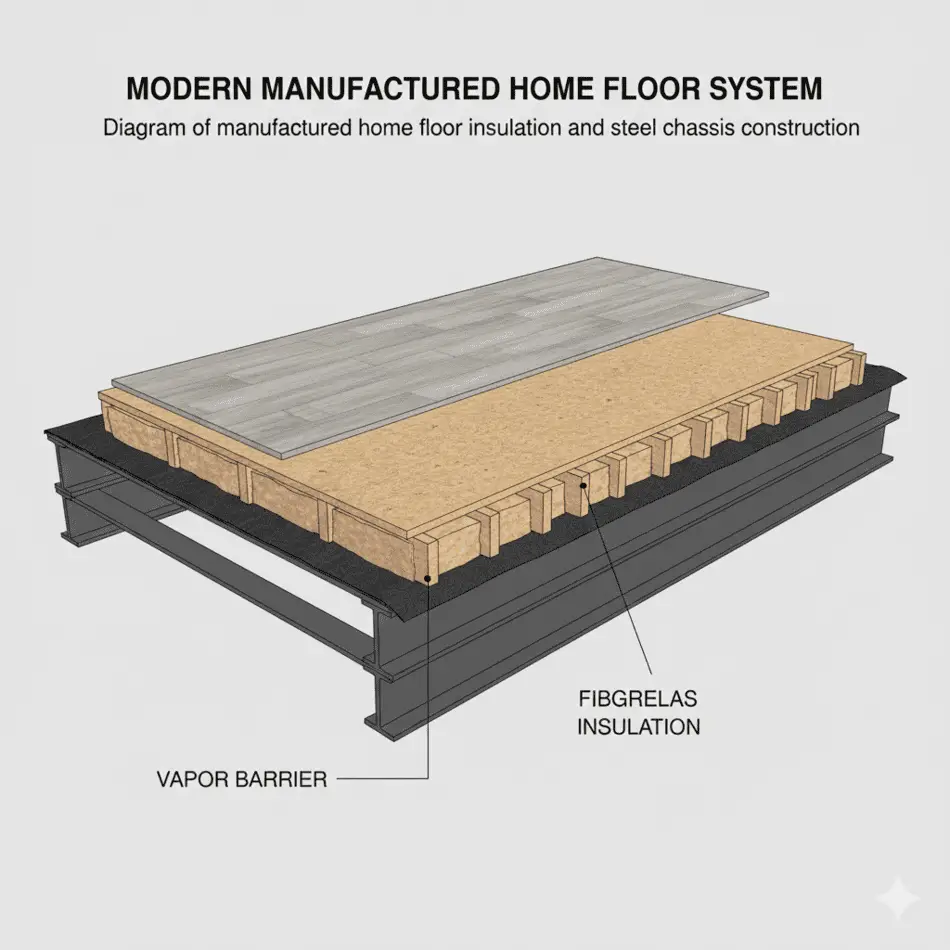
Following the 1994 HUD updates (spurred by Hurricane Andrew), wind load requirements and thermal protections were significantly increased. Homes built in the last 30 years use 2×4 or 2×6 exterior walls, plywood or OSB decking instead of particle board, and shingled roofs. In my 100+ flips, I have found that homes built after 1995 behave very similarly to site-built homes in terms of longevity. They are robust, energy-efficient, and capable of lasting nearly indefinitely with standard maintenance.
The Three Silent Killers of Manufactured Homes
1. Moisture and Humidity
Water is the enemy of all housing, but it is the assassin of mobile homes. Because these homes sit on a chassis above the ground, moisture rising from the earth can rot the floor joists and subflooring from the bottom up. I always insist on a 6-mil vapor barrier on the ground. Without it, you are essentially steaming your home foundation every day. If you smell mildew, the clock is ticking on your home longevity.
2. Foundation Settling
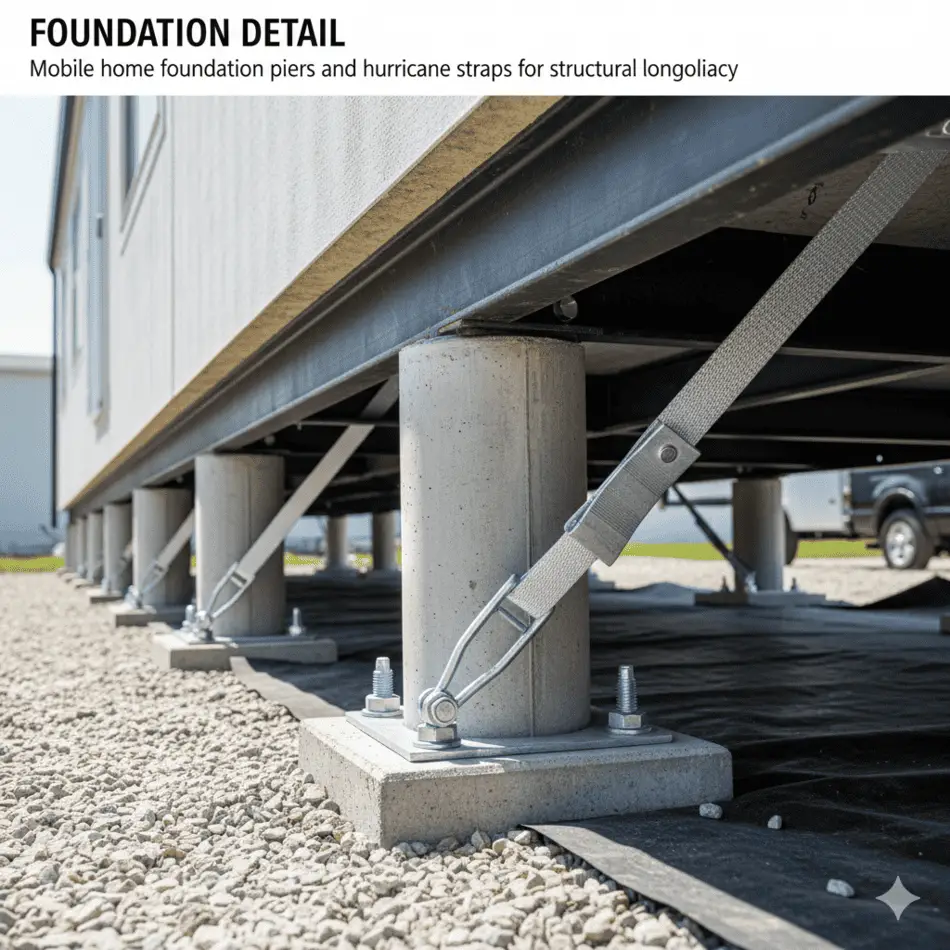
A mobile home is a giant bridge made of steel and wood. It relies on being perfectly level to distribute weight. When the ground shifts and the piers sink, the frame twists. This puts torque on the walls and roof. You will see it first in doors that won’t close or cracks in the marriage line of a double-wide. If the home stays out of level for too long, the structural fasteners begin to pull out, and the home lifespan is cut in half.
3. Roof Neglect
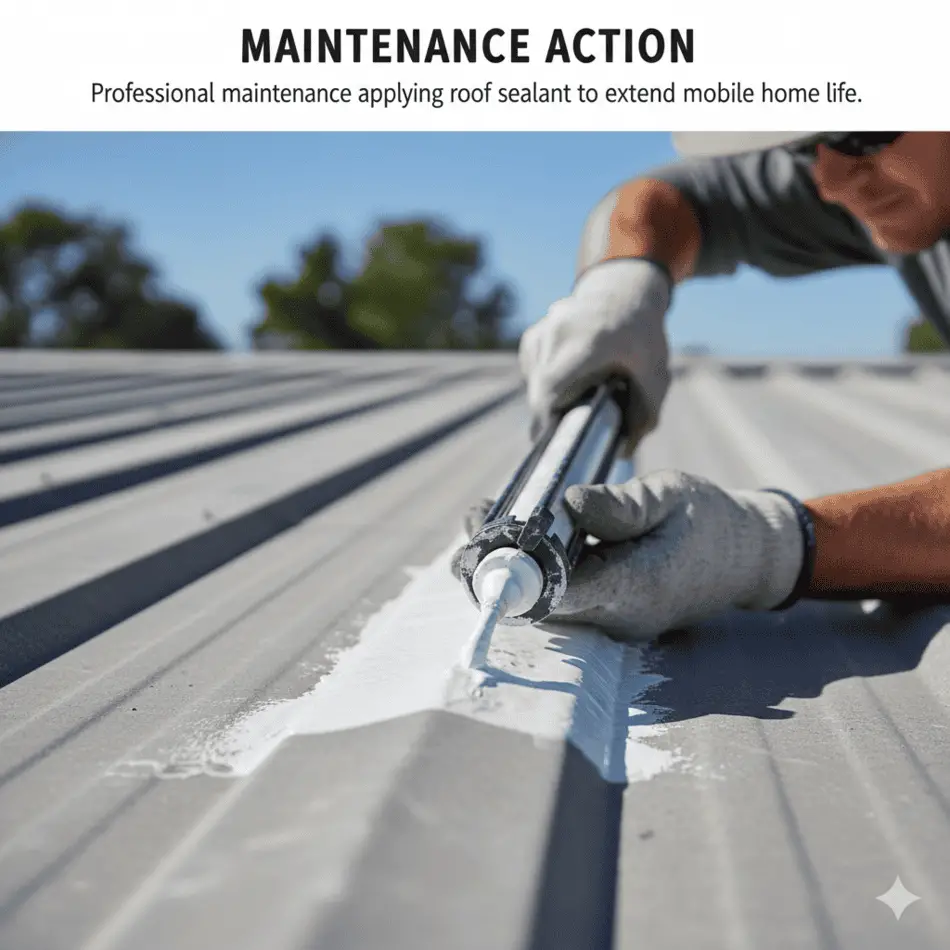
Metal “rumble” roofs on older homes need to be coated every 2 to 3 years. Shingled roofs on newer homes need replacement every 20 years. Once a leak reaches the wall cavity, it destroys the insulation and the studs. Because many mobile homes use interior wall panels rather than traditional drywall, you might not even see the damage until the wall is structurally compromised. I never buy a property without a drone or ladder inspection of the roof deck.
2026 Cost Transparency Table
Maintaining longevity requires capital. Here is what I am seeing for average costs in 2026 to extend a home’s life by 15 to 20 years.
| Service or Upgrade | Estimated Cost (2026) | Lifespan Added |
|---|---|---|
| Professional Re-Leveling | $600 – $1,200 | 5 – 10 Years |
| 6-Mil Vapor Barrier Install | $500 – $900 | 15+ Years (Prevents Rot) |
| Roof Over (Metal over Shingle) | $4,500 – $8,000 | 30+ Years |
| PEX Plumbing Repipe | $2,500 – $4,000 | Permanent (Prevents Leaks) |
| Vinyl Siding Upgrade | $5,000 – $12,000 | 25+ Years |
Recommended Maintenance Tools (Affiliates)
I do not hire out everything. These are the three products I keep in my truck to ensure my rentals and flips stay in peak condition. I have tested dozens, and these are the winners for 2026.
| Product | Why I Use It | Link |
|---|---|---|
| Level-Master Pro Water Level | The only way to accurately level a double-wide across 60 feet. Lasers fail in tight crawlspaces; gravity does not. | [Check Price] |
| SharkBite Pro PEX Crimp Tool | Old polybutylene pipes will burst. I use this tool to swap out entire systems for PEX in a single weekend. | [Check Price] |
| GacoRoof Silicone Sealant | Forget the cheap silver “tar” coatings. This silicone creates a permanent rubber membrane that stops leaks forever. | [Check Price] |
Critical Longevity Checklist
If you want your home to last 50+ years, you must execute these steps. I perform this walkthrough on every property I own once every six months.
- Inspect the Skirting: Is it secure? If air cannot circulate, humidity builds. If rodents get in, they destroy your ductwork and insulation.
- Check the “Belly Wrap”: Look under the home. Is the black fabric sagging? That usually means a hidden water leak is pooling inside the insulation.
- Test for Level: Place a marble on the kitchen floor. If it rolls consistently to one corner, your foundation is failing. Do not wait to fix this.
- Clear the Gutters: Water shedding off the roof should be directed at least 3 feet away from the home. Standing water at the base of your piers is a death sentence.
- Seal the Windows: Inspect the caulking. Mobile home windows are notorious for leaking into the wall cavity, rotting the studs while the interior looks fine.
Internal Resources
To learn more about maximizing the value and life of your property, check out my other deep dives:
- The Mobile Home Leveling Guide: DIY vs Professional
- How to Replace Mobile Home Subflooring Like a Pro
- Modernizing Your 1980s Single Wide for Under $10k
Summary
A mobile home is a machine for living. Like any machine, its lifespan is entirely dependent on maintenance. If you buy a post-1994 home, install a proper vapor barrier, keep it level, and ensure the roof remains watertight, there is no reason that home will not be standing and comfortable in 2075. The “throwaway” reputation of these homes comes from owners who ignored the basics. Do not be one of them.
About Chuck O’Dell
Chuck O’Dell is the founder of MobileHomeFriend.com and a veteran real estate investor. With over 20 years in the industry and more than 100 successful mobile home flips, Chuck focuses on first-principles engineering and practical, cost-effective renovation strategies. He lives in a custom-renovated manufactured home and spends his time consulting for park owners and DIY investors across the country.
Lead editor Chuck O’Dell leverages over two decades of hands-on experience in the manufactured housing industry to provide a data-backed look at structural longevity and real-world durability.