
Table of Contents
Introduction
I have spent over two decades in the trenches of the mobile home investment world. I have personally overseen the renovation of more than 100 properties. If there is one thing I have learned, it is that a cheap paint job is the most expensive mistake you can make. In 2026, the cost of materials and labor has shifted, but the fundamental logic remains the same. Your mobile home exterior is a protective shell, not just a color choice.
When I first started flipping, I thought paint was just about curb appeal. I was wrong. On property number twelve, I used a standard exterior latex on a vinyl-sided double-wide without checking the light reflectance value. By mid-July, the siding had warped so badly it looked like a wet noodle. That mistake cost me thousands. This guide is built on those hard-earned lessons. We aren’t just talking about aesthetic upgrades; we are talking about structural preservation. In the 2026 market, where housing inventory remains tight, maintaining the exterior of a manufactured home is the highest-ROI move a homeowner or investor can make. We will dive deep into the chemistry of modern paints, the logistics of 2026 labor, and the specific technical hurdles presented by different siding substrates.
Video Guide Overview
Affiliate Disclosure
I am a straight shooter. To keep the lights on at MobileHomeFriend.com, I include links to products I actually use on my job sites. If you click these and buy something, I might earn a small commission at no extra cost to you. I only recommend gear that survives my 100-plus property track record. These tools are the ones that actually make it through a full season of heavy use without breaking down. I don’t recommend “homeowner grade” tools for “investor grade” results.
The “Short” Answer
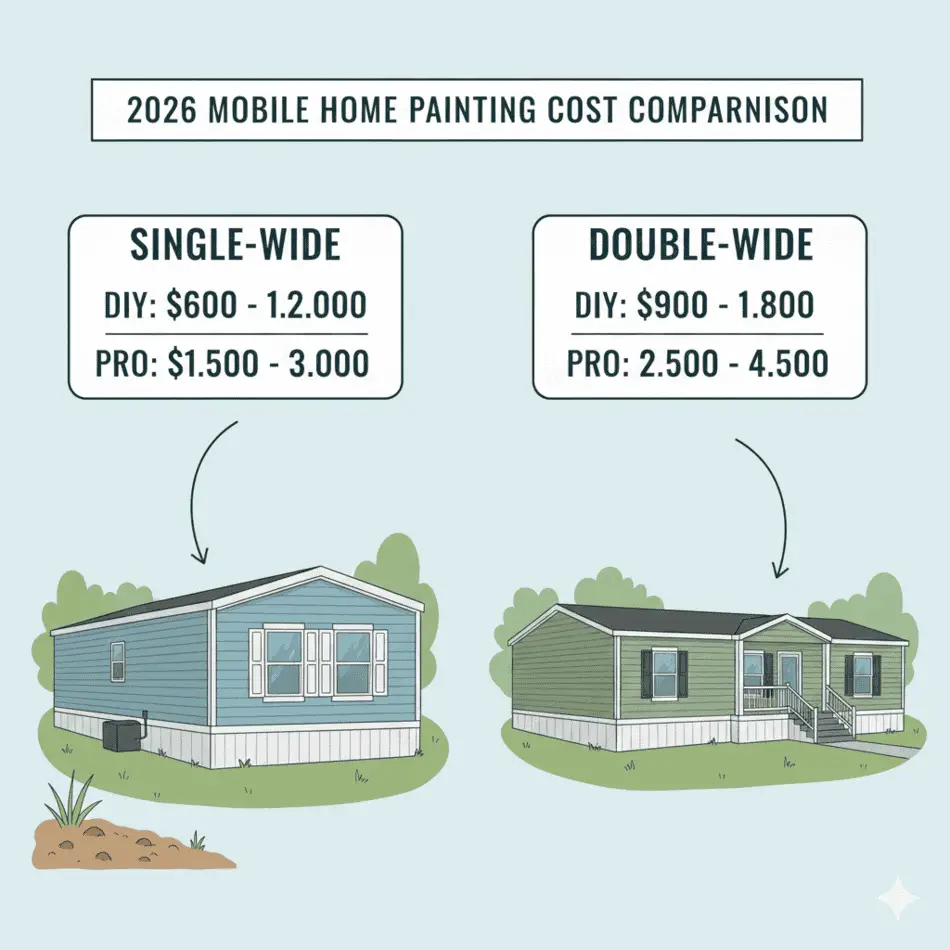
For a standard single-wide mobile home in 2026, expect a professional exterior paint job to cost between $2,800 and $4,800. For a double-wide, that range jumps to $4,500 to $8,200. If you tackle this as a DIY project, you can expect to spend between $1,400 and $2,600, which covers high-grade paint, specialized primer, rental equipment, and safety gear. The primary cost drivers are the condition of your siding and the specific vinyl-safe or bonding coatings required for long-term adhesion. Do not trust a quote that seems too good to be true. In this industry, you get exactly what you pay for, and a low bid usually means they are skipping the most important part: the prep.
Deep Dive: The Technical Economics of 2026
Siding Material: The Logic of Physics and Chemistry
The material of your mobile home is the first and most important variable in the cost equation. You cannot treat 1980s aluminum the same way you treat modern vinyl or composite wood. Each requires a different chemical approach for the paint to bond effectively.
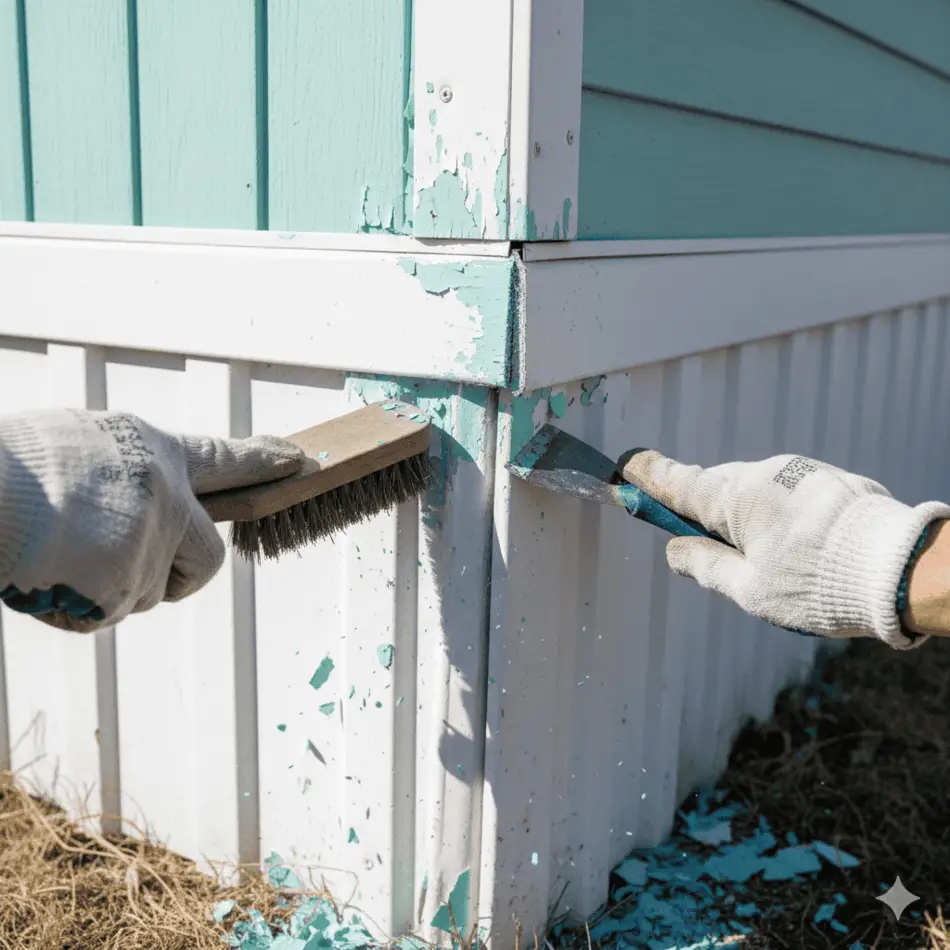
Aluminum Siding: The Oxidation Battle. Many older mobile homes feature aluminum siding. Over time, UV exposure breaks down the original factory finish, creating a chalky white powder known as oxidation. If you paint directly over this powder, your paint is sticking to dust, not the house. In 2026, the labor to de-chalk a home correctly involves a chemical wash (usually TSP or a proprietary substitute) and physical scrubbing. This adds significant time. Furthermore, aluminum requires a high-quality “bite” primer. I have seen countless “pro” painters skip the primer on aluminum, only to have the paint peel off in sheets the following spring. Expect to pay a 15% premium for the extra labor and specialized metal-grade primers needed here.
Vinyl Siding: The Thermal Expansion Factor. Vinyl is the most common siding today, but it is also the most misunderstood. Vinyl expands and contracts significantly as temperatures fluctuate. In 2026, we have seen a massive advancement in “Vinyl-Safe” paint technology. Traditional paints use dark pigments (like carbon black) that absorb heat. If you put a dark traditional paint on light vinyl, the siding will reach temperatures it was never designed to handle, leading to warping, buckling, and eventually, failure of the water barrier. You must use paints formulated with infrared-reflective pigments. These are roughly 20% to 30% more expensive per gallon, but they are the only way to safely change the color of a vinyl-sided home to a darker shade.
Wood and Composite Siding (T1-11): The Rot Inspection. If your mobile home has wood-based siding, your costs will be dictated by the “soft spots.” Before a drop of paint is applied, every square inch must be inspected for water intrusion. Paint is not a structural repair; it is a coating. If you paint over soft wood, you are just hiding a problem that will cost five times as much to fix in three years. In 2026, the price of T1-11 sheets has stabilized but remains high, meaning prep work on wood homes is often the most expensive part of the quote.
Labor Realities in the Modern Market
Labor currently accounts for roughly 65% to 70% of a professional quote. In 2026, we are dealing with a shortage of skilled tradespeople who actually understand the nuances of manufactured housing. A standard residential painter might not know how to handle the unique trim or the skirting of a mobile home. Skilled crews are currently charging $65 to $110 per hour. You are paying for their insurance, their specialized equipment like airless sprayers, and their ability to work safely on ladders or scaffolding. When evaluating a quote, look at the “hours estimated.” A single-wide requires approximately 40 to 50 man-hours for a high-quality job. If a contractor says they can do it in a day, they are cutting corners on prep.
The “Shadow” Costs You Haven’t Considered
Budgeting for just “paint and labor” is a rookie mistake. You must factor in the following:
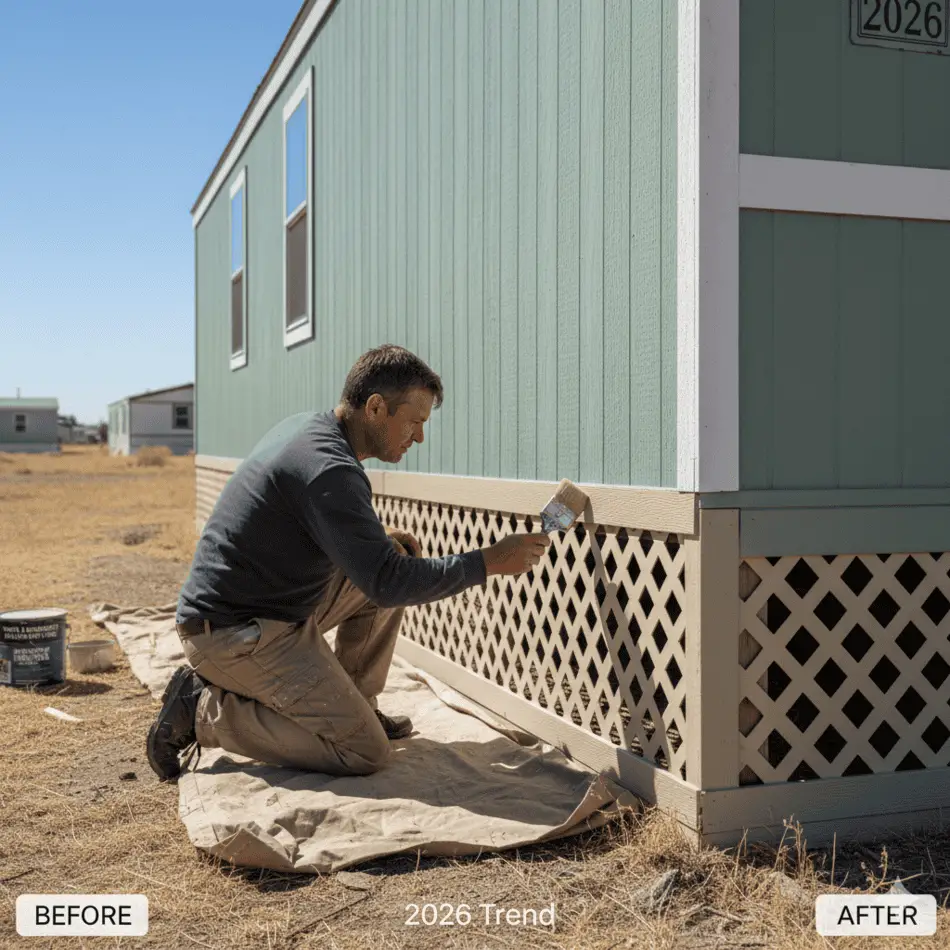
- Skirting: Whether you have vinyl, rock-look, or metal skirting, it usually requires a different type of paint or at least a different application method. Painting the skirting adds roughly 15% to 20% to the total surface area.
- Trim and Accents: Two-tone or three-tone paint jobs look incredible, but they require double the masking time. Every color change is an opportunity for a leak or a mistake. Contractors usually add a flat fee of $400 to $800 for accent colors.
- Caulking: Mobile homes move more than stick-built homes because they sit on piers. Standard caulk will fail. In 2026, a high-performance elastomeric sealant (like Big Stretch) is mandatory. A full reseal of a double-wide can use 20 to 30 tubes of caulk.
- Accessibility: If your home is on a steep slope or has tight clearances between other units in a park, expect a “difficulty premium” of 10%.
Cost Transparency Table (2026 Estimates)
These figures are based on 2026 national averages for a 1,500 sq. ft. double-wide mobile home. Prices will vary by region, with coastal and urban areas skewing higher.
| Expense Category | Professional Cost | DIY Cost |
|---|---|---|
| Premium Paint & Vinyl-Safe Primer (25-30 Gal) | $2,200 – $3,000 | $1,600 – $2,200 |
| Surface Prep (TSP Wash, Scraping, Sanding) | $800 – $1,400 | $300 (Supplies/Rentals) |
| Labor (Masking, Spraying, Trim Detail) | $3,500 – $6,000 | $0 (Sweat Equity) |
| High-Performance Sealants & Consumables | $400 – $700 | $250 – $400 |
| Equipment (Sprayer Rental, Ladders, Safety) | Included | $350 – $600 |
| TOTAL ESTIMATE | $6,900 – $11,100 | $2,500 – $3,850 |
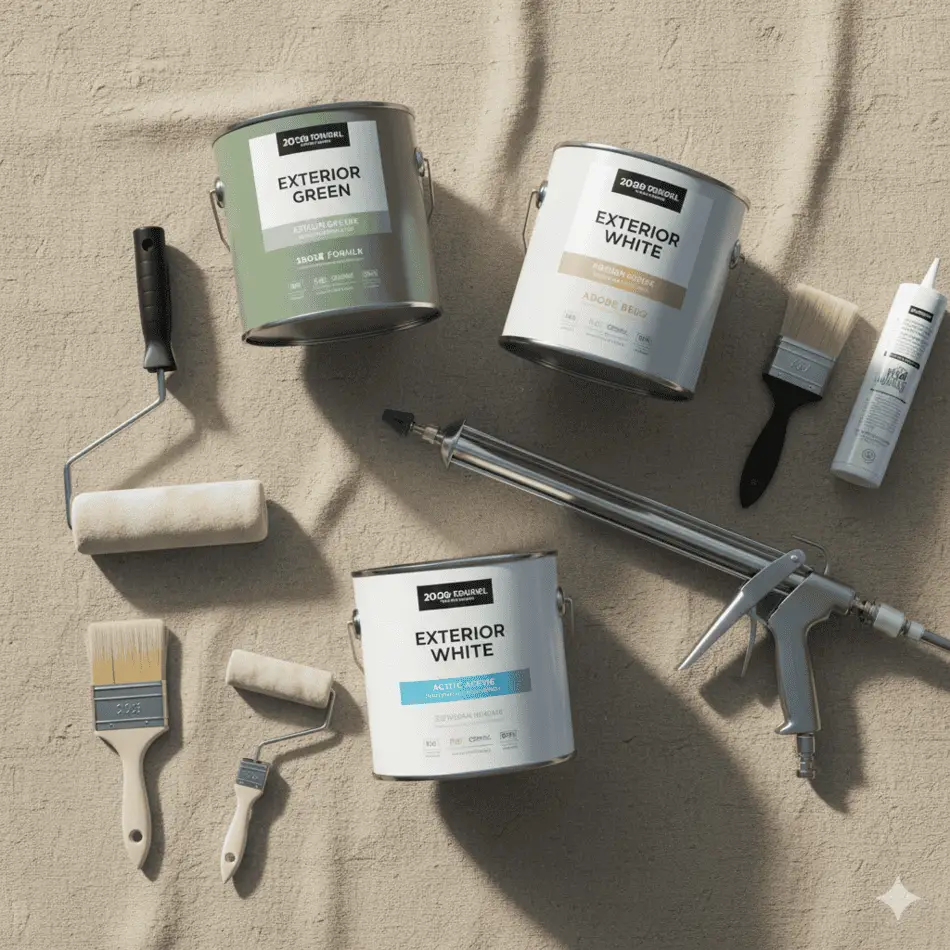
Affiliate Products Table
I don’t play around with hobbyist gear. If you are doing this yourself or checking your contractor’s work, these are the three specific products I trust to get the job done right the first time. I have used these across dozens of properties, and they are the only ones that meet my 2026 standards.
| Product Name | Purpose | Why I Recommend It |
|---|---|---|
| Graco Magnum ProX19 Airless Sprayer | Professional Application | Brushing a mobile home is a waste of your life. This sprayer handles heavy exterior coatings without thinning, ensuring the mill thickness stays consistent. It’s built for the long haul. |
| Zinsser Bulls Eye 1-2-3 Primer | Adhesion Master | This is the gold standard for mobile homes. It sticks to slick vinyl and locks down chalky aluminum. I never paint a flip without a full coat of this first. It’s mold and mildew resistant too. |
| Sashco Big Stretch High-Flex Caulk | Elastic Sealing | Mobile homes twist and shift constantly. Standard caulk cracks within months. Big Stretch can handle up to 500% movement. It keeps water out of your walls for decades. |
PDF Resource: The Chuck O’Dell 7-Step Prep Protocol
(Investors: Print this section and hand it to your crew. Homeowners: Follow this to save $3,000 in labor.)
Step 1: The Chemical Deep Clean
Do not just spray with water. Use a pressure washer at no more than 1,500 PSI to avoid forcing water into the walls. Mix a solution of TSP (Trisodium Phosphate) or a biodegradable equivalent. Use a long-handled soft-bristle brush to scrub the siding, paying special attention to the chalky areas of aluminum or the mildew on the north side of the home. Rinse from the top down.
Step 2: Structural Audit and Dry Time
Wait at least 48 hours. During this window, walk the perimeter with a screwdriver. Poke the bottom of every siding panel and around window sills. If the wood is soft, it must be replaced now. Painting over rot is like putting a band-aid on a gunshot wound. Replace damaged sheets or panels with matching material.
Step 3: The Mechanical Scrape
Focus on window frames, door headers, and trim. If there is loose, flaking paint, it has to go. Use a 2-inch carbide scraper for the heavy work and 80-grit sandpaper to feather the edges of the remaining paint. You want a smooth transition so the old paint edges don’t show through the new coat.
Step 4: High-Performance Resealing
Remove old, brittle silicone caulk—nothing sticks to old silicone. Apply Big Stretch or a similar high-performance elastomeric sealant to every joint, corner bead, and window edge. Don’t forget where the siding meets the roof line and the J-channel. Let the caulk cure for at least 6 hours before priming.
Step 5: Professional Masking
Cover every window with 3M hand-masker film. Tape off the underside of the roof (the soffit) if you aren’t painting it the same color. Wrap outdoor lights in plastic bags. Use heavy canvas drop cloths for the ground—plastic is a slip hazard when you are on a ladder with a sprayer.
Step 6: The Bonding Prime Coat
Apply one full coat of Zinsser 1-2-3. This is the bridge between the old surface and the new paint. If you are painting over aluminum, this primer is what prevents the metal from reacting with the water-based paint. If you are painting vinyl, it provides the “tooth” needed for the color coat to grab onto.
Step 7: The Two-Coat Finish (Spray and Back-Roll)
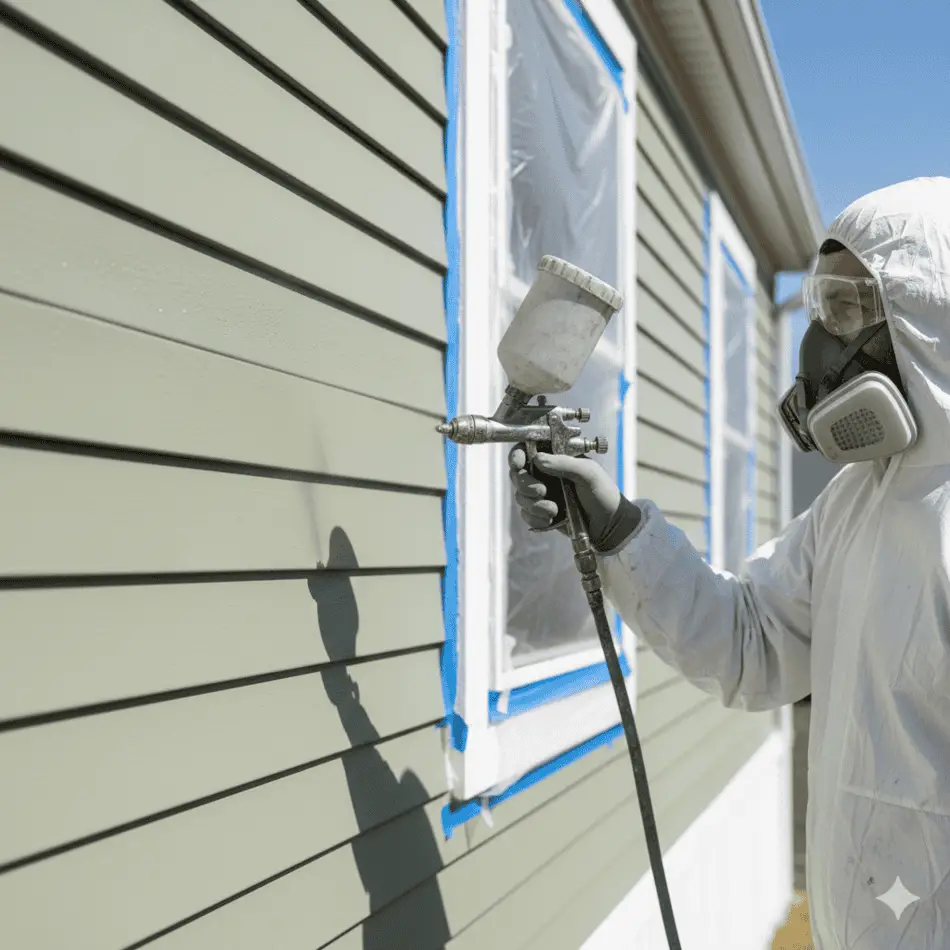
Load your airless sprayer with a 515 or 517 tip. Spray in consistent vertical or horizontal strokes. Have a second person follow behind immediately with a 3/4-inch nap roller. This back-rolling technique forces the paint into the texture of the siding and ensures even coverage. Apply the second coat only after the first is dry to the touch.
Detailed Comparison: Professional Crew vs. DIY
I get asked all the time: “Chuck, is it really worth doing it myself?” My answer depends on your goals. If you are a homeowner living in the unit, DIY makes sense because you can take three weekends to get it perfect. If you are an investor, your time is better spent finding the next deal.
The Professional Advantage: A pro crew brings speed and insurance. If a painter falls off a ladder on your property and doesn’t have insurance, you are liable. Pros also have industrial-grade sprayers that provide a finish you simply cannot achieve with a brush and roller. In 2026, the cost of a pro is high, but the “finish quality” can add $10,000 to $15,000 in perceived value to a home during a resale.
The DIY Reality: You will save roughly $4,000 to $6,000 on a double-wide. However, you will lose 60 to 80 hours of your life. You also have to handle the disposal of hazardous materials (old paint) and manage the logistics of ladder work. If you have a fear of heights or chronic back pain, stay off the ladder. The medical bill for a fall will be higher than the painter’s quote.
The Logic of Color and Resale Value
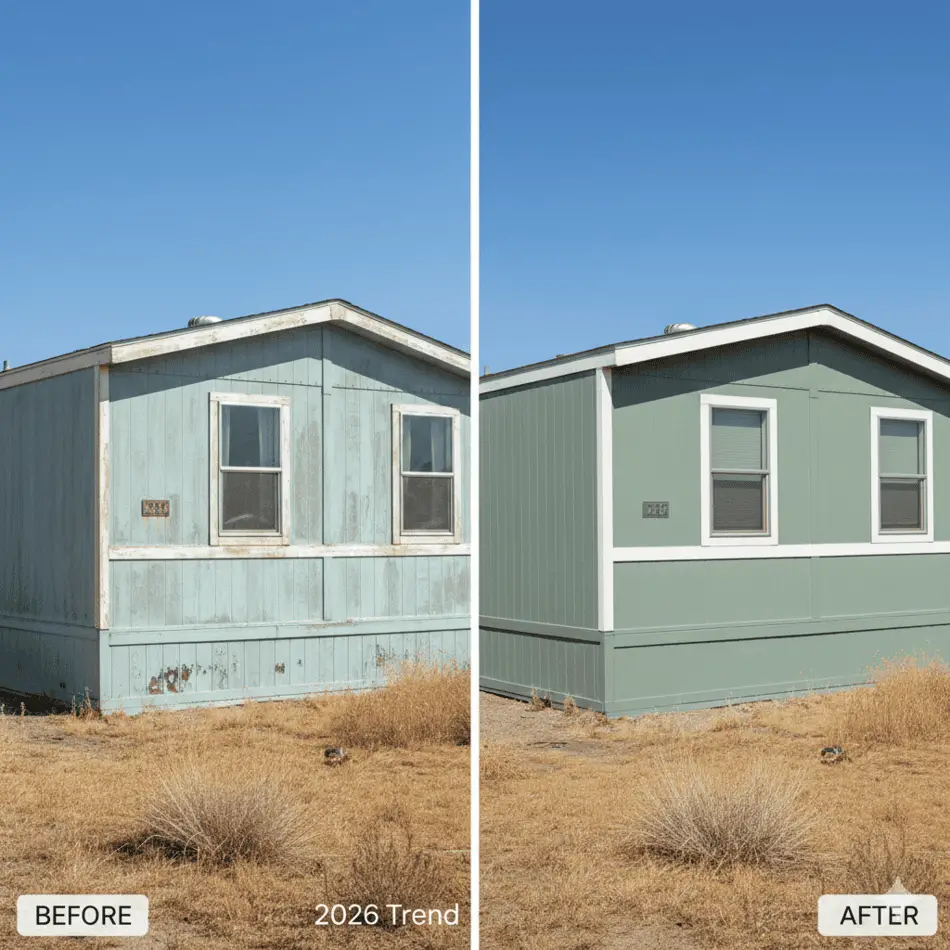
In 2026, the “Modern Farmhouse” look—white siding with black trim—is starting to fade. We are seeing a shift toward “Earth-Toned Industrial.” Think deep sage greens, warm grays, and sandy beiges. However, your color choice must be governed by your siding type. As I mentioned earlier, LRV (Light Reflectance Value) is the number to watch. Most paint decks list the LRV on the back of the color chip. For vinyl siding, try to stay above an LRV of 50 unless you are using a specialized “Vinyl-Safe” line that allows for lower values. A lighter home also stays significantly cooler in the summer, which is a major selling point for manufactured homes with older insulation packages.
Actionable Checklist for the 2026 Season
- Verify Licensing: Before hiring, ask for a 2026 certificate of insurance. “Handyman” insurance is not the same as “Professional Painter” insurance.
- Paint the Skirting Last: Skirting is a magnet for dust and grass clippings. Save this for the final stage of the project to ensure a clean finish.
- Pressure Test: After the first rain, inspect the window seals. If you see moisture, your caulking job was insufficient. Fix it before the paint cures completely.
- Document the Process: If you are flipping, take photos of the prep work—the washing, the priming, the caulking. Showing a buyer that you did the prep right is a massive trust-builder.
- Buy 10% Extra: Paint batches can vary slightly. Buy all your paint at once and “box” it (mix it all together in a 5-gallon bucket) to ensure color consistency across the whole house.
Internal Resources
If you are planning a full exterior overhaul, don’t stop at the paint. Check out these related guides I have written to maximize your property value:
- The Ultimate Mobile Home Skirting Guide – Learn how to choose and install skirting that complements your new paint and lasts for 20 years.
- How to Repair Soft Spots in Mobile Home Walls – A step-by-step guide to fixing structural rot before you apply your finish coat.
- Best Mobile Home Roof Coatings for 2026 – Don’t let a leaky roof ruin a fresh paint job. Learn about elastomeric and silicone coatings.
Summary
Painting your mobile home is the single most effective way to increase its appraisal value and curb appeal in 2026. However, cutting corners on prep work is a guaranteed way to watch your investment peel off in two years. Expect to pay for quality. Whether you spend the money on a professional crew or spend your weekends on a ladder, ensure you are using the right primers and flexible sealants. A properly painted mobile home doesn’t just look better; it acts as a fortress against the elements. I have seen homes that were neglected for 30 years look brand new with $3,000 worth of paint and a lot of elbow grease. This isn’t just about color; it’s about asset protection. Do it right, or don’t do it at all.
Bio: Chuck O’Dell
Chuck O’Dell is the founder of MobileHomeFriend.com and a veteran real estate investor with over 20 years of experience. Having successfully flipped more than 100 mobile home properties, Chuck specializes in high-ROI renovations and first-principles property management. He is a firm believer that the dirt under the fingernails approach is the only way to truly master the manufactured housing market. When he isn’t on a job site, he is helping other investors find the logic in the numbers and the profit in the prep work.
Drawing on over 20 years of hands-on experience in the manufactured housing industry, Chuck O’Dell provides real-world pricing data that bypasses generic contractor estimates.