
Table of Contents
Introduction
I have spent over two decades in the trenches of the manufactured housing industry. I have flipped more than 100 properties. I have seen every DIY disaster and every ambitious renovation project you can imagine. One question that consistently surfaces from homeowners looking to increase their square footage is whether they can simply build up. People want more space without increasing their footprint. They see a single-wide or a double-wide and think it looks like a sturdy enough box to support another box on top.
I approach every real estate problem from first principles. We have to look at the physics of the structure, the legal framework of the HUD code, and the economic reality of the investment. If you are looking for a sugar-coated answer, you are in the wrong place. I am here to tell you exactly what is possible and, more importantly, what is profitable. Adding a second story to a mobile home is not just a construction challenge. It is an engineering nightmare that almost always results in a net loss of value. We are going to break down why this is the case and what you should do instead.
Video Guide Overview
Affiliate Disclosure
To keep the lights on at MobileHomeFriend.com, I occasionally recommend products that I have used in the field. If you click a link and make a purchase, I may receive a small commission at no extra cost to you. I only recommend gear that actually works on a job site.
The Short Answer
No, you cannot safely or legally add a second story directly onto the existing structure of a mobile home. Manufactured homes are designed as integrated units where the walls, floor, and roof work together to distribute specific, limited loads. The wall studs and the steel chassis are engineered to support the weight of the original roof and its anticipated snow load, nothing more. Placing the weight of a second floor, furniture, and occupants on top of a manufactured home will lead to structural failure, wall buckling, and a total collapse of the home. If you want a second story, you must build an independent “over-structure” that does not touch the mobile home, or you must replace the home with a modular unit designed for vertical expansion.
The Engineering Reality
Weight Distribution and Load Paths
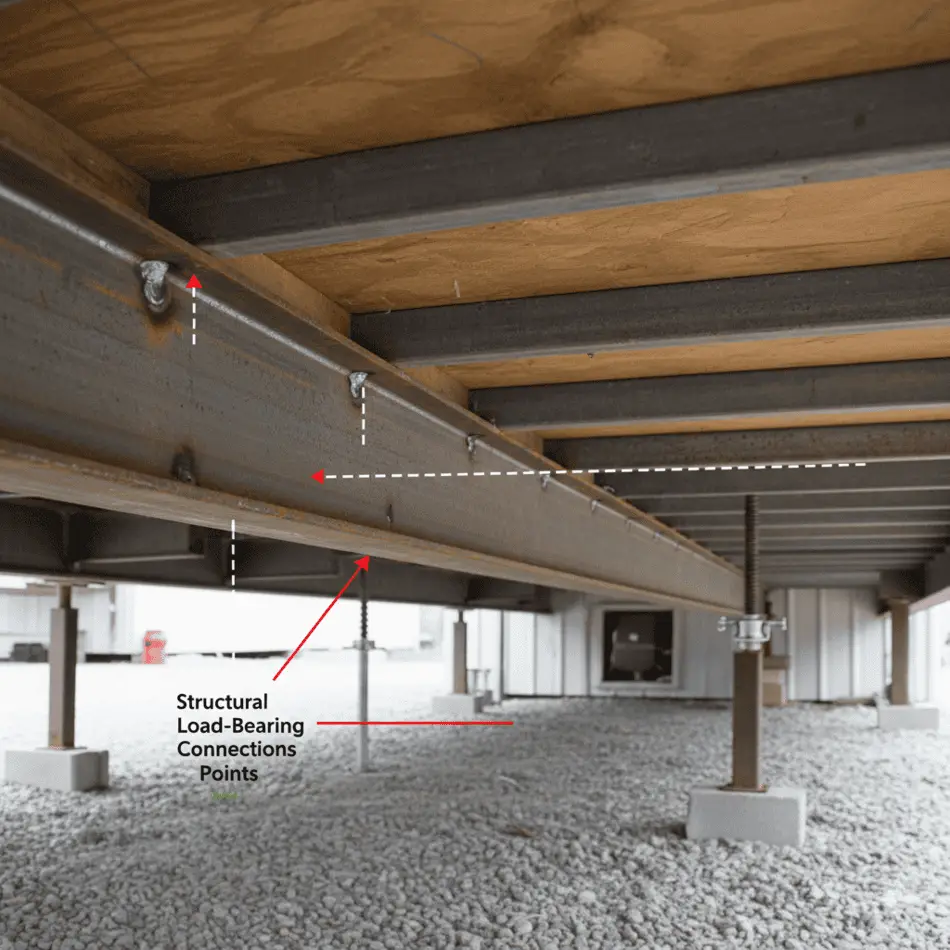
In a traditional stick-built home, we use a foundation of concrete footings that are often over-engineered for the weight of the house. In a mobile home, the load path is entirely different. The weight starts at the roof, travels down the 2×3 or 2×4 exterior walls, passes through the floor joists, and eventually rests on the steel I-beam chassis. This chassis then sits on stacks of concrete blocks or jack stands.
When you add a second story, you are effectively doubling or tripling the “dead load” (the weight of the materials) and adding a significant “live load” (the weight of people and furniture). The mobile home leveling system is not designed for this. The outriggers, which are the steel brackets extending from the I-beams to the edge of the home, will bend. The wall studs will bow outward because they lack the lateral bracing required for a multi-story structure. From a first-principles perspective, you are trying to use a ladder as a bridge. It is the wrong tool for the job.
The HUD Code Barrier
Manufactured homes are built to a federal standard known as the HUD Code. This code governs everything from the thickness of the insulation to the structural load requirements. Once you make a significant structural modification, such as removing the roof to add a second floor, you have voided the HUD certification. This is a massive problem for mobile home taxes and resale value. In most jurisdictions, a home that has been modified outside of its original engineering specs cannot be sold with traditional financing. You will be stuck with a “zombie” property that you cannot insure or sell to anyone but a cash buyer at a steep discount.
Wind Loads and Overturning Moments
Mobile homes are already susceptible to wind damage. They are essentially aerodynamic boxes. When you add a second story, you increase the surface area of the home. This creates a larger “sail” for the wind to catch. The anchoring system that keeps your home on the ground is calculated based on the original height. A two-story mobile home would require a massive upgrade to the ground anchors and likely a permanent concrete slab foundation to prevent the entire structure from tipping over in a high-wind event. Most people do not account for the “overturning moment,” which is the physical force that wants to flip the home over when the wind hits that extra height.
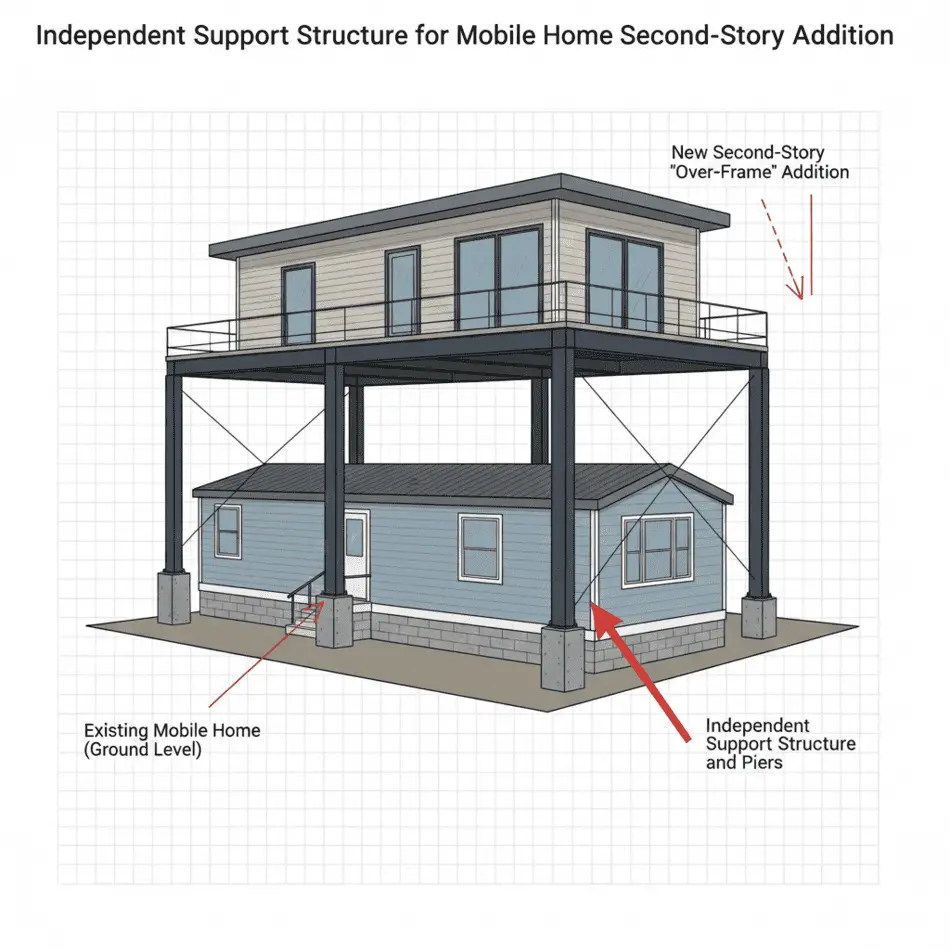
Alternative: The Independent Over-Structure
If you are dead-set on having a second story while keeping your mobile home, there is only one way to do it right. You must build a “pole barn” style structure over the home. This involves sinking heavy-duty 6×6 or 8×8 pressure-treated posts into the ground on the outside of the home. These posts support a completely independent floor and roof system. The mobile home essentially sits inside a giant table.
This approach solves the engineering problem because the weight of the second story never touches the mobile home. However, it creates a new set of problems. You will have to deal with complex flashing issues where the two structures meet. You will also face strict zoning challenges. Most building inspectors will view this as two separate structures, and getting a permit for a “house over a house” is a bureaucratic nightmare. I have seen it done on private land in rural areas, but in a managed community or a strictly zoned suburb, it is almost impossible.
Cost Transparency Table (2026 Estimates)
To give you an idea of the financial insanity involved in this project, here are the estimated costs for a standard 1,200 sq. ft. vertical expansion versus other options.
| Project Type | Estimated Cost | Feasibility |
|---|---|---|
| Vertical Addition (Directly on Structure) | $85,000 – $120,000 | Dangerous / Illegal |
| Independent Pole Structure Over-Build | $110,000 – $160,000 | Technically Possible |
| Horizontal Ground-Level Addition | $40,000 – $70,000 | Recommended |
| Trading in for a New Double-Wide | $90,000 – $150,000 | Best ROI |
Affiliate Products Table
If you are working on any structural project or just maintaining your home, these are the tools I trust to get the job done right.
| Product Name | Primary Use | Why I Recommend It |
|---|---|---|
| Stabila 96M-2 Magnetic Level Set | Leveling and Alignment | Precision is non-negotiable. These levels stay true even after being dropped on a job site. |
| iLevel Water Level System | Foundation Leveling | The only way to ensure your chassis is perfectly flat across 60+ feet of length. |
| Simpson Strong-Tie SDWS Screws | Structural Fastening | Better than lag bolts for securing additions or heavy-duty blocking. |
The Problems with “The Second Story” Mentality
When I talk to investors who want to build up, they often cite the “tiny home” movement as inspiration. They see lofts in tiny homes and think a mobile home is just a big tiny home. This is a logical fallacy. Tiny homes are built on heavy-duty trailers with thick walls designed for highway speeds. Manufactured homes are mass-produced to meet a specific price point. To meet that price point, materials are optimized for the original design.
Roof Pitch and Drainage
Standard mobile home roofs are either flat or have a very low pitch. When you build a second story, you have to find a way to tie the new roof into the old one or replace the old one entirely. If you replace it, you are opening up the entire interior of your home to the elements during construction. One rainstorm during the build can destroy your subfloors, your insulation, and your electrical system. I have seen $50,000 worth of damage happen in 30 minutes because a tarp blew off.
Staircase Logic
People forget that a staircase takes up a massive amount of floor space. In a 14×70 single-wide, adding a staircase that meets code will consume about 30 to 40 square feet on both the first and second floors. You are essentially losing a small bedroom or a large chunk of your living area just to get upstairs. In a narrow home, a staircase creates a bottleneck that makes the living space feel cramped and poorly designed. From a utility perspective, you are often better off building a 12×12 ground-level addition than a 400-square-foot second story that is hard to access.
The Smarter Play: Horizontal Expansion
If you need more space, build out, not up. A horizontal addition can be built on its own foundation, whether that is piers or a concrete slab. You can then use a “breezeway” or a “soft joint” to connect the addition to the mobile home. This keeps the two structures independent. If the mobile home settles, it won’t pull the addition down with it.
You should also consider the mobile home skirting when expanding horizontally. You want the new addition to look like it belongs with the original structure. Using high-quality materials for the transition will maintain the curb appeal. Horizontal additions are also much easier to permit because you aren’t messing with the primary load-bearing roof of the HUD-coded home. You are simply building a “room addition” that happens to be next to it.
Actionable Checklist for Homeowners
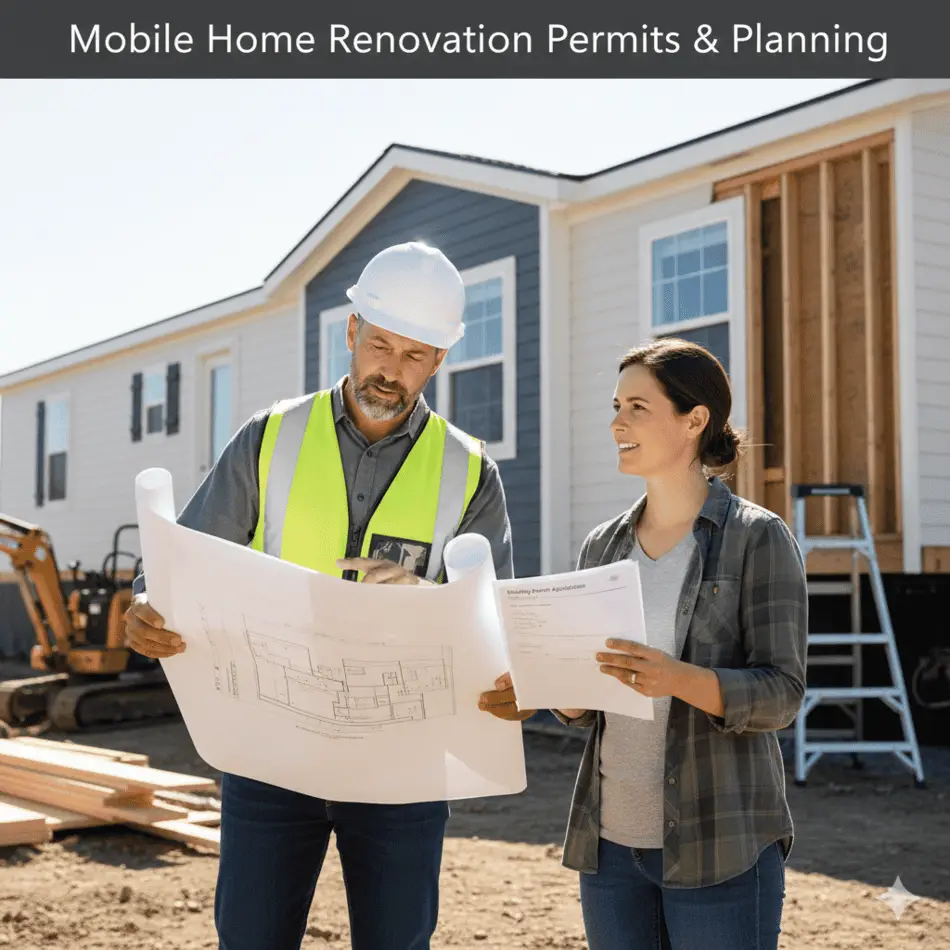
Before you spend a single dollar on a vertical expansion project, go through this list. If you cannot check every box, stop the project.
- Consult a Structural Engineer: Have a licensed professional look at your chassis and I-beams.
- Check Local Zoning: Ensure your county allows for multi-story manufactured home modifications.
- Verify Insurance: Call your insurance agent and ask if they will continue to cover the home after a vertical addition.
- Calculate the ROI: Compare the cost of the addition to the market value of a larger, newer double-wide.
- Inspect the Foundation: Ensure your current footings can handle even a slight increase in load.
- Plan for Utilities: Determine how you will run plumbing and HVAC to the second floor without compromising the first floor’s integrity.
Internal Resources
If you are serious about upgrading your home, check out these related guides on our site:
- Understanding Mobile Home Leveling and why it matters for structural changes.
- The legal side of Mobile Home Titles and how modifications affect ownership.
- How to properly handle Roof Repair without voiding your warranty.
Summary
Building a second story on a mobile home is a classic example of a project that is possible on a whiteboard but disastrous in reality. Between the structural limitations of the steel chassis and the legal hurdles of the HUD code, the “upward” path is filled with expensive traps. As an investor, I always look for the path of least resistance and highest return. That path usually involves either a horizontal addition or selling the home to upgrade to a larger model. Do not risk your safety or your equity on a vertical expansion that the home was never meant to handle. Stick to the engineering facts and keep your home on solid ground.
Bio: Chuck O’Dell
Chuck O’Dell is the founder of MobileHomeFriend.com and a veteran real estate investor with over 20 years of experience. Having managed the renovation and sale of more than 100 manufactured homes, Chuck focuses on practical, no-nonsense advice for homeowners and investors. He believes in the “first principles” approach to construction: if the physics don’t work, the project doesn’t work. When he isn’t on a job site, he is helping homeowners navigate the complexities of titling, taxes, and structural repairs.
With over 20 years of hands-on experience in the manufactured housing industry, Chuck O’Dell provides expert insight into the structural engineering and HUD-code requirements of home additions.